Venus Aerospace raises $91M Series B led by Mercury Fund to scale 3D-printed RDRE hypersonic rocket engines

Hardware
Originally reported by 3DNatives
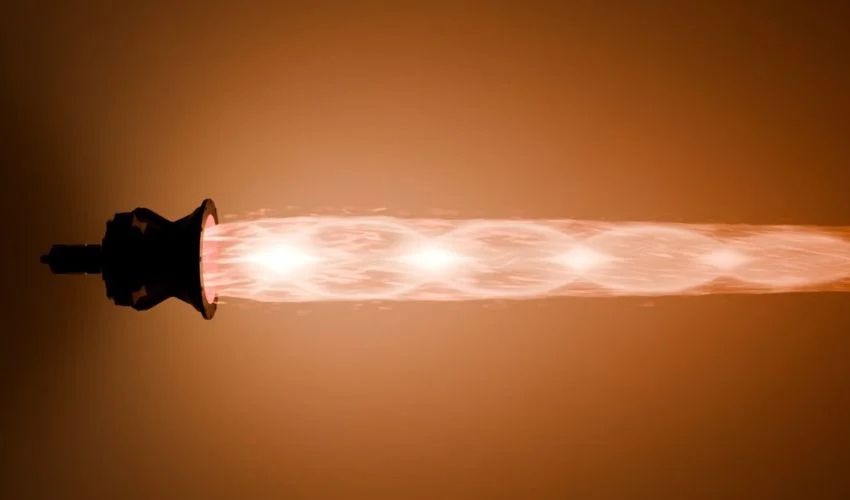
Houston-based Venus Aerospace has closed a $91M Series B led by Mercury Fund, with Lockheed Martin Ventures, PEAK6, and Draper Associates among the participants. The capital funds the transition of its Rotating Detonation Rocket Engine, an RDRE that generates thrust through continuous rotating detonation waves, from flight-tested demonstrator to production hardware for defense and space customers. The company builds the engine using laser powder bed fusion, printing the combustion chamber with internal cooling channels and injector orifices that conventional machining cannot produce. Those parts rely on two NASA-developed alloys, GRCop-42 for thermal conductivity and GRX-810 for high-temperature strength under detonation loading.
The funding follows a May 2025 flight test at Spaceport America in New Mexico, where the engine flew and validated performance under real flight conditions rather than static test-stand data alone. Venus Aerospace is positioning the RDRE as a common propulsion architecture rather than a mission-specific engine, aiming to cover munitions, space launch, orbital transfer, and landing vehicles from a single printed design. That approach mirrors a broader defense-sector pattern where additive manufacturing is pitched less as a novelty and more as a route to domestic, single-source-independent production, a case CEO Sassie Duggleby made directly in citing supply-chain reliability as a customer priority alongside performance.
The near-term test for Venus Aerospace is whether LPBF-built combustion hardware can move from a single validated flight to repeatable production runs across multiple engine variants without requalifying the process each time. Reusability and throttle control claims will matter more to prospective defense and launch customers than the printing method itself once qualification data accumulates. With Lockheed Martin Ventures among the backers, an early path toward a defense prime relationship is plausible, though no supply agreement has been announced.
This article is an AI-assisted rewrite of the linked source report. Facts originate from the source; phrasing is AMPulse's. Use Read Original below to verify, or Report an issue if something is wrong.
Topics