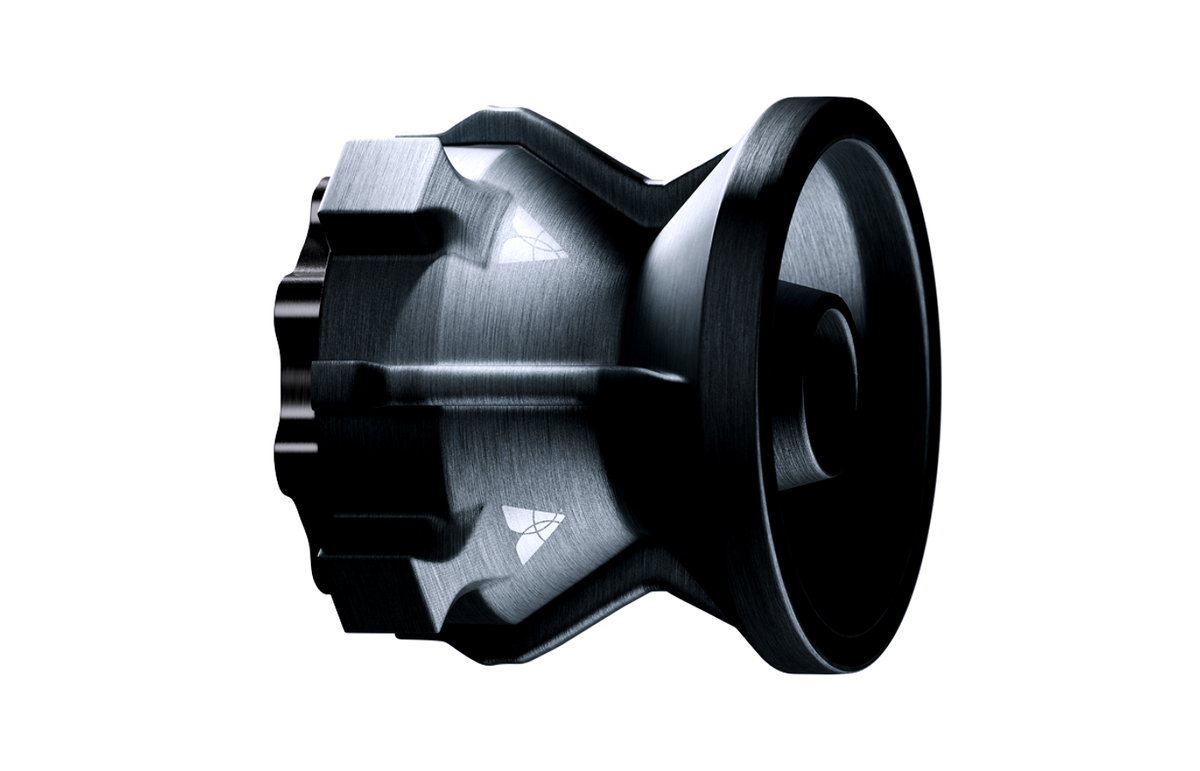
Venus Aerospace raises $91M Series B for 3D-printed rotating detonation rocket engine

Hardware
Originally reported by TCT Magazine
Venus Aerospace has closed a $91 million Series B financing round to advance development and production of its rotating detonation rocket engine (RDRE), a propulsion system that relies on 3D-printed components and standard materials for domestic manufacturing at scale. The round was led by Mercury Fund, with participation from Lockheed Martin Ventures, MESH, PEAK6, Draper Associates, Starboard Star Venture Capital, and Green Sands Equity. The company, founded in 2021 and headquartered in Texas, had previously raised $80 million. Venus completed what it believes was the world's first successful flight test of an RDRE engine in 2025, and the new funding will move the technology from demonstration toward deployment for defense and space applications including munitions, space launch, orbital transfer, and lander vehicles.
This funding round sits within a well-established pattern in the aerospace segment: a startup with a novel propulsion concept uses additive manufacturing to compress development timelines and reduce supply chain dependencies, then attracts defense-linked capital to bridge the gap between flight demo and production qualification. Venus's RDRE claims a 15% efficiency improvement over conventional rocket engines through a continuous supersonic detonation wave rotating around the combustion chamber. The company's emphasis on domestic manufacturing and standard materials directly addresses the defense sector's growing preference for supply chain resilience, a theme amplified by recent policy shifts favoring U.S.-based production. Lockheed Martin Ventures' reinvestment signals that Venus has passed initial technical credibility checks, though the company still faces the long aerospace qualification grind before its engine becomes embedded in program-scale production. The $91 million raise is substantial for a pre-production propulsion startup, but it must fund not only continued engineering but also the build-out of manufacturing capacity and qualification testing across multiple mission profiles.
For Venus, the practical challenge now is execution discipline: translating a promising flight demo into repeatable, certifiable production hardware that meets the reliability requirements of defense and space customers. The company's use of 3D printing for complex combustion chamber geometries is a genuine advantage for reducing part count and lead time, but it does not shortcut the qualification and testing cycles that define aerospace propulsion programs. Investors and partners should watch for Venus's progress in establishing production-rate capability and securing program-specific contracts, not just additional flight demonstrations.
Topics