VoxelDance Additive launches implicit modeling thermal management module for metal 3D printing

Software
Originally reported by 南极熊3D打印网
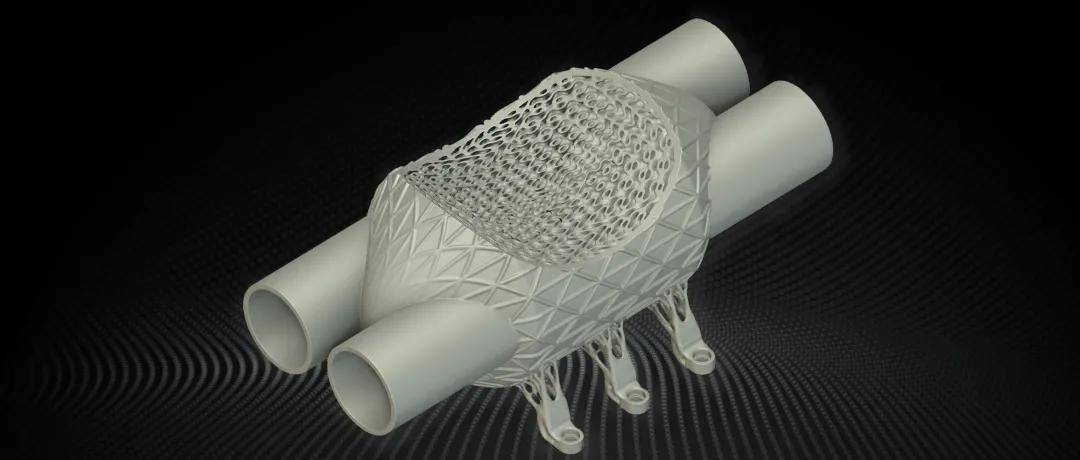
VoxelDance Additive, the Chinese 3D printing software developer, has released a new thermal management design module for metal additive manufacturing, centered on an implicit modeling workflow. The module enables parametric generation of TPMS lattice structures, field-driven design based on thermal and stress loads, and efficient handling of ultra-complex models that bog down traditional CAD systems. It also integrates design-to-print preparation in a single pipeline, reducing data conversion steps for heat exchangers, cold plates, and other high-performance thermal structures. The announcement, published May 13, 2026, targets the growing demand for additively manufactured thermal management components in defense, aerospace, and high-power electronics applications.
This release places VoxelDance in direct competition with established design-for-additive-manufacturing (DfAM) software providers such as nTopology, which pioneered implicit modeling for lattice and TPMS structures, and Autodesk's Fusion 360 with its generative design capabilities. The module addresses a specific bottleneck: as metal LPBF and green-laser copper printing mature for thermal applications, the design workflow - not the hardware - has become the limiting factor for iteration speed. VoxelDance's approach mirrors the broader industry shift toward implicit modeling, which avoids the file-size explosion and editing lag of boundary-representation CAD when handling millions of lattice cells. The company's position as a Chinese software vendor also aligns with the localization pattern seen across the AM supply chain, where domestic tools increasingly match Western capabilities while integrating local service and material references.
For engineering teams designing liquid-cooled heat exchangers or conformal cooling channels for defense and aerospace programs, this module reduces the practical barrier between simulation-driven optimization and printable geometry. The key execution risk for VoxelDance is whether the implicit modeling engine can match the robustness of nTopology's kernel on production-scale assemblies, and whether the company can build the qualification references that defense primes require before adopting new design tools. Users should evaluate the module's ability to export directly to LPBF build preparation software without geometry degradation, as that handoff remains the most common failure point in implicit-to-print workflows.
Topics