Zhongzhi Laser acquires Jiangxi Xinyu Laser, establishes precious metal 3D printing service center in Fuzhou
Hardware
Originally reported by SOHU
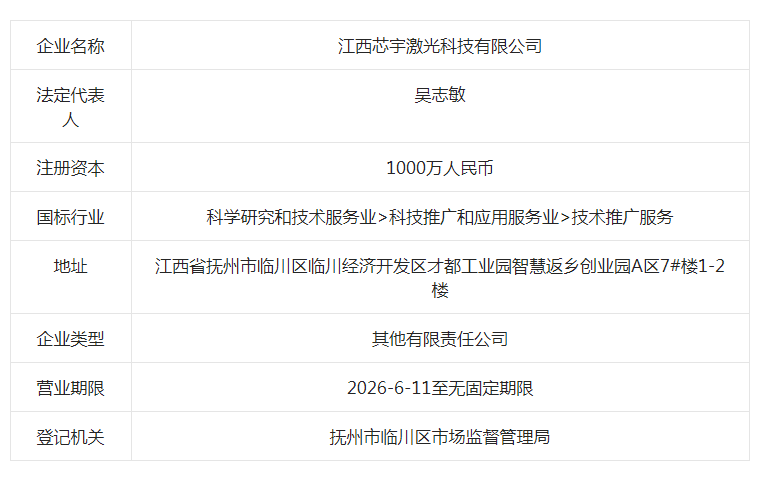
Shenzhen-based Zhongzhi Laser Technology Group has completed its acquisition of a controlling stake in Jiangxi Xinyu Laser Technology Co., Ltd., a newly registered entity in Fuzhou, Jiangxi Province. The company, registered on June 11, 2026, with registered capital of 10 million RMB, is 51% owned by Zhongzhi Laser and 49% by Jinboli (Shenzhen) Precious Metal Technology Co., Ltd. The facility, located in the Linchuan Economic Development Zone, will serve as a regional precious metal 3D printing service center, targeting the jewelry and precision hardware markets across central China. Zhongzhi Laser brings its full suite of self-developed LPBF and laser cladding equipment, control systems, and digital software to the partnership, while Jinboli contributes precious metal processing expertise.
This move extends Zhongzhi Laser's geographic footprint beyond its Shenzhen R&D headquarters into central China, establishing a "Shenzhen R&D + Fuzhou manufacturing" model that shortens prototyping and delivery cycles for customers in Jiangxi, Hunan, Hubei, and Anhui. The deal reflects the broader Chinese localization arc pattern, where domestic AM players build regional service networks to lower adoption costs for traditional manufacturing clusters. By combining laser equipment manufacturing with precious metal 3D printing services, Zhongzhi Laser is targeting the jewelry and precision hardware verticals - segments that have seen growing adoption of metal binder jetting and LPBF for custom, high-value production. The partnership also includes plans to collaborate with local technical colleges for workforce training, addressing the talent gap that often limits AM adoption in inland industrial regions.
For Zhongzhi Laser, the practical challenge is execution: integrating Jinboli's precious metal processing workflows with its own equipment ecosystem, and demonstrating that the Fuzhou center can achieve the throughput and quality consistency required by jewelry and hardware customers. The company must also prove that its self-developed control systems and materials can compete on cost and reliability with established Chinese AM platforms from BLT and Farsoon, which already have broader service networks. This is a measured regional expansion, not a market-shaking move - the real test will be whether the center can convert local manufacturers from trial runs to repeat production orders.
Topics