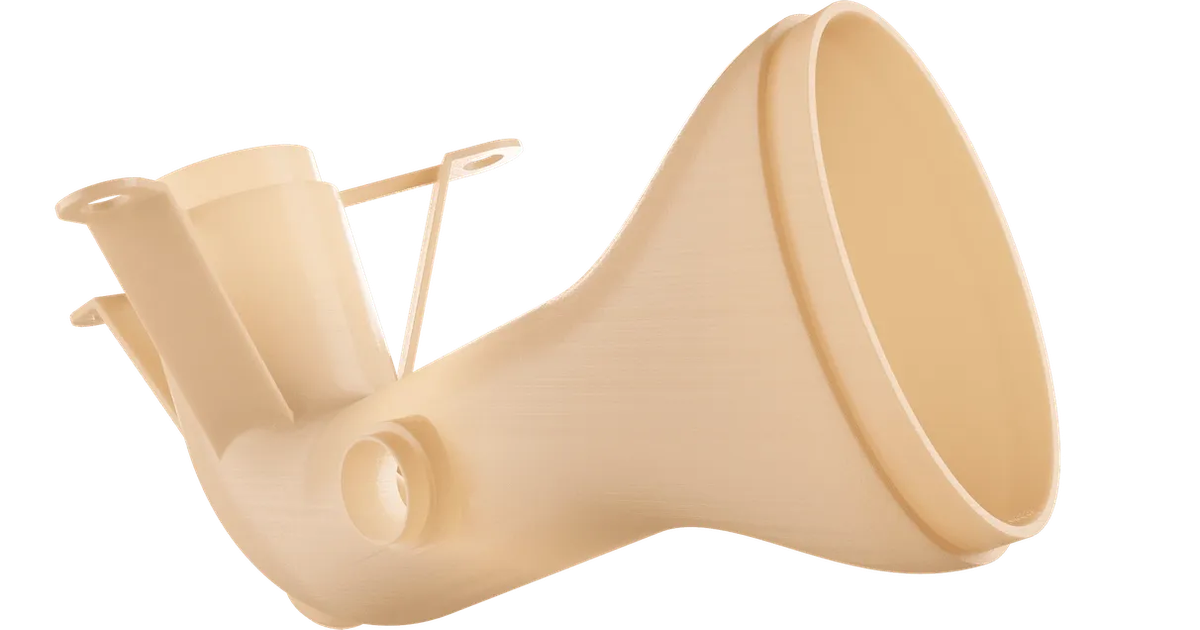
Airbus qualifies ROBOZE ARGO 500 HYPERSPEED platform with ULTEM 9085 filament for flight-ready secondary structural parts

Hardware
Originally reported by TCT Magazine
Airbus has qualified ROBOZE's ARGO 500 HYPERSPEED material extrusion platform paired with standard ULTEM 9085 filament for production of flight-ready secondary structural parts. The approval covers mechanical performance, flame retardancy, repeatability, process control and traceability, and notably relies on off-the-shelf ULTEM 9085 rather than a dedicated proprietary formulation developed for Airbus alone. Airbus said the qualification validates ROBOZE's manufacturing process, thermal management architecture and production controls across ARGO 500 HYPERSPEED Mission Ready systems, meaning parts can be produced to consistent, repeatable specification across distributed sites rather than a single certified machine. ROBOZE founder and CEO Alessio Lorusso said additional company materials are now moving through qualification for further aerospace applications beyond this first approval.
For polymer material extrusion, qualifying a system-and-material pairing rather than a single part is the harder and more valuable step, since it lets Airbus reuse the qualified process across future part families instead of re-running qualification for each new component. ULTEM 9085, a flame-retardant PEI thermoplastic, is already the material most associated with Stratasys FDM systems in cabin interior and ducting applications at Airbus and Boeing, so this qualification puts ROBOZE's high-throughput ARGO line into a slot that has effectively been Stratasys territory for over a decade. ROBOZE frames the result around distributed manufacturing: certified parts built where and when needed, rather than centralized production feeding a global supply chain. That framing matters more for secondary structural parts, where flight-critical but non-primary-load requirements make distributed, on-demand production commercially realistic in a way primary structures are not.
The practical payoff for Airbus is reduced procurement complexity and inventory carrying cost once a process, not just a part number, is qualified. For ROBOZE, the open questions are which part families move through production first, how quickly the pipeline of additional qualified materials converts to actual purchase orders, and whether this expands into primary structural or higher-temperature material qualifications over time.
Topics