BAE Systems Hägglunds deploys Microfactory for on-demand WAAM battlefield spare parts

Hardware
Originally reported by edrmagazine.eu
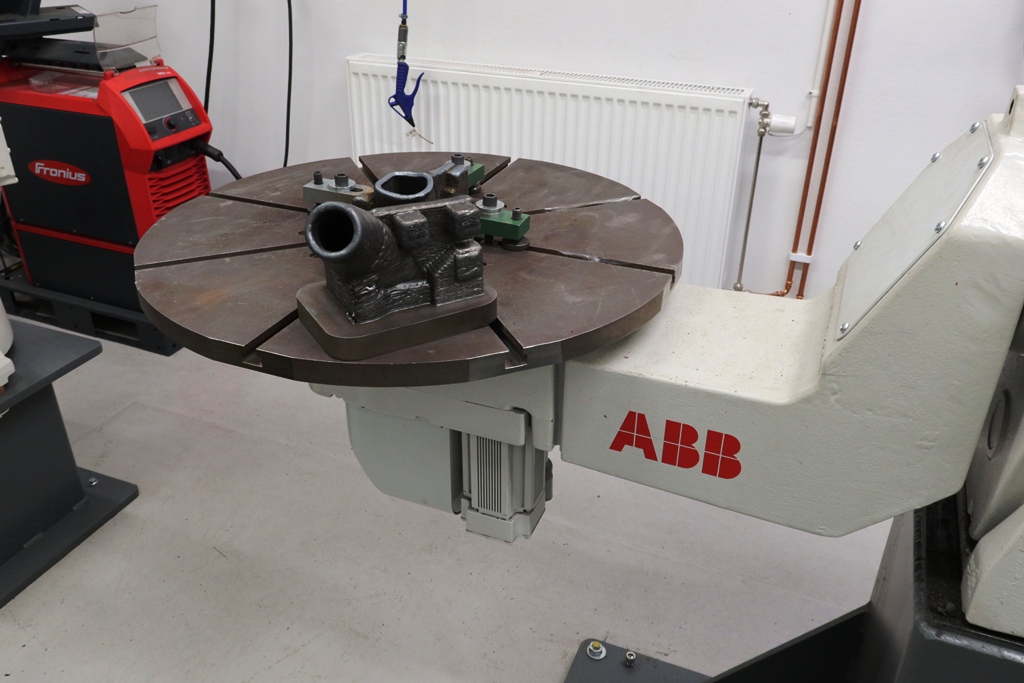
BAE Systems Hägglunds has delivered its first Microfactory solution to the Swedish Defence Materiel Administration (FMV) in Q1 2026, a mobile production system designed to produce qualified and certified spare parts on the battlefield using Wire Arc Additive Manufacturing (WAAM). The system, developed over ten years in Örnsköldsvik in cooperation with Saab, FMV, and University West (Högskolan Väst), consists of a six-axis robot with a two-axis turntable capable of depositing 2.5–5 kg of metal per hour, producing parts up to one meter long and 300 kg. A five-axis post-processing machine brings WAAM-produced components to design tolerances and surface finish. The company provides Technical Data Packs - qualified recipes including AM and post-processing instructions - that allow military personnel to produce spares without OEM intervention. The first verified spare part was produced in 2023, and the system is now undergoing field testing with Swedish forces.
This deployment represents a concrete operationalization of the defense vertical's politically accelerated AM adoption wave, fitting the aerospace qualification grind pattern adapted for military logistics. Unlike typical AM field-deployment concepts that remain experimental, BAE Systems Hägglunds has delivered a production-capable system with certified recipes, a NATO-aligned digital repository (RAPID-e) for part data, and a clear IP-protection model. The microfactory directly addresses the critical battlefield logistics gap where advanced spare stocks are depleted and supply chains are severed, offering a path to maintain fleet availability without replacing traditional stockpiles. The WAAM process, while lower-resolution than LPBF, is well-suited for large, structurally forgiving parts like brackets, mounts, and armor components where deposition rate matters more than fine detail. This positions the microfactory as a complementary capability to existing spare-part pipelines rather than a replacement.
For defense logistics planners, the practical question is not whether WAAM can produce parts - it clearly can - but whether the Technical Data Pack qualification pipeline can scale across multiple vehicle platforms and part numbers without becoming a bottleneck. BAE Systems Hägglunds must now demonstrate that the RAPID-e database can accommodate contributions from multiple OEMs while maintaining certification integrity, and that the training burden for field operators remains manageable. The Swedish customer's field testing will determine whether this concept moves from a funded pilot to a procurement program.
Topics