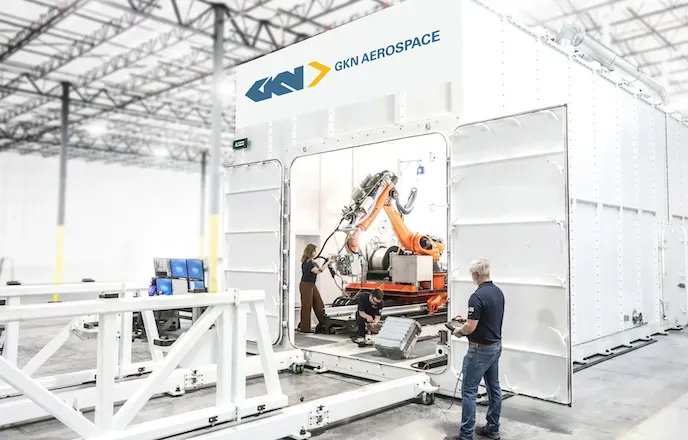
GKN Aerospace launches $8.4M TITAN-AM titanium additive manufacturing project with US Air Force Research Laboratory

Hardware
Originally reported by 新浪财经
GKN Aerospace has initiated the TITAN-AM (Near-Net Additive Manufacturing of Titanium Alloys - Industrialization and Technology Advancement) project, a $8.4 million collaboration with the US Air Force Research Laboratory (AFRL). The project targets the industrialization of wire-based laser metal deposition (LMD-w) for large titanium alloy aerospace structural components. Work will be conducted at GKN Aerospace's Global Technology Center in Fort Worth, Texas, a hub for US defense and aerospace advanced manufacturing innovation. The program focuses on five key areas: large-scale titanium part process development, building reliable material datasets, advanced simulation methods for optimized design and manufacturing, non-destructive testing tailored for AM, and technology demonstrations on selected structural components.
This project directly addresses the aerospace qualification grind - the 10-15 year journey from concept to embedded production in critical applications. GKN Aerospace brings over 20 years of AM experience and already produces additively manufactured primary structural components for in-service aircraft, including fan case mounting rings for Pratt & Whitney's geared turbofan engine family used on the Airbus A220 and Embraer E195-E2. The TITAN-AM initiative targets the persistent gap in large-format metal AM for aerospace: while LPBF has matured for smaller, complex parts, wire-DED for large titanium structures remains at a lower technology readiness level. By focusing on LMD-w, GKN and AFRL are addressing a specific production bottleneck - reducing material waste, shortening lead times, and increasing design freedom for large airframe components that currently require extensive machining from forged billets.
For GKN Aerospace, the practical challenge is translating this R&D into qualified production programs within defense procurement timelines. The company already has the facility, the customer relationship with AFRL, and the production reference base from its fan case rings. The next step is demonstrating that LMD-w can meet the certification requirements for primary flight-critical structures, not just secondary components. If successful, this could open a new production pathway for large titanium parts in next-generation fighter and transport aircraft programs.
This article is an AI-assisted rewrite of the linked source report. Facts originate from the source; phrasing is AMPulse's. Use Read Original below to verify, or Report an issue if something is wrong.