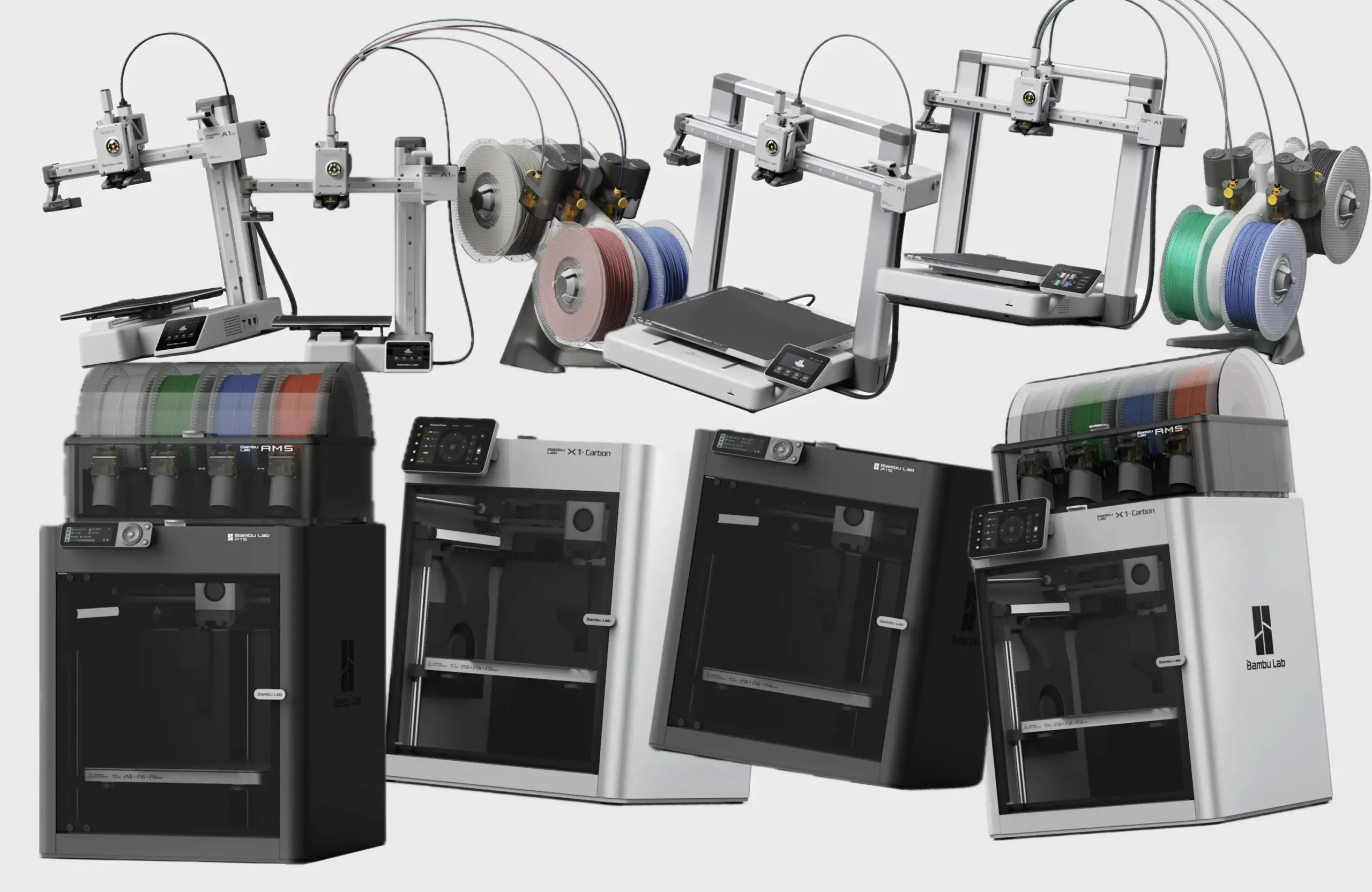
Bambu Lab has officially discontinued the P1P FDM 3D printer as of February 10, 2026, fueling speculation regarding a forthcoming hardware refresh.

Hardware
Originally reported by TechKrams
Bambu Lab has officially discontinued the P1P FDM 3D printer as of February 10, 2026, fueling speculation regarding a forthcoming hardware refresh. While the company maintains the P1S in its active portfolio, the retirement of the P1P suggests a strategic transition toward updated FDM platforms that integrate advanced multi-material handling capabilities. Recent technical developments, specifically the H2S and H2C systems featuring automated hotend-swapping mechanisms, indicate the company is prioritizing higher throughput and material efficiency. These developments occur within the context of a highly competitive desktop FDM market where manufacturers are increasingly adopting tool-changer and multi-nozzle architectures to improve productivity.
The discontinuation of the P1P marks a clear effort by the Shenzhen-based company to streamline its product hierarchy and address the growing demand for more sophisticated, automated material management. As competitors like Prusa Research and Creality expand their own multi-material and high-speed offerings, Bambu Lab faces pressure to maintain its market share in the prosumer and maker segments. The company currently occupies a dominant position in the high-speed FDM hardware sector, but the need to reduce material waste during multi-color printing remains a primary technical hurdle for its next generation of machines. The current market trend favors systems that offer higher levels of automation and reduced manual intervention for complex, multi-material prints.
Bambu Lab is likely preparing to replace the P1P with a model that incorporates more advanced automation features to compete with current tool-changer systems. Users should anticipate a focus on improved material efficiency and potentially a more distinct separation between entry-level and professional-grade hardware. The company must now demonstrate that its next iteration can maintain its signature print speeds while offering more reliable multi-material performance than its current AMS-based solutions.
Topics