Bambu Lab releases BambuStudio beta with Texture-to-Color Painting feature

Hardware
Originally reported by Fabbaloo
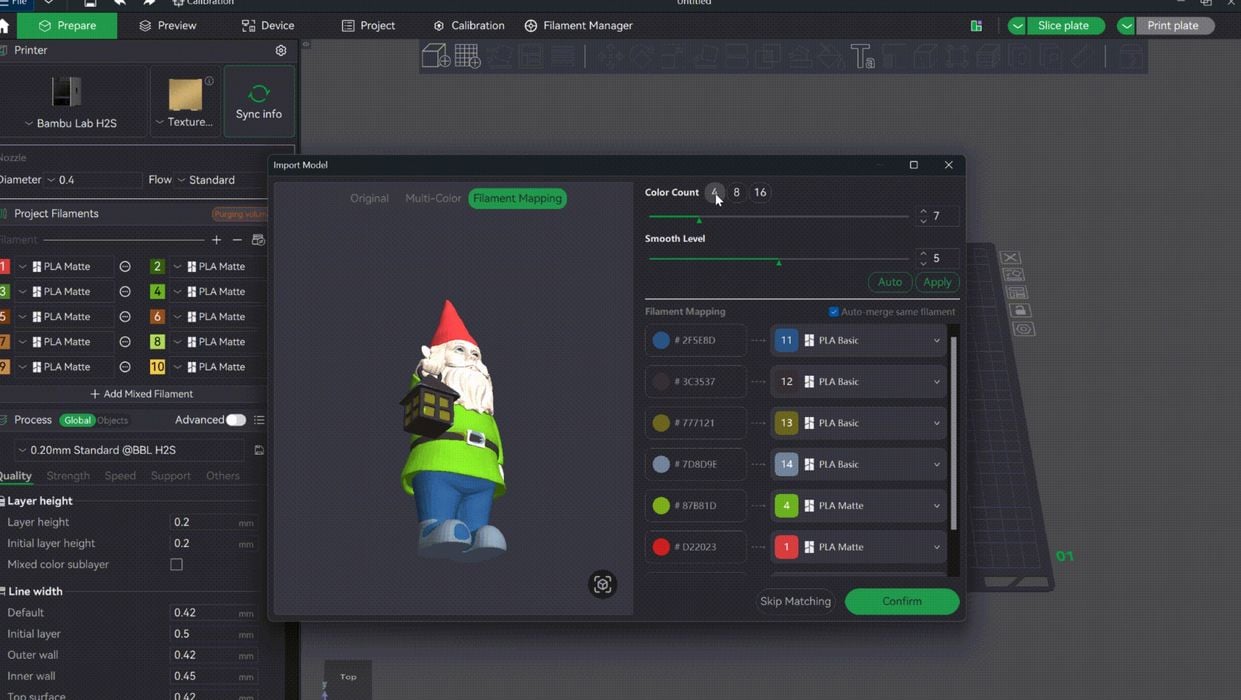
Bambu Lab has released BambuStudio 2.7 beta, introducing a Texture-to-Color Painting feature that automates the application of color to imported 3D models. The tool reads external texture maps and converts them into multi-color print instructions, supporting palettes of 4, 8, or 16 colors corresponding to the number of AMS units attached. The update also adds per-part gradient effects and a critical fix that preserves painting data when a part is cut within the slicer. The beta is available via GitHub, with no production release date announced.
This feature addresses a persistent friction point in desktop polymer AM: the manual labor of painting multi-color models. For users with Bambu Lab's H2C and Vortek waste-free system, the combination reduces material waste from color-swap purging, making detailed color prints more economical. The move fits a broader pattern in the polymer-MEX segment where software workflow improvements, not hardware speed, increasingly determine user satisfaction and adoption. Bambu Lab continues to differentiate through integrated hardware-software ecosystems, competing directly with Prusa Research and UltiMaker on ease-of-use rather than raw build volume or material breadth.
For Bambu Lab, the practical test is whether Texture-to-Color Painting handles complex texture maps reliably across diverse user models without manual cleanup. Users should evaluate the beta on a non-critical print first, as automated color mapping can produce unexpected results on models with non-standard UV layouts. The per-part gradient fix is a genuine quality-of-life improvement for anyone who has lost hours of painting work to a cut operation.
Topics