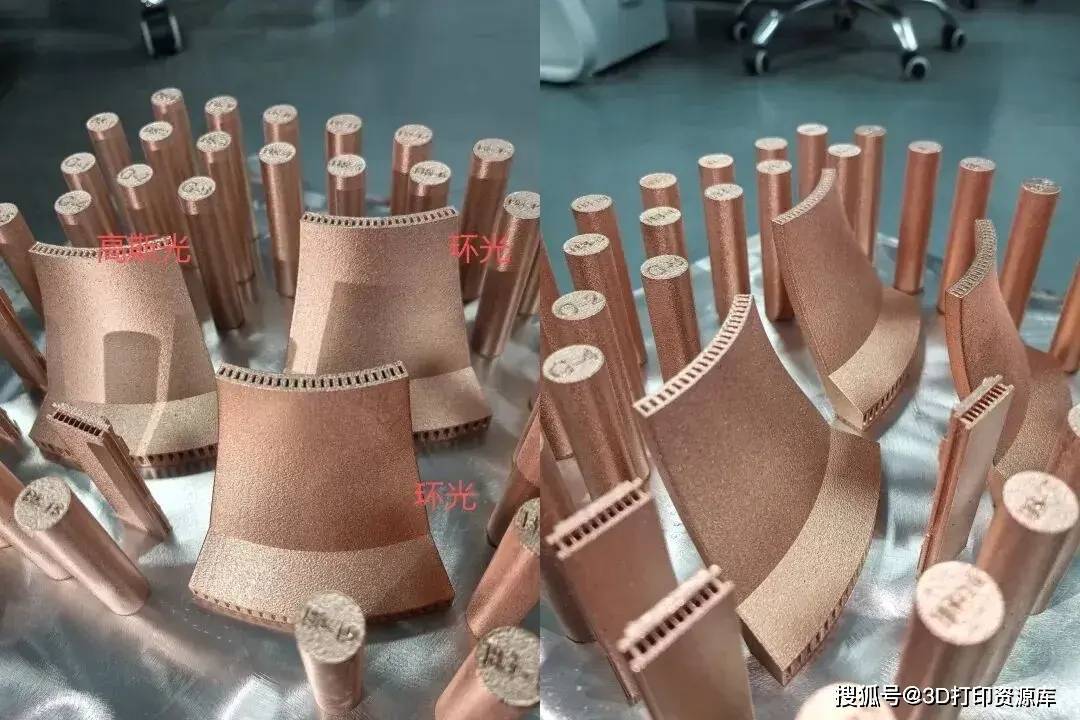
Beifeng Intelligent launches 3D-printable CuCrZr copper alloy powder with 350 W/(m·K) thermal conductivity and 99.9% density

Hardware
Originally reported by 3D打印资源库
Beifeng Intelligent, a Chinese metal additive manufacturing materials and systems company, has released a new CuCrZr copper alloy powder optimized for laser powder bed fusion (LPBF). The material achieves a thermal conductivity of 320–350 W/(m·K), a printed density of 99.9%, and tensile strength of 540 MPa with 15% elongation. The powder is produced using Beifeng's proprietary GHA atomization process, which reaches 3,000°C instantaneously to reduce chromium segregation and maintain zirconium content, while keeping oxygen below 200 ppm and sphericity above 95%. The company operates six production lines at its powder preparation center in Shanxi province and has developed dedicated print parameters for its own red-wavelength LPBF machines.
This launch targets the growing demand for high-thermal-conductivity materials in heat exchangers, induction coils, and liquid-cooled cold plates for electronics and energy systems. Copper alloys have historically been difficult to process via LPBF due to high reflectivity and thermal diffusivity, and most commercial offerings have struggled with consistent chromium distribution and batch-to-batch repeatability. Beifeng's GHA process addresses a known materials qualification discipline gap in the copper AM supply chain, where component segregation has limited adoption in production environments. The company positions itself as a vertically integrated supplier - from powder production to printer hardware to process parameters - which reduces qualification friction for end users in thermal management applications.
For buyers evaluating CuCrZr for production, the key differentiator will be batch consistency and print process stability rather than peak thermal conductivity numbers alone. Beifeng must demonstrate that its GHA powder delivers repeatable mechanical and thermal properties across multiple production lots, and that its red-wavelength printer ecosystem can maintain the required melt-pool control at scale. This is a solid materials-engineering update that fills a specific gap in the copper LPBF workflow, but it remains to be seen whether the company can build the customer references and qualification data packages that thermal-management OEMs require before committing to serial production.
Topics