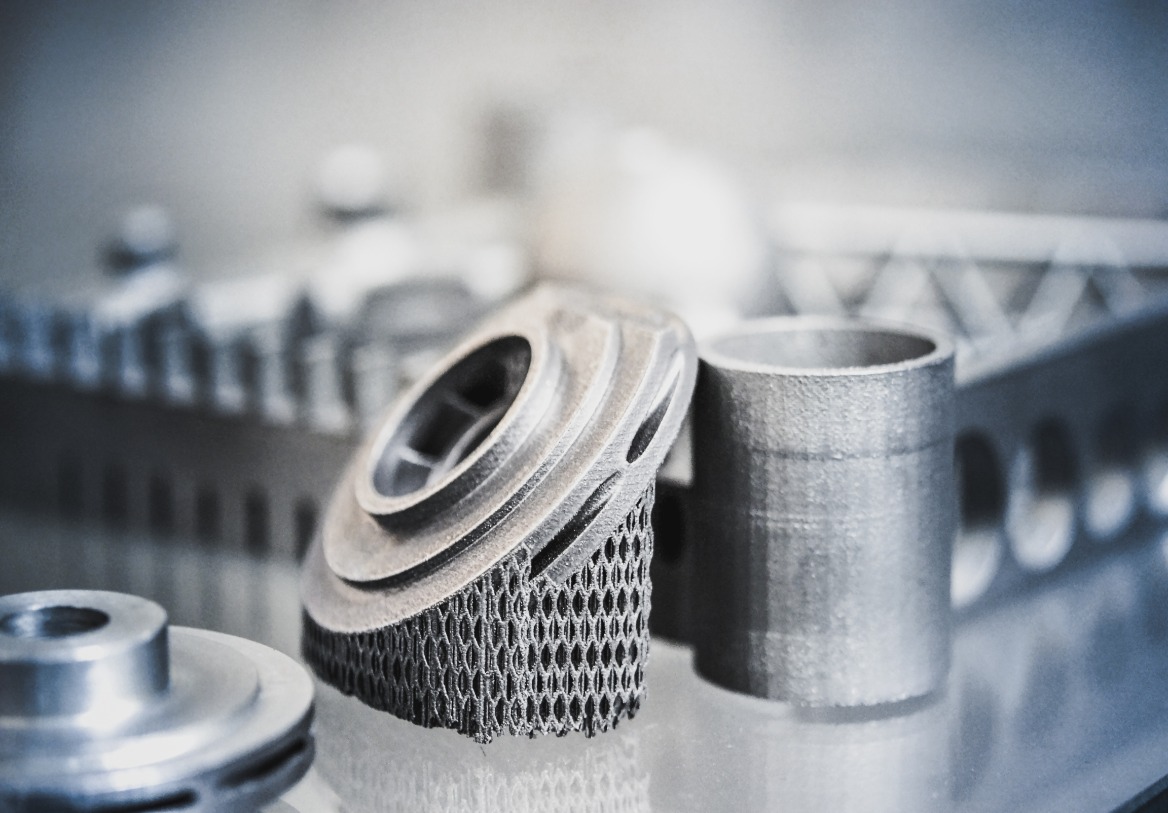
Charles Darwin University leads a new research project funded by the Queensland Defence Sciences Alliance to develop Nickel Aluminium Bronze (NAB) naval propulsion components using...
Originally reported by Australian Manufacturing
Charles Darwin University leads a new research project funded by the Queensland Defence Sciences Alliance to develop Nickel Aluminium Bronze (NAB) naval propulsion components using SPEE3D cold spray additive manufacturing. The project involves collaboration with James Cook University and the Australian Institute of Marine Science to test 3D-printed parts in simulated Pacific tropical seawater conditions. The initiative aims to replace traditional casting methods for critical marine parts like propellers and valves, which are currently difficult to source domestically in Australia. Key personnel include CDU Research Professor Kannnoorpatti Krishnan, SPEE3D CTO Steven Camilleri, and JCU Distinguished Professor Peter Junk.
This project addresses the critical supply chain vulnerability of Australian maritime sustainment by localizing the production of corrosion-resistant NAB components. While traditional casting remains the standard for high-performance marine alloys, the use of cold spray technology offers a deployable alternative for on-demand repair and maintenance in remote operating environments. The integration of the Australian Institute of Marine Science SeaSim facility provides a controlled environment to validate the microstructure and corrosion resistance of printed parts against qualified cast equivalents. This effort aligns with broader regional initiatives to enhance sovereign industrial capability in the Indo-Pacific theater.
For industrial end-users, the success of this project hinges on demonstrating metallurgical equivalence between cold spray-deposited NAB and traditional cast alloys. If the testing confirms that the printed microstructure maintains structural integrity in high-salinity, variable-temperature environments, it provides a viable pathway for field-deployable maintenance. Stakeholders should focus on the forthcoming data regarding alloy composition and long-term corrosion performance as the primary metrics for qualification in defense applications.
This article is an AI-assisted rewrite of the linked source report. Facts originate from the source; phrasing is AMPulse's. Use Read Original below to verify, or Report an issue if something is wrong.
Topics