Chengdu Silike Technology discusses TPU filament stability limits for scalable 3D printed footwear at TCT Asia 2026
Originally reported by OpenPR
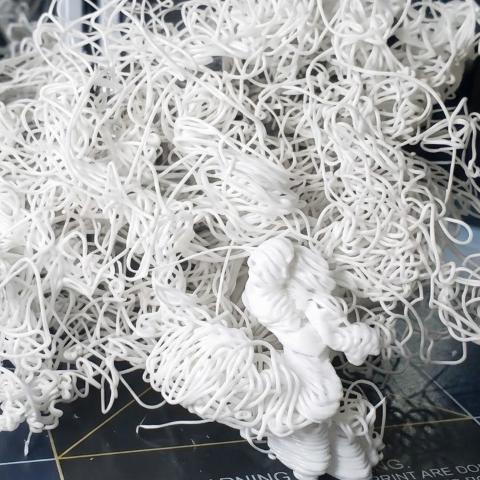
Chengdu Silike Technology Co., Ltd., a Chinese materials engineering firm, presented its analysis of TPU filament stability bottlenecks for scalable 3D printed footwear at TCT Asia 2026, held March 17-19 at the National Exhibition and Convention Center in Shanghai. The company identified four recurring production failures in long-run TPU extrusion: stringing causing surface defects, nozzle die build-up leading to frequent downtime, unstable extrusion resulting in diameter inconsistency and yield loss, and glossy surface finish that fails premium footwear aesthetics. Silike positioned its Si-TPV (silicone-based thermoplastic vulcanizate elastomer) modification technology as a material-level solution to these problems, claiming improved melt flow stability, reduced friction, matte surface capability, and low Shore A softness without secondary coating.
The significance of this presentation lies in its timing: the 3D printed footwear segment is moving from prototyping into early-stage commercialization, as evidenced by concurrent announcements at TCT Asia from Wanhua Chemical × Li-Ning (Wudao Future shoe using TPU + supercritical CO2 foaming, which saw temporary stock shortages) and PEAK (3D NextFit fully printed TPU shoes with multi-hardness zones of 85A and 90A). The competitive question has shifted from "can you print TPU?" to "can you scale TPU printing reliably?" This mirrors the broader polymer AM industry's transition from process optimization to material engineering, particularly in the polymer-mex (FDM/FFF) segment where filament consistency directly determines production viability. Silike's Si-TPV approach targets a specific gap: existing TPU filaments optimized for short demonstrations fail under continuous production cycles, creating a bottleneck for footwear brands attempting serial production.
For TPU filament manufacturers and footwear OEMs evaluating production-scale AM, the practical takeaway is that machine tuning alone will not solve yield problems in continuous TPU extrusion. Material-level modification-whether through Si-TPV or competing elastomer alloying approaches-is becoming a prerequisite for reliable production. Silike's next step is to demonstrate Si-TPV modified TPU filaments running at production volumes with documented yield rates and downtime metrics, not just exhibition-floor samples. Buyers should request long-run stability data before committing to any TPU material for serial footwear production.
Topics