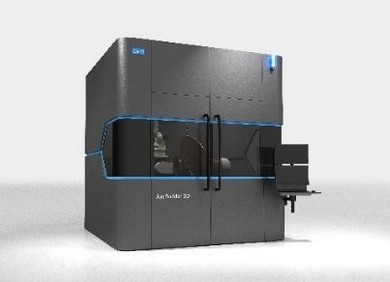
Daihen enters metal 3D printing with wire-arc DED process, targets 1-meter-plus ship propellers in 2026

Hardware
Originally reported by SEKAPRI
Daihen, the Osaka and Tokyo-based heavy-electrical-equipment maker, has entered the metal 3D printer market with a machine built on wire-arc additive manufacturing, using electric arc welding to melt and deposit metal wire layer by layer. Per Nikkei reporting, the company is refining deposition accuracy and aims to apply the process this year to ship propellers exceeding one meter in diameter and to heat exchangers. Daihen says the arc-welding approach builds roughly 10 times faster than laser or electron-beam powder-bed systems and cuts equipment cost to under half, since it avoids both laser optics and metal powder feedstock. Planned applications extend to rocket nozzles and fuel tanks alongside construction and shipbuilding use cases.
This is a directed energy deposition play, not a powder-bed one, and it lands in a segment where build-rate and part-size economics matter more than surface finish. Powder-bed laser fusion still owns the qualification-heavy, high-precision end of metal AM: aerospace brackets, medical implants, dental components. Wire-arc DED instead targets the large, thick-walled parts that PBF struggles to produce economically, positioning Daihen against WAAM specialists already serving marine, energy, and heavy-industrial customers. Daihen's advantage is vertical: it already holds the domestic top share in arc welding machines and welding robots, so it is extending an existing hardware and controls base into a new build format rather than starting from a research prototype. That matters in a market where DED vendors often struggle to move from demo cells to repeatable production; Daihen already has the welding-robot manufacturing and service infrastructure that repeatability requires.
The near-term test is accuracy and repeatability at scale, not the underlying physics, which is well understood. Propellers and heat exchangers are a sensible proving ground: large, tolerant of some post-machining, and squarely in Daihen's existing marine and industrial customer base. Buyers evaluating this should ask for demonstrated dimensional consistency on parts near the stated 1-meter class before treating the cost claims as production-ready.
Topics