Dash-CAE showcases LFAM-tooled carbon monocoque demonstrator at Goodwood, cutting mold-to-chassis lead time to days

Service
Originally reported by 3Druck
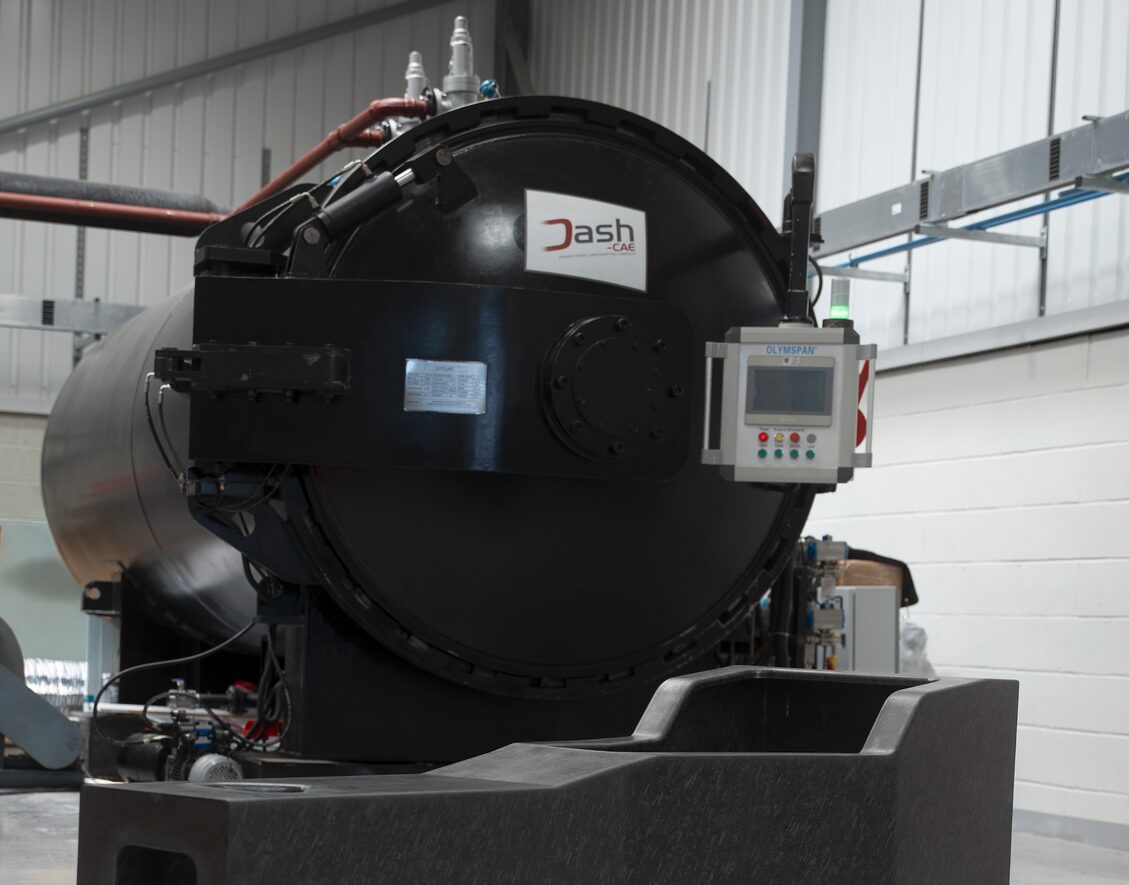
Dash-CAE, the British engineering and composites specialist, unveiled a single-seat technology demonstrator with a carbon monocoque at the 2026 Goodwood Festival of Speed. The chassis was built using large-format additive manufacturing to print molds, patterns, and production tools, which were then used to process a quasi-isotropic sheet moulding compound. Two proprietary LFAM materials underpin the process: Dastrude100 for models and fixtures, and Dastrude165 for directly printed, Class-A surface production tools rated for repeated thermal cycling. CEO Tim Robathan said the approach, building on the earlier TR01 project, compresses the path from CAD model to complete chassis to a matter of days and coincides with Dash-CAE's move to a new, larger production facility.
The demonstrator sits squarely in the tooling layer of the composites value chain rather than the printed-part layer itself, a distinction that matters for how the news should be read. LFAM's proposition here is not printing the monocoque but replacing conventionally milled molds and patterns with printed tooling that can be reworked quickly for different racing series or vehicle classes without recutting a new toolset. That is a materially different economics case than direct metal or polymer part production: the payoff is tooling turnaround and low-volume flexibility, not per-part cost at scale. Competing LFAM tooling players (Thermwood, CEAD, Titan Robotics-class systems) have made similar claims in automotive and marine tooling; Dash-CAE's differentiation rests on its in-house material formulations tuned for thermal-cycling durability rather than the printer hardware itself, which is a more defensible position if the materials data holds up under production use.
For buyers evaluating LFAM tooling, the practical question is repeatability across thermal cycles and surface finish consistency batch to batch, not the headline lead-time figure from a single demonstrator. Dash-CAE has not disclosed cycle counts or tolerance data for Dastrude165 in this release, so the days-not-weeks claim should be treated as a capability showcase rather than a validated production benchmark until customer parts follow.
Topics