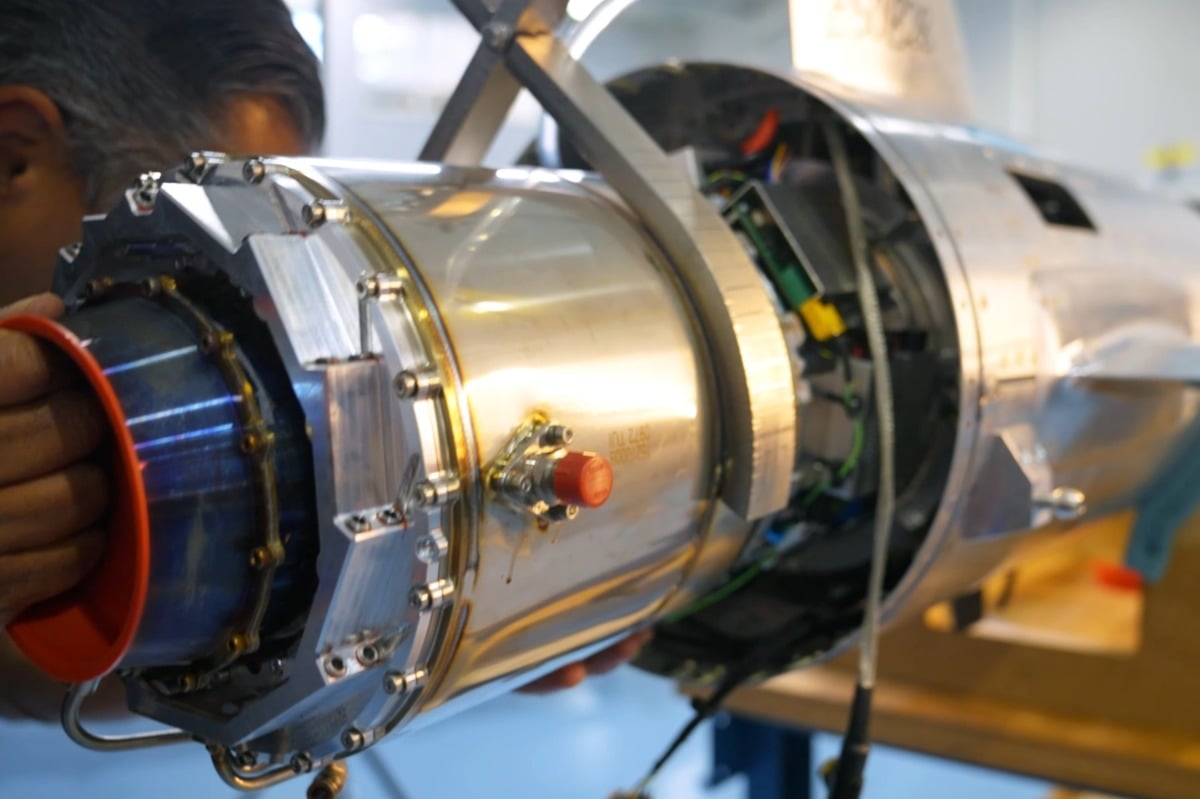
Destinus announces assembly of 1000th drone engine, marking a drone milestone

Hardware
Originally reported by weddings.lavenderhotels.co.uk
Destinus, the European aerospace startup, has announced the assembly of its 1,000th drone engine, a milestone the company and its investors are framing as proof of sovereign, mass-produced drone propulsion capability for the continent. The announcement comes amid a broader push by European defense tech firms to scale manufacturing capacity for unmanned systems, with Destinus positioning itself as a key supplier of turbojet and turbofan engines for military drones. The company has not disclosed specific engine specifications, materials used, or the exact timeline for reaching this production volume, but the press cycle has treated the number as a definitive signal of industrial readiness.
This milestone is a classic example of the volume-over-velocity trap that has historically misled defense tech reporting. Counting assembled units from a single design ignores the deeper structural dependencies that define true manufacturing sovereignty. The critical bottleneck for European drone propulsion is not assembly throughput but the supply chain for high-temperature ceramic bearings, rare-earth magnets, and specialized superalloy castings - components that remain heavily dependent on East Asian and Chinese suppliers. Without a materials base that can pivot to alternative sources or substitute alloys within weeks, a 1,000-engine inventory is a static stockpile, not a resilient production capability. The thermodynamic realities of small-scale turbojets further compound the problem: shrinking turbine engines creates efficiency losses from tip clearance, Reynolds number effects, and thermal soakback that demand expensive single-crystal superalloys or accept severely limited operational range and payload capacity.
From an engineering economics perspective, Destinus has demonstrated assembly-line discipline but has not yet proven supply-chain resilience or metallurgical flexibility. The real test will come when a trade route closes or a critical material becomes unavailable - can the company redesign its engine around alternative components within a quarter, or will production halt? For defense buyers evaluating Destinus as a supplier, the relevant metric is not the 1,000th engine on the shelf but the lead time to qualify a substitute bearing or a different superalloy casting. Volume without material sovereignty is just expensive inventory.
This article is an AI-assisted rewrite of the linked source report. Facts originate from the source; phrasing is AMPulse's. Use Read Original below to verify, or Report an issue if something is wrong.