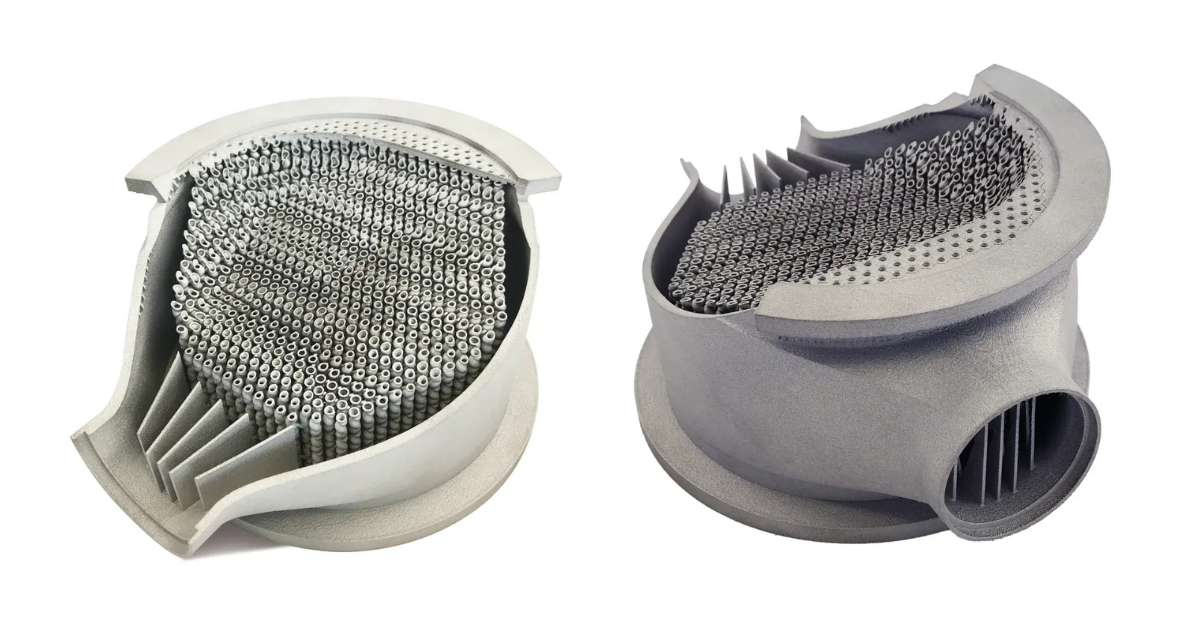
Elmet Technologies to 3D print hypersonic vehicle heat exchangers on 3D Systems' DMP Flex 350 Triple using C103 niobium alloy

Materials
Originally reported by TCT Magazine
Elmet Technologies, a refractory metals producer, is deploying 3D Systems' DMP Flex 350 Triple metal 3D printer to additively manufacture large heat exchangers for hypersonic vehicles. The program uses C103, a niobium-based alloy with hafnium and titanium additions built for extreme heat, following eight years of parameter development between Elmet and 3D Systems' Application Innovation Group on an earlier machine generation. Elmet R&D manager Scott Ohm said the company expects qualification within a couple of months and NASA 6030 certification a few months after that, with production targeted later this year. The DMP Flex 350 Triple runs three lasers inside a 350 x 350 x 350 mm build envelope with an oxygen level typically between 0 and 6 ppm, well under its 25 ppm ceiling.
C103 belongs to a class of refractory and reactive alloys that most LPBF systems struggle to process cleanly, since trace oxygen pickup degrades ductility and high-temperature performance, which is why hypersonic thermal and heat-exchanger parts have stayed a narrow niche for metal AM rather than a volume application. Elmet's position as an established refractory metals supplier, now layering an additive route onto its existing mill and forming capacity, lets it offer internal channel geometries that conventional machining cannot reach in this alloy family. The compressed qualification window Ohm describes is unusual for aerospace-grade metal AM, but it reflects parameter work already banked on 3D Systems' earlier platform rather than a new development cycle. The deployment also lands inside a broader wave of hypersonics and defense-adjacent AM investment moving faster than typical civil aerospace qualification timelines.
For buyers, the point worth tracking is whether Elmet converts this single-machine deployment into repeatable production capacity for hypersonic vehicle primes rather than a one-off qualification exercise. NASA 6030 certification, once secured, would give Elmet a documented quality baseline usable across multiple programs instead of one customer contract. The jointly developed C103 parameter set becomes a practical differentiator that competitors would need years to replicate.
Topics