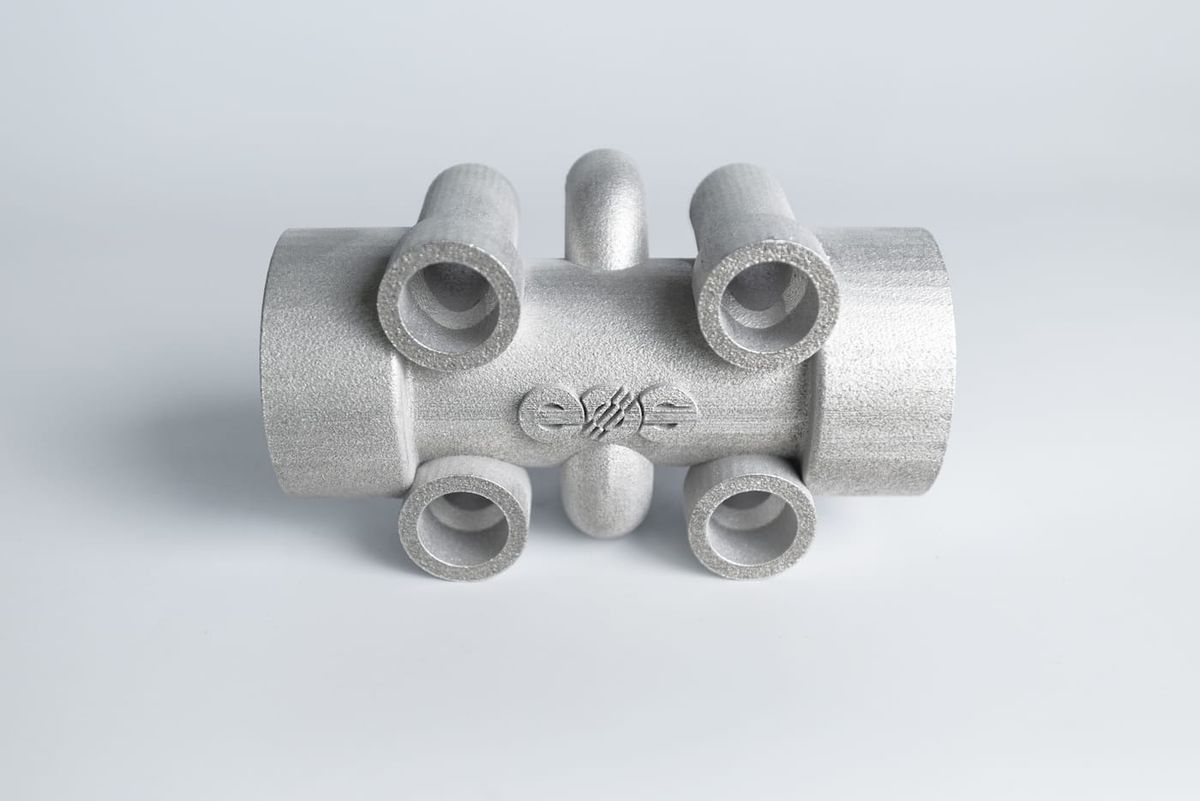
EOS partners with Constellium to expand aluminium alloy portfolio for LPBF systems

Hardware
Originally reported by TCT Magazine
EOS has announced a strategic partnership with Constellium to bring advanced aluminium alloys to its laser powder bed fusion (LPBF) platform. Effective August 2026, EOS will add Constellium's Aheadd CP1 to its materials portfolio, marketed as EOS Aluminium Constellium CP1, while EOS's existing Aluminium Al5X1 will be renamed EOS Aluminium Constellium Al5X1 and added to Constellium's alloy portfolio. The collaboration targets applications including heat exchangers, semiconductor heat sinks, and lightweight structural components. Joachim Zettler, CTO of EOS, described the move as setting a "new benchmark" for aluminium AM, with both companies committing to a long-term framework for next-generation alloy development.
This partnership addresses a persistent gap in metal AM: the limited availability of validated, production-ready aluminium alloys beyond the ubiquitous AlSi10Mg. Constellium's Aheadd CP1 offers improved processing characteristics and cost advantages for existing AlSi10Mg users, while Al5X1 provides high-strength, high-elongation, and anodisable properties for aerospace and motorsport. By embedding Constellium's metallurgical expertise into EOS's qualified materials ecosystem, the deal reduces qualification risk for end users and strengthens EOS's position against competitors like SLM Solutions and Trumpf, who also compete on aluminium process windows. The move reflects a broader industry shift where materials governance and validated parameter sets are becoming as important as machine hardware in capturing production volume.
For EOS, the partnership is a practical hedge against commoditisation of LPBF hardware. Rather than competing solely on build speed or laser count, EOS is locking in a differentiated materials pipeline that ties customers to its ecosystem through qualified process parameters. The real test will be adoption velocity: whether Constellium's alloys can displace entrenched AlSi10Mg in high-volume applications like automotive heat exchangers or consumer electronics thermal management. If the framework delivers repeatable, cost-competitive results across multiple customer sites, this could become a template for how materials suppliers and OEMs collaborate to accelerate industrial adoption.
Topics