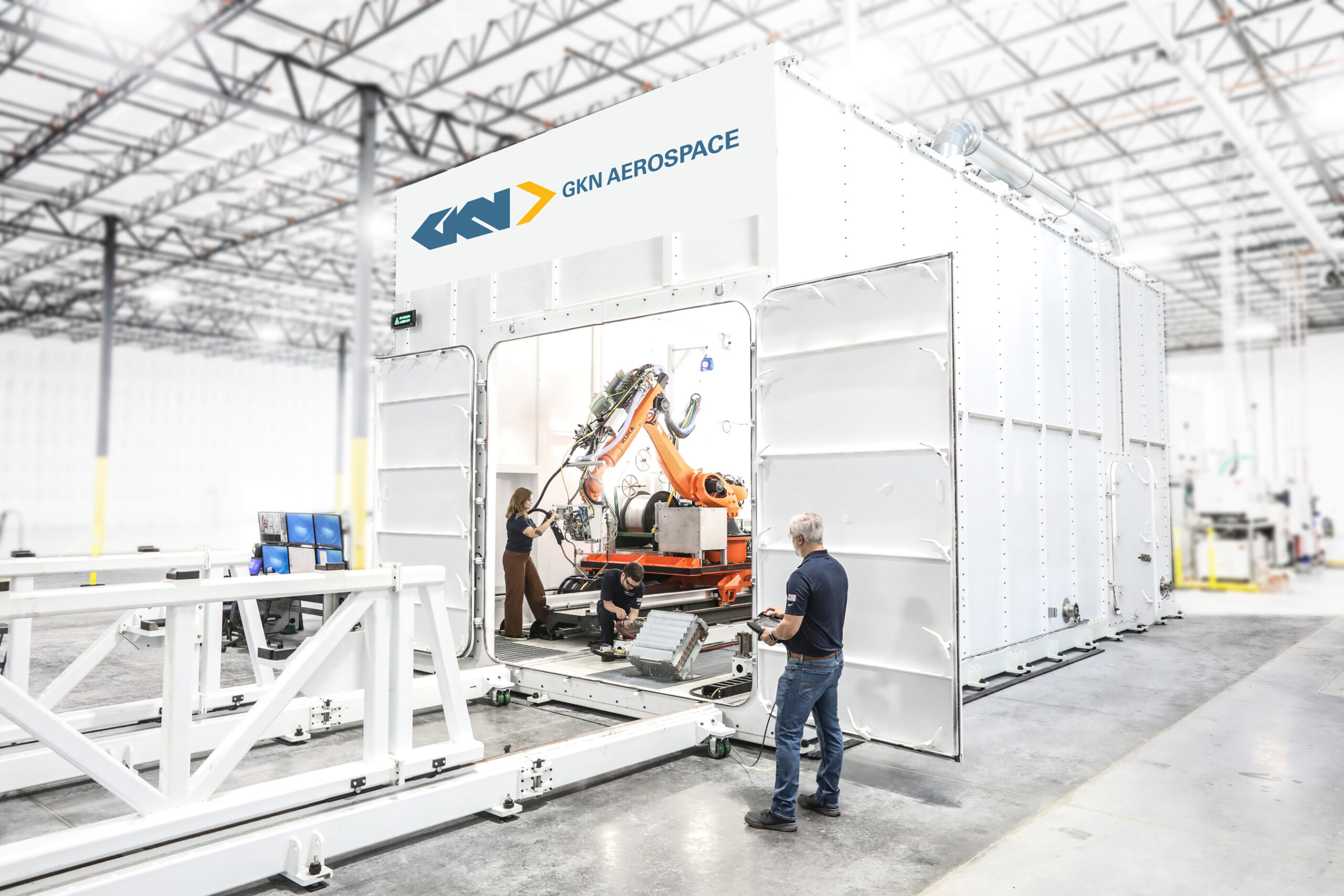
GKN Aerospace has launched the $8.4 million TITAN-AM (Titanium Industrialisation and Technology Advancement for Near-net Additive Manufacturing) programme in partnership with the U.S.

Hardware
Originally reported by avitrader.com
GKN Aerospace has launched the $8.4 million TITAN-AM (Titanium Industrialisation and Technology Advancement for Near-net Additive Manufacturing) programme in partnership with the U.S. Air Force Research Laboratory. Based at the company's Global Technology Centre in Fort Worth, Texas, the initiative focuses on industrializing Laser Metal Deposition with wire (LMD-w) for large-scale titanium aerostructures. The programme scope includes developing robust material datasets for Ti-6Al-4V, advancing simulation software for process optimization, and establishing non-destructive inspection protocols tailored to wire-based directed energy deposition.
This programme addresses the critical gap between laboratory-scale LMD-w capabilities and the stringent certification requirements for structural aerospace components. While LPBF remains the standard for complex, smaller-scale geometries, LMD-w offers significantly higher deposition rates and lower material waste for large, near-net-shape titanium parts. By focusing on material reliability and inspection standards, GKN Aerospace is positioning itself to replace traditional forging processes that currently suffer from long lead times and high buy-to-fly ratios in the defense and commercial aerospace sectors.
For GKN Aerospace, the success of TITAN-AM depends on moving beyond process demonstration to achieving repeatable, flight-certified mechanical properties. The focus on simulation and NDT is the correct technical priority, as these are the primary barriers to adopting wire-based DED for primary load-bearing structures. Stakeholders should track the transition of these processes from the Fort Worth testbed to actual production hardware within the next 24 to 36 months.
This article is an AI-assisted rewrite of the linked source report. Facts originate from the source; phrasing is AMPulse's. Use Read Original below to verify, or Report an issue if something is wrong.
Topics