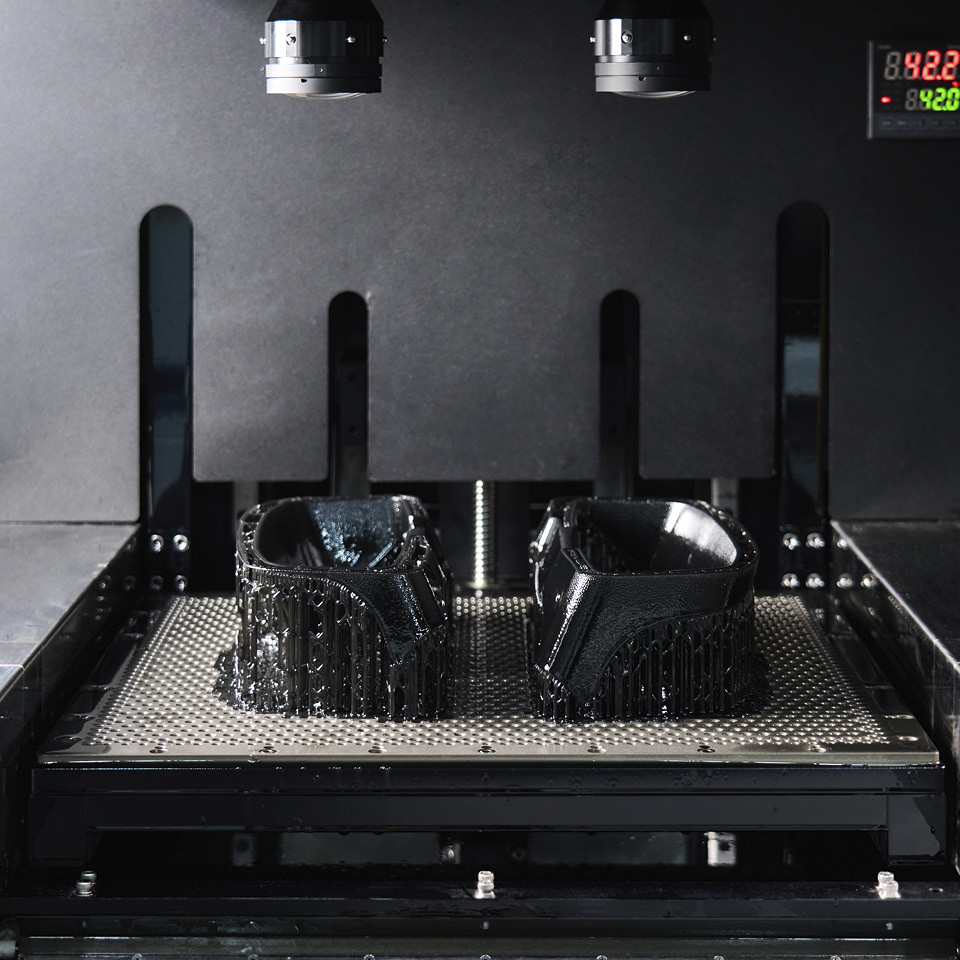
Hyundai Motor Group opens Additive Manufacturing Solution Center at Namyang R&D Center

Service
Originally reported by hyundaimotorgroup.com
Hyundai Motor Group has opened its Additive Manufacturing Solution Center (AMSC) at the Namyang R&D Center in June 2026, marking a 30-year milestone since the group first introduced a 3D printer in 1996. The AMSC is a fully integrated facility that covers the entire additive manufacturing workflow in-house: design for AM (DfAM), data preparation, printing, post-processing (support removal, heat treatment, surface finishing, CNC machining), and inspection (dimensional, functional, and material property testing). The center is equipped with a multi-process fleet including vat photopolymerization (VPP-SLA and VPP-DLP) for rapid prototyping, powder bed fusion (PBF-HSS and PBF-MJF) for polymer production-grade parts, metal PBF for high-precision metal components, and directed energy deposition (DED-WAAM) for large-format metal parts, enabling production across polymer and titanium alloys and other specialized materials.
The significance of the AMSC lies in its uncommon vertical integration of the entire AM value chain under one roof. In the automotive industry, most OEMs outsource segments of the AM workflow-design, printing, or post-processing-to specialized service bureaus or material suppliers. Hyundai’s decision to internalize all stages, from powder feedstock quality control (measuring particle size distribution and oxygen content) to final mechanical testing (tensile, impact, hardness, and density), signals a shift from using AM solely as a prototyping tool to treating it as a production-capable manufacturing discipline. This moves Hyundai closer to the operational model seen in aerospace, where OEMs like GE Aviation have embedded AM fully within their production engineering infrastructure. The center is intended to accelerate vehicle development cycles by replacing hard tooling for prototypes and test parts, enabling rapid design iterations, and supporting heritage vehicle restoration with on-demand parts. It also aims to serve the group’s broader mobility ambitions in robotics, advanced air mobility (AAM), and future mobility platforms where lightweight, complex geometries are critical.
From a practical standpoint, the AMSC’s most immediate impact will be on internal development velocity, not on supplier displacement. The center currently focuses on research, prototyping, tooling, and aftermarket service parts-not high-volume end-use production. To justify the investment, Hyundai must now demonstrate that the integrated workflow can consistently reduce time-to-market for new vehicle programs and lower the total cost of prototype iteration. For the broader AM industry, this facility adds to the growing evidence that automotive OEMs are transitioning from experimental labs to dedicated AM centers with in-house qualification capabilities, a pattern that, if executed well, could open a more reliable demand channel for metal powder suppliers and DfAM software vendors than speculative production contracts have delivered so far.
Topics