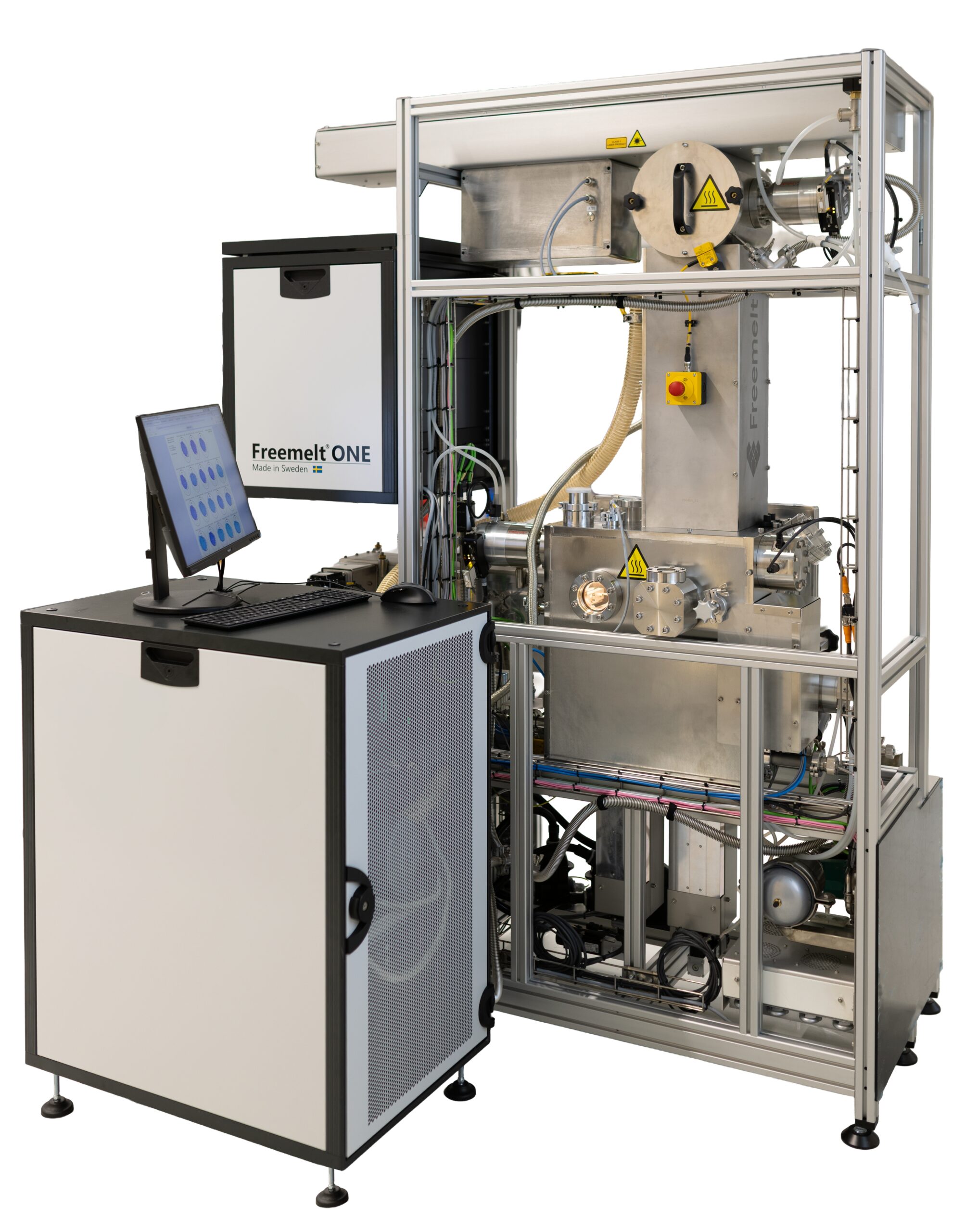
IHI Europe has expanded its additive manufacturing capabilities by acquiring a third Freemelt electron-beam powder-bed fusion (E-PBF) system, following the procurement of two previ...

Hardware
Originally reported by 3DPrint.com
IHI Europe has expanded its additive manufacturing capabilities by acquiring a third Freemelt electron-beam powder-bed fusion (E-PBF) system, following the procurement of two previous units by its parent company, IHI Corporation. This acquisition supports the Japanese engineering conglomerate's research into advanced Nickel-based superalloys and gamma titanium aluminides for high-temperature turbine applications. Dr. Rachel Jennings, Head of Advanced Technology Development at IHI Europe, noted that the open-architecture nature of the Freemelt platform is critical for experimenting with small-batch, novel alloy compositions that are otherwise difficult to process on closed-system machines.
The adoption of E-PBF by a major aerospace manufacturer like IHI highlights the increasing demand for open-platform hardware that allows for custom thermal management and beam control. While GE Additive (Arcam) has historically dominated the E-PBF market for aerospace, Freemelt is carving out a niche by providing researchers and material scientists with the flexibility to iterate on build parameters for brittle or high-performance materials. This shift toward open-source hardware is essential for the development of next-generation turbine components, where the ability to control grain structure and minimize thermal stress is a prerequisite for replacing heavier, traditional superalloys with lightweight alternatives like gamma titanium aluminides.
For IHI, the primary challenge remains the transition from small-batch material research to repeatable, certified production of flight-critical components. Users of E-PBF systems should focus on the correlation between open-parameter sets and the resulting metallurgical consistency required for aerospace certification. Freemelt must continue to demonstrate that its hardware can maintain the rigorous quality standards expected by Tier 1 aerospace suppliers as IHI scales its development efforts.
This article is an AI-assisted rewrite of the linked source report. Facts originate from the source; phrasing is AMPulse's. Use Read Original below to verify, or Report an issue if something is wrong.
Topics