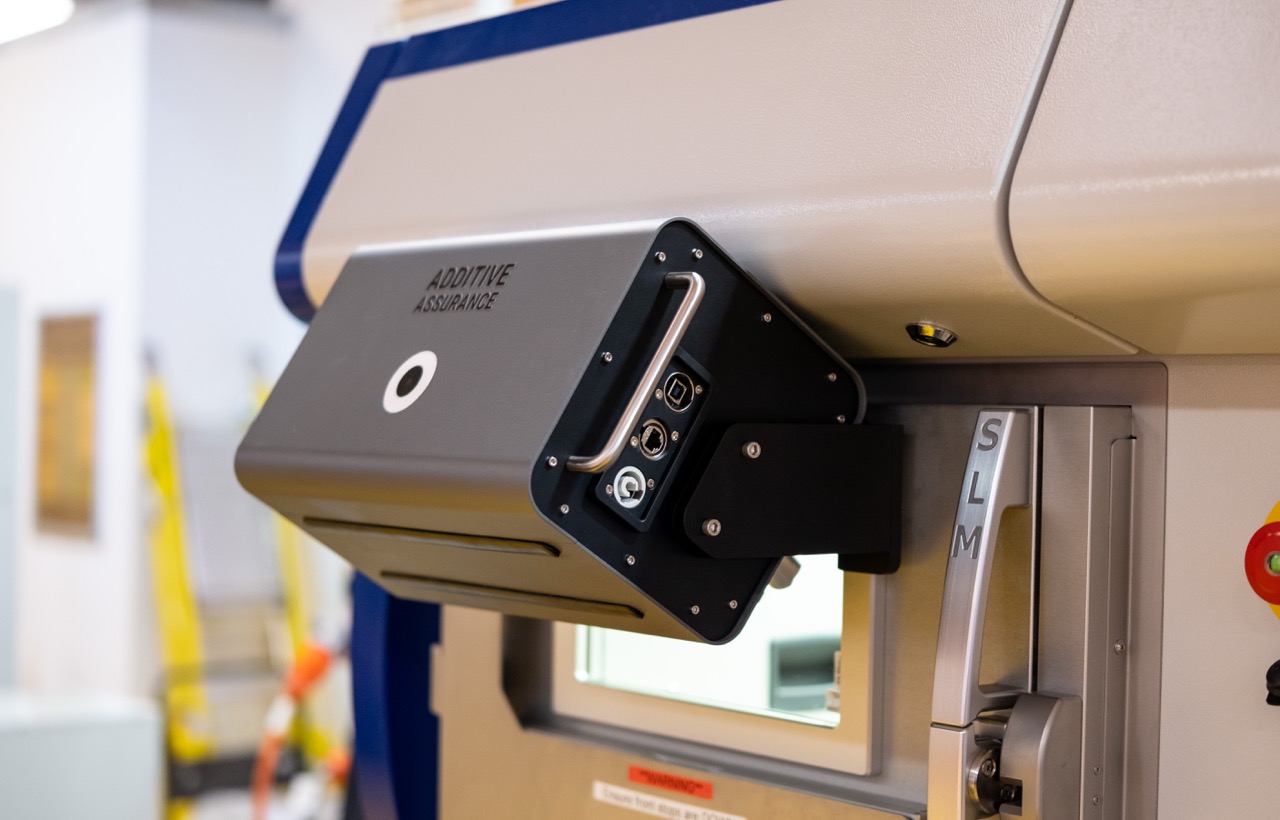
Additive Assurance's AMiRIS in-situ monitoring integrates with Nikon SLM NXG for production-scale metal LPBF

Service
Originally reported by 3Druck
Additive Assurance, an Australian developer of quality assurance systems for metal additive manufacturing, has deepened the industrial application of its AMiRIS in-situ monitoring platform through integration with Nikon SLM Solutions' NXG large-format laser powder bed fusion (LPBF) systems. In an interview with 3Druck.com, Chief Commercial Officer David Menzies detailed how AMiRIS - which uses near-infrared sensors, real-time data capture, and browser-based software - now supports build volumes above 400 mm, where conventional CT inspection becomes cost- and throughput-prohibitive. The platform is available for standard and large-format machines and is designed to plug into existing MES and QMS structures for auditability.
The integration addresses a central barrier in metal AM’s industrial scaling: moving from process monitoring to production-relevant quality assurance. In aerospace, defense, energy, and medical verticals, the ability to generate reproducible, auditable process data is becoming a prerequisite for serial production qualification. AMiRIS competes with offerings from EOSTATE, Sigma Labs, and others, but Additive Assurance differentiates by prioritizing data governance and integration into customer quality management workflows rather than raw sensor novelty. The partnership with Nikon SLM - a Tier 1 machine OEM - signals that large-format LPBF users, where the cost of a failed build is highest, now expect embedded in-situ monitoring as a production baseline rather than an optional add-on.
For end-users, the practical value hinges on whether monitoring data from AMiRIS will be accepted by certification bodies and regulators as a substitute for post-build inspection. Menzies emphasizes that the critical differentiator is not sensor architecture but how data translates into decision-ready reports. The immediate next step for Additive Assurance is deepening OEM integration and proving that AMiRIS can reduce per-part qualification cost at scale - not just detect anomalies.
Topics