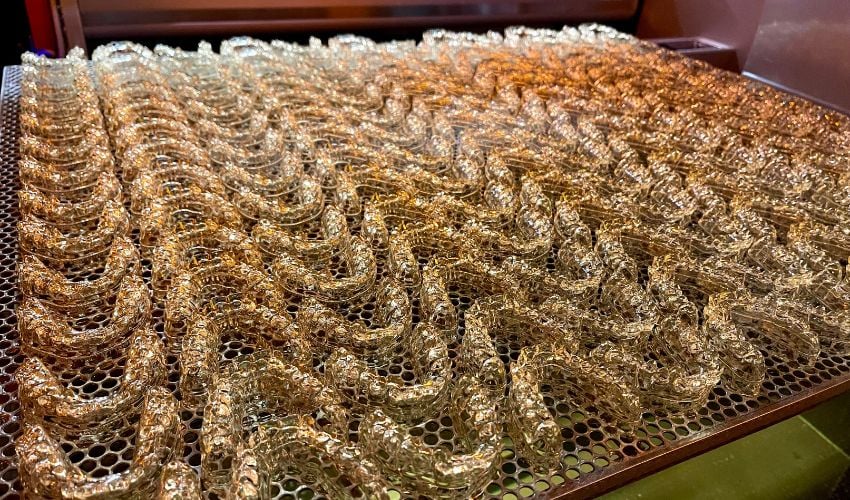
Intrepid Automation enters dental aligner production with modular DLP platform

Hardware
Originally reported by 3DNatives
Intrepid Automation, a San Diego-based additive manufacturing company, is expanding into the dental clear aligner market with its patented modular Digital Light Processing (DLP) platform. The company, which already serves aerospace, defense, automotive, and industrial casting, is targeting centralized high-volume production of custom aligners. CTO and Co-Founder Ben Wynne stated that Intrepid’s core focus remains on highly automated industrial production rather than chairside or edge manufacturing, arguing that dentists should not become manufacturers. The dental 3D printing market is projected to grow from roughly $3 billion today to over $12 billion by 2032, driven by consumer preference for discreet orthodontic treatment.
This move places Intrepid in direct competition with established dental AM players like Align Technology, which operates the world’s largest vat photopolymerization production fleet for its Invisalign brand, as well as Stratasys’ Dental Series and 3D Systems’ NextDent portfolio. Intrepid’s differentiation lies in its modular architecture and continuous manufacturing approach, which integrates advanced robotics and AI-driven quality control to eliminate the multi-step mold-and-vacuum-forming process used by most aligner producers today. Wynne noted that direct printing of aligners-skipping the intermediate mold step-remains nascent due to material challenges in achieving biocompatibility and sustained low-force mechanical properties. The company’s value chain position is as a hardware and automation platform provider, not a service bureau, targeting centralized production hubs rather than distributed chairside workflows.
For Intrepid, the critical execution challenge is developing or qualifying a photopolymer material that meets the mechanical and biocompatibility requirements for direct aligner printing, while maintaining the throughput economics that make centralized production viable against Align’s established process. Buyers in the dental supply chain should watch whether Intrepid partners with a materials developer or brings its own resin to market, as material qualification will determine whether this platform moves beyond the mold-printing use case. The company’s existing industrial automation experience in aerospace and defense provides a credible foundation, but dental aligner production demands a different scale and regulatory pathway than those verticals.
This article is an AI-assisted rewrite of the linked source report. Facts originate from the source; phrasing is AMPulse's. Use Read Original below to verify, or Report an issue if something is wrong.
Topics