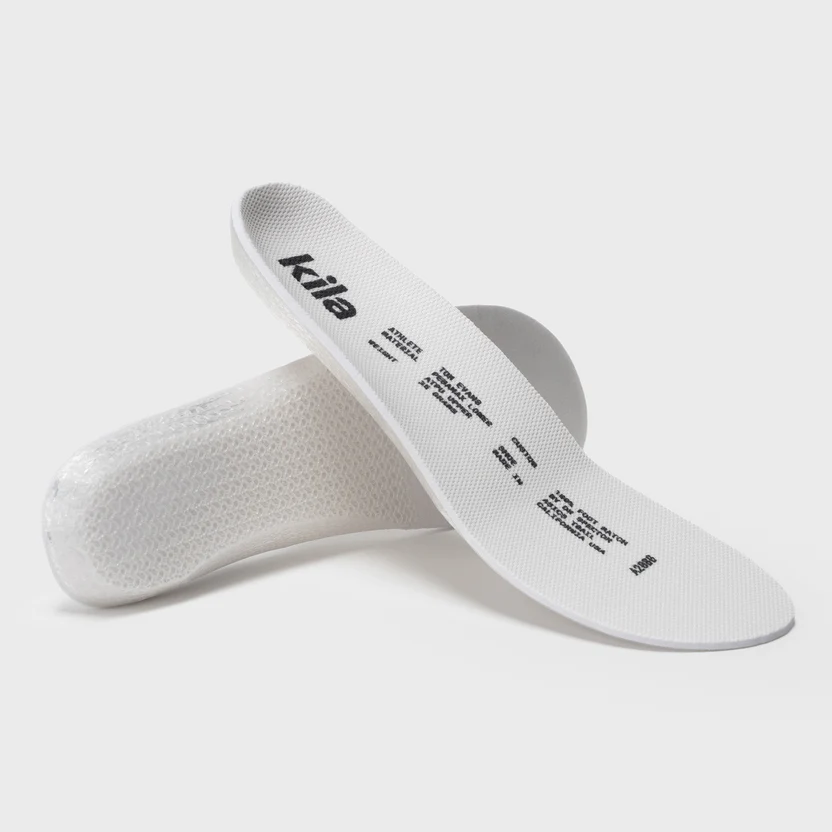
Kila Launches Version 2.0 of Custom Running Insoles with NanoPEBA Foam

Application
Originally reported by 3D Printing Industry
Kila has released Version 2.0 of its custom running insoles, built around a proprietary NanoPEBA foam compound from the Peba material family used in elite carbon-plated racing shoes. The insoles are fitted via iPhone FaceID scanning at home, then 3D printed at Kila's new San Diego facility and shipped directly. British ultramarathon champion Tom Evans, winner of the 2025 UTMB, trained and raced in earlier Kila insoles, providing feedback that informed the updated arch mapping, reinforced construction, and faster turnaround this version delivers.
This launch sits at the convergence of two established AM trends: smartphone-based 3D scanning eliminating the need for clinical visits, and additive manufacturing enabling mass-customized performance products rather than solely corrective orthotics. Competitors such as Fitasy (spatial AI + digital light projection), PioCreat (clinical insole system under 35 minutes), and Syntilay (AI-assisted casual footwear via smartphone scan) are all building similar scan-to-print models, while the Carbon-Adidas Futurecraft initiative demonstrated that 3D-printed midsoles can reach Olympic athletes. Kila's focus on high-mileage running performance and direct-to-consumer logistics through its own production facility differentiates it from clinical or casual-focused alternatives.
For Kila, the key practical challenge is scaling scan-to-print consistency and durability at the reported high-volume output from a single San Diego site. Runners considering v2.0 should verify that the NanoPEBA foam retains its energy return across typical training distances-independent wear data will matter more than athlete testimonials. The product update is sensible, not a market-shifting event, and will test whether consumer willingness to pay for custom-printed insoles extends beyond early adopters.
Topics