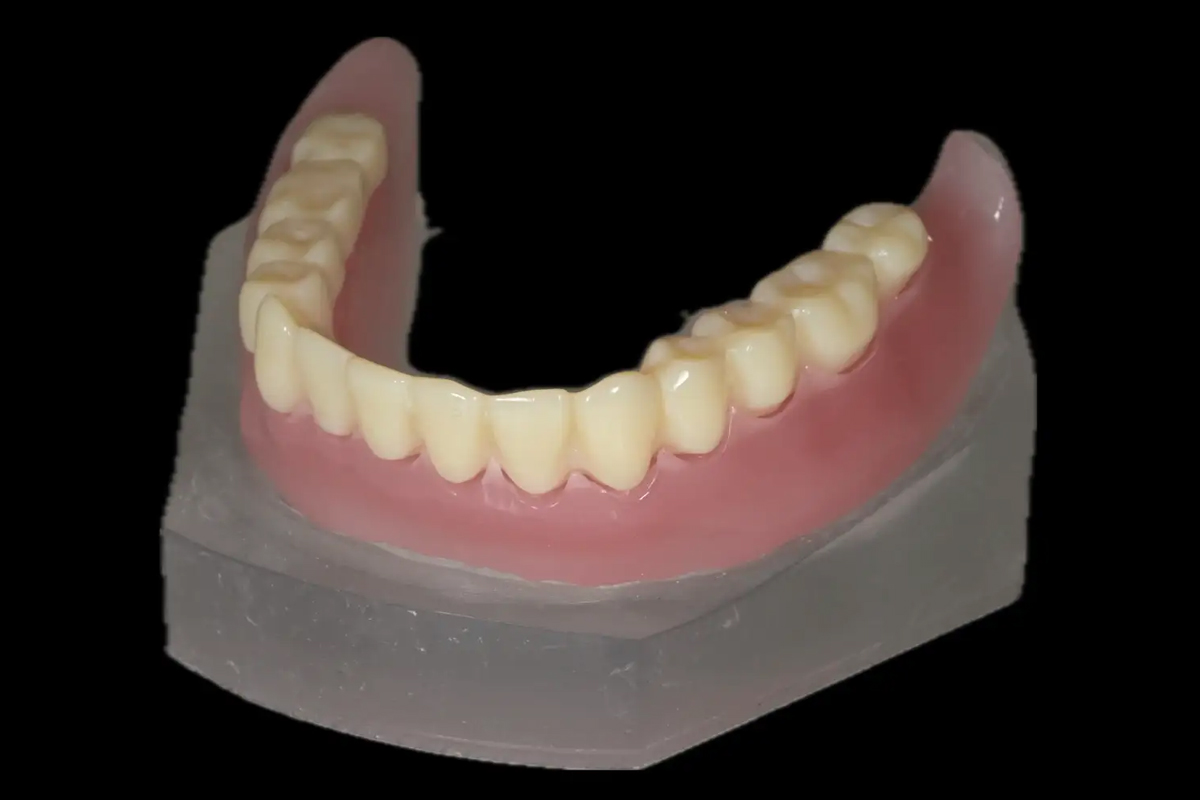
Nobu Dental Clinic launches emergency denture service using 3D printing, cuts production to one week
Originally reported by ShareLab
Nobu Dental Clinic (Nobu Shika • Hanarabi Shika) in Kobe, Japan, has launched a commercial emergency denture service called "Emergency Denture" starting July 2026. The service uses a Shining 3D AccuFab-F1 DLP printer and a face scanner to produce custom dentures in as little as one week, compared to the conventional three-month process that requires waiting for gum healing after tooth extraction. The clinic charges a time-based fee: ¥330,000 (approx. $2,200) for a one-month delivery, ¥440,000 for two weeks, and ¥550,000 for the one-week option for a single arch; full-arch pricing ranges from ¥660,000 to ¥1,100,000. The clinic produces approximately 2,000 denture cases per year and has integrated its dental technician expertise into the digital workflow.
This launch is a concrete example of digital dentistry moving beyond surgical guides and aligners into restorative prosthetics - a segment that has been slower to adopt AM due to material certification and fit requirements. The AccuFab-F1 is a dental-specific DLP system, and the clinic's in-house workflow eliminates the traditional wax try-in step and external lab coordination, directly addressing the patient pain point of extended edentulous periods. While Align Technology remains the largest production AM user in medical-dental via its VPP aligner manufacturing, this case shows a smaller clinic achieving meaningful throughput for a different clinical need. The service economics are notable: the premium pricing reflects the value of time compression rather than material cost, and the clinic's existing high-volume denture production base provides the technician experience to maintain quality under accelerated timelines.
From a practical standpoint, this is a workflow integration story, not a hardware breakthrough. The AccuFab-F1 is a mature dental printer, and the face scanner is a standard tool. What matters is that the clinic has built a repeatable digital pipeline that compresses a multi-visit, multi-week analog process into a single-visit digital design and print cycle. The real test will be whether the six-month follow-up adjustment period and subsequent permanent denture production can maintain fit accuracy without excessive chair time. For other dental clinics evaluating AM adoption, this case demonstrates that the bottleneck is not the printer but the integration of scanning, design, and technician skill into a closed-loop service.
Topics