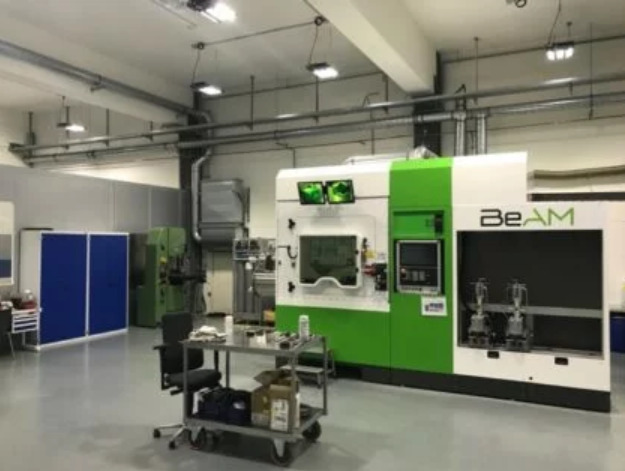
MT Aerospace acquires second AddUp Modulo 400 DED printer for aerospace tank production

Service
Originally reported by 3Druck
MT Aerospace, a German aerospace supplier and OHB subsidiary, has placed an order for its second AddUp Modulo 400 metal 3D printer, a directed energy deposition (DED) system. The machine, built by the French joint venture AddUp (founded by Michelin and Fives), will be used to produce fluid storage tanks for satellites and launch vehicles, including the Ariane 5 program. MT Aerospace already validated the Modulo 400 with reactive materials like Ti-6Al-4V and plans to use the twin machines to accelerate certification of satellite tanks with the European Space Agency, while also developing new applications for micro-launchers and expanding into automotive and energy sectors. The company aims to build a complete DED industrial platform-encompassing design, production, post-processing, and testing-compliant with the EN 9100 aerospace standard.
This repeat purchase underscores a quiet but meaningful shift in how aerospace primes and Tier-1 suppliers deploy metal AM. As noted in the AMPulse substrate, DED’s advantage lies in scale and deposition rate for large, near-net-shape structures-precisely the domain of MT Aerospace’s tankage. The decision to double down on DED rather than LPBF reflects a deliberate segmentation: LPBF handles intricate, high-resolution components, while DED covers larger, less filigree parts where build time and material efficiency matter. By committing to a second system just two years after the first, MT Aerospace bypasses the typical vendor-evaluation treadmill and moves directly into production scaling-a signal that DED has passed the internal qualification hurdle for specific aerospace applications. The move also reinforces the pattern where successful AM adoption becomes infrastructure rather than marketing, especially when the parts (fuel tanks) are too critical to publicize. European defense and space agencies are increasingly favoring domestic supply chains; MT Aerospace’s investment aligns with that protective posture, reducing reliance on Asian or U.S. DED capacity.
From a practical standpoint, this is a textbook example of the 'repeat order as maturity signal' heuristic. The first machine was a technology probe; the second is a capacity play. What matters now is execution on the EN 9100 certification timeline and the ability to replicate the tank production process across multiple programs. If MT Aerospace can lock in ESA and ArianeGroup qualification documents for its DED-manufactured tanks, it will create a durable barrier to entry for competing DED shops. For buyers evaluating DED, the takeaway is that aerospace-grade DED is no longer a lab curiosity-it is becoming a documented production option for large, safety-critical parts, provided the supplier invests in serial process control and certification from day one.
This article is an AI-assisted rewrite of the linked source report. Facts originate from the source; phrasing is AMPulse's. Use Read Original below to verify, or Report an issue if something is wrong.