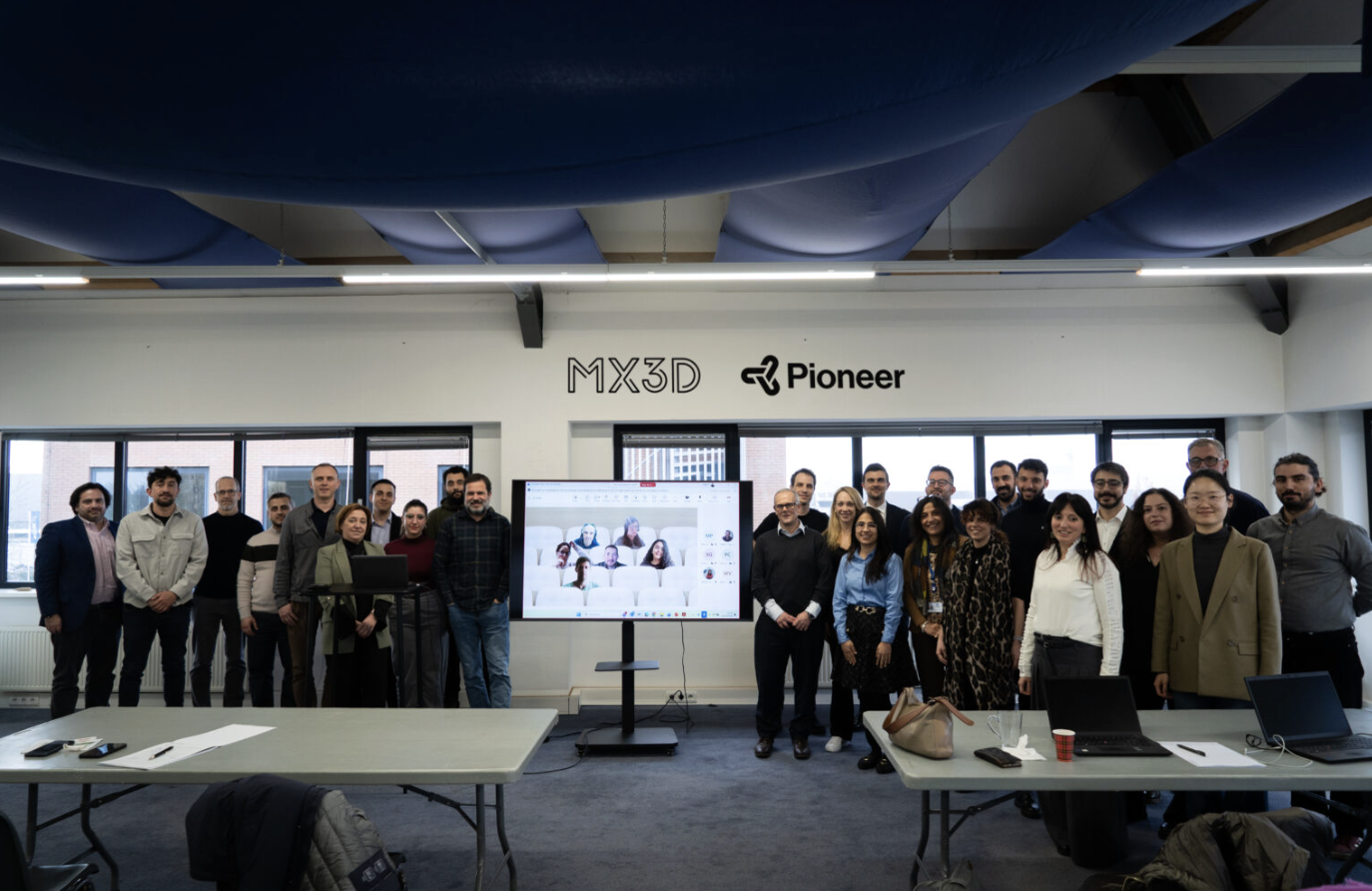
MX3D completes PIONEER project proving hybrid WAAM increases steel capacity by up to 300%

Hardware
Originally reported by 3D Printing Industry
MX3D, the Netherlands-based robotic Wire Arc Additive Manufacturing (WAAM) specialist, has concluded the EU Horizon-funded PIONEER project. Serving as the pilot line leader within a European consortium, MX3D collaborated with Imperial College London and engineering software firm Limitstate to industrialize automated workflows for load-bearing steel components. The project successfully demonstrated the assembly of a 10-meter load-bearing truss utilizing 22 first-time-right WAAM-printed nodes. Testing validated that applying WAAM to standard square hollow section profiles yielded an average capacity improvement of 300% while using only double the original material volume.
This development addresses a critical gap in the civil engineering sector: the high embodied carbon and material waste associated with traditional steel fabrication. By utilizing a hybrid approach-depositing WAAM material only at high-stress zones of conventional rolled steelwork-the project achieved a 50% to 75% reduction in steel consumption in specific applications. Unlike pure additive manufacturing which struggles with scale and cost in heavy infrastructure, this hybrid method integrates seamlessly into existing construction supply chains. This positions MX3D as a key provider of high-value, topologically optimized components that complement rather than replace standard structural profiles.
For industrial adoption to occur, MX3D must now transition these validated workflows into standardized certification protocols that satisfy municipal building codes. The technical success of the 10-meter truss proves the mechanical viability of the hybrid method, but the next hurdle is the integration of these digital workflows into the procurement cycles of large-scale civil engineering firms. Buyers should focus on the specific mass-to-strength ratios demonstrated, as these metrics will drive the economic argument for replacing traditional heavy steel sections with optimized hybrid nodes.
This article is an AI-assisted rewrite of the linked source report. Facts originate from the source; phrasing is AMPulse's. Use Read Original below to verify, or Report an issue if something is wrong.
Topics