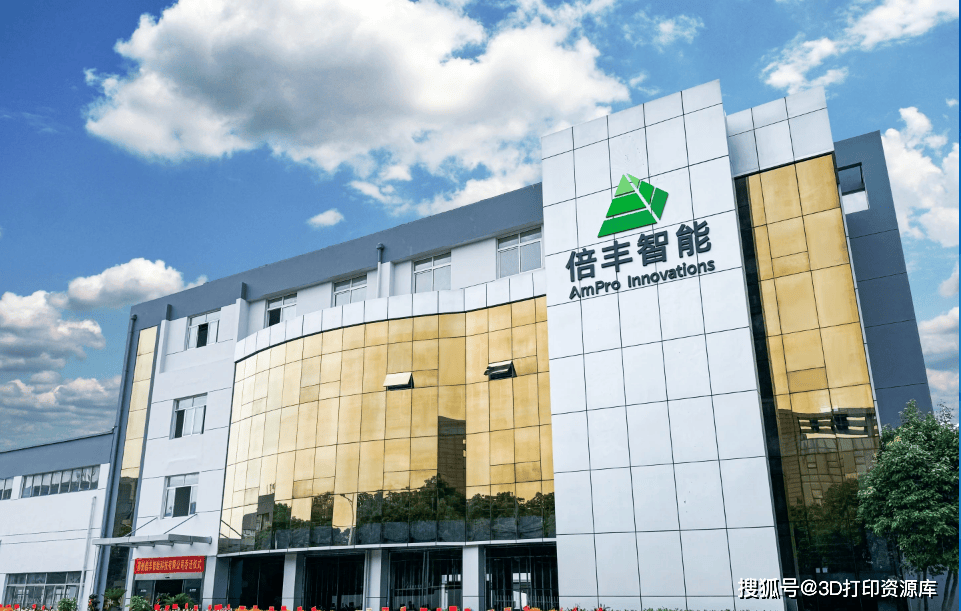
Nanjing Inigma leads DED group standard for metal parts, published by China Welding Association

Hardware
Originally reported by 3D打印资源库
Nanjing Inigma Industrial Automation Technology Co., Ltd., in collaboration with Nanjing University of Science and Technology, Xi'an Jiaotong University, and other institutions, has led the drafting of a new group standard titled "Additive Manufacturing of Metal Parts via Directed Energy Deposition" (T/CWAN0169-2026). Published by the China Welding Association on June 3, 2026, the standard will take effect on July 1, 2026. The standard focuses on DED process specifications for metal components, aiming to formalize quality benchmarks and procedural guidelines across the Chinese AM ecosystem.
This standard addresses a critical gap in China's DED landscape, where process consistency and qualification pathways have lagged behind the rapid expansion of machine sales and service capacity. By establishing a unified technical baseline, Nanjing Inigma positions itself as a standards-setter in the DED segment, a process family that is gaining traction for large-format repair, cladding, and near-net-shape production in energy, aerospace tooling, and heavy machinery. The involvement of academic partners signals a deliberate effort to bridge research-grade process knowledge with industrial repeatability, a move that mirrors earlier standardization work in LPBF but is notably earlier in DED's adoption curve. For the broader AM industry, this standard reduces qualification friction for end-users evaluating DED for production applications, particularly in China's defense and energy verticals where domestic sourcing and certified processes are increasingly mandated.
From a practical standpoint, the standard's July 1 effective date gives the market roughly one month to align internal procedures. For Nanjing Inigma, the real test will be whether this standard translates into commercial adoption-specifically, whether it becomes embedded in customer procurement specifications or remains a reference document. The company's next move should be to demonstrate repeatable part quality under the standard's framework, ideally with a published case study from an early adopter in energy or heavy equipment repair. Without that, the standard risks being a procedural artifact rather than a market catalyst.
This article is an AI-assisted rewrite of the linked source report. Facts originate from the source; phrasing is AMPulse's. Use Read Original below to verify, or Report an issue if something is wrong.
Topics