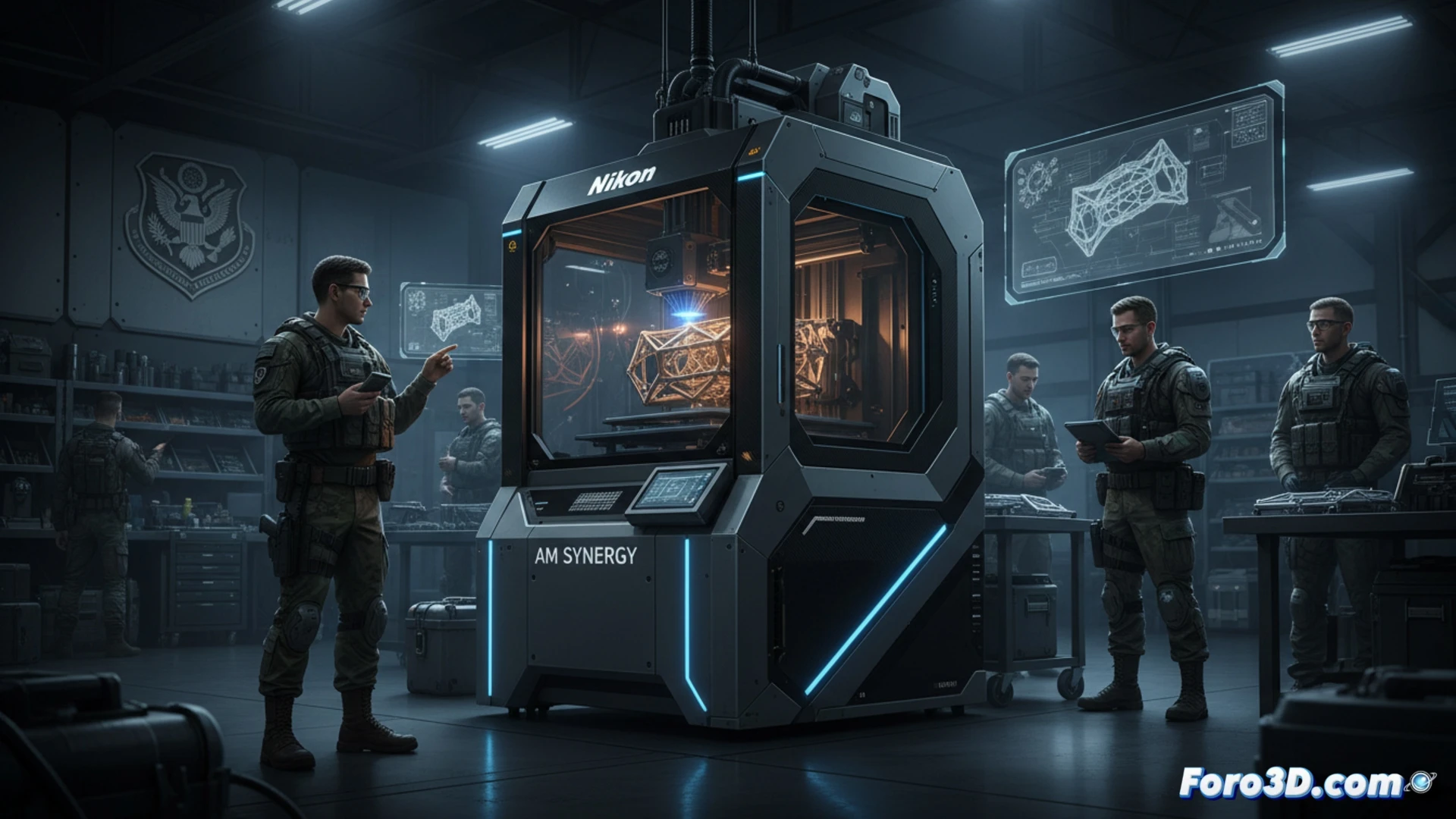
Nikon AM Synergy selected by U.S. Defense Logistics Agency for JAMA IV program, will use Long Beach facility for 3D printing military parts

Service
Originally reported by foro3d.com
The U.S. Defense Logistics Agency has selected Nikon AM Synergy for the JAMA IV IDIQ Pilot Parts program, a multi-year indefinite-delivery/indefinite-quantity contract aimed at validating additive manufacturing for defense logistics. Nikon AM Synergy will produce complex metal components using laser powder bed fusion (LPBF) and electron beam melting (EBM) at its technology center in Long Beach, California. The program prioritizes parts with difficult geometries or critical delivery timelines that conventional manufacturing cannot meet, with the explicit goal of reducing dependence on long, vulnerable supply chains. No contract ceiling or specific part quantities were disclosed in the announcement.
This selection places Nikon AM Synergy within a politically accelerated defense procurement wave that has reshaped the U.S. additive manufacturing landscape since 2025. The JAMA IV program is a direct expression of the NDAA §849 split, which took effect in December 2026 and mandates that the Department of Defense prioritize domestic AM suppliers for critical spare parts. Nikon AM Synergy, formed from Nikon's 2023 acquisition of SLM Solutions and subsequent integration of Morf3D's Long Beach operations, now competes directly with incumbent defense AM suppliers such as 3D Systems' Littleton facility and GE Additive's Auburn operation. The Long Beach site, originally established as a Morf3D aerospace production center, provides the qualified-part service capability and AS9100-certified environment that defense programs require. The key editorial lesson from the aerospace qualification grind applies here: success in defense AM often disappears from marketing language precisely when it succeeds, as parts become embedded infrastructure rather than headline technology.
For Nikon AM Synergy, the practical challenge is execution within the JAMA IV framework's qualification and delivery timelines. The company must demonstrate that its LPBF and EBM processes can consistently produce parts that meet military specifications at a cost and lead time that justifies replacing conventional supply chains. The Long Beach facility's existing aerospace customer references provide a foundation, but defense qualification requires separate documentation and audit cycles. The real test will be whether the program moves beyond pilot parts to sustained production volumes, which would validate the broader thesis that AM can reduce the military's reliance on single-source suppliers for critical components.
Topics