Ouster and Benchmark expand partnership to scale volume production of REV8 digital lidar sensors

Hardware
Originally reported by ledinside.com
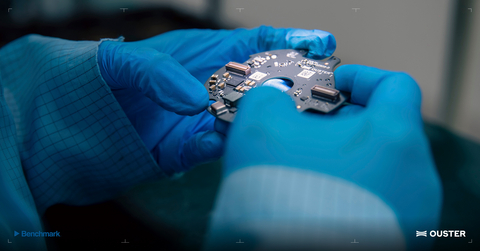
Ouster, Inc., a leader in sensing and perception for Physical AI, and Benchmark Electronics, Inc., a global manufacturing services provider, announced an expanded long-term manufacturing partnership to support high-volume production of Ouster's new Rev8 OS sensor family. The Rev8 family is designed for industrial, robotics, automotive, and smart infrastructure applications, leveraging Benchmark's automated microelectronics and precision optical assembly lines. Ouster's established manufacturing capacity exceeds 100,000 units per year, with a planned 10-year production life and multi-site flexibility across Benchmark's 20 facilities in eight countries, including the United States and Europe. Darien Spencer, Ouster's COO, emphasized the partnership's role in delivering cybersecure, functionally safe native color lidar sensors at scale.
This expansion matters for the broader additive manufacturing and deep-tech ecosystem because it demonstrates how advanced production techniques-including precision optical assembly and automated microelectronics integration-are enabling the transition from low-volume prototyping to mass-market sensor production. Ouster's Rev8 program mirrors the industrial-tooling and consumer-electronics pull-through dynamics seen in metal AM, where design-for-manufacturing and supply chain resilience become the real competitive moats. The partnership also highlights the growing importance of multi-site, geographically flexible production networks, particularly as defense and automotive customers demand secure, domestically sourced supply chains. Benchmark's role as a strategic manufacturing partner, rather than a mere contract assembler, reflects a value-chain shift where production expertise itself becomes a differentiator.
From an AM industry perspective, the Ouster-Benchmark relationship is a case study in scaling complex optoelectronic systems without compromising reliability or cost targets. The 100,000-unit annual capacity and 10-year program commitment provide the kind of production stability that automotive and industrial OEMs require before committing to a sensor platform. For AM companies eyeing similar volume transitions, the lesson is clear: production scale is not just about machine throughput but about building a manufacturing ecosystem that can absorb qualification burdens, maintain multi-site consistency, and deliver long-term program support.
This article is an AI-assisted rewrite of the linked source report. Facts originate from the source; phrasing is AMPulse's. Use Read Original below to verify, or Report an issue if something is wrong.
Topics