Phillips Corporation Rebrands Additive Hybrid Division as Phillips Advanced Manufacturing

Service
Originally reported by 3DPrint.com
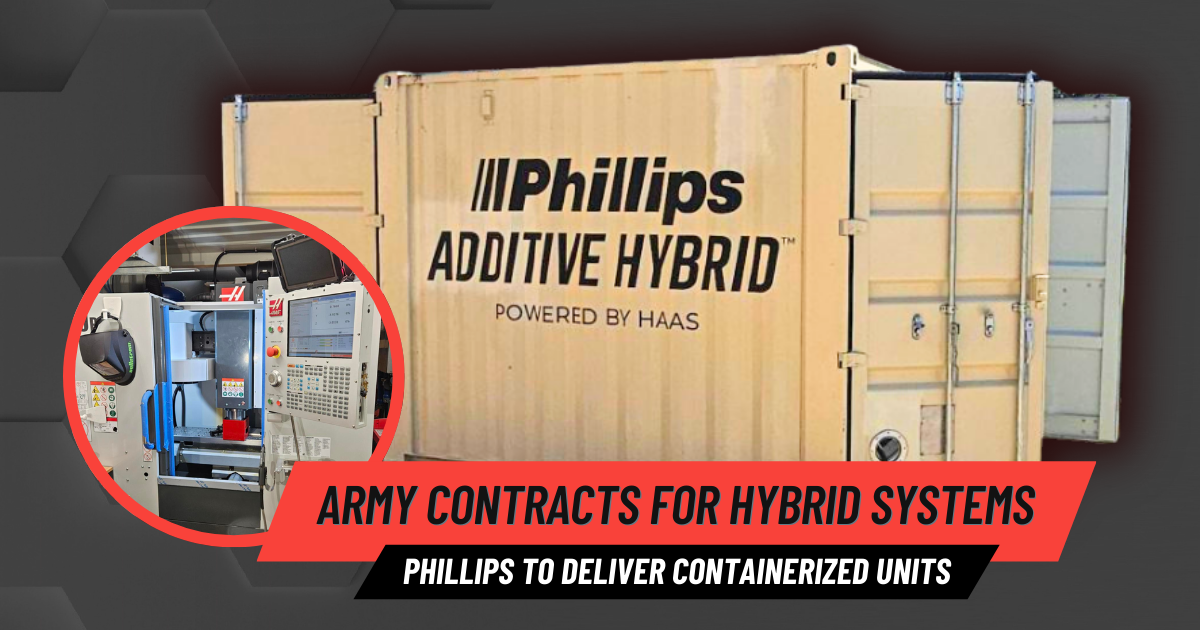
Phillips Corporation has rebranded its Additive Hybrid division to Phillips Advanced Manufacturing, signaling a strategic shift toward broader advanced manufacturing solutions. The newly formed unit, led by President Brian Kristaponis, will focus on hybrid manufacturing, standalone additive systems, and deployable manufacturing cells. The division’s portfolio includes DED technologies from Meltio (wire-laser DED), Fronius (wire arc), InssTek (powder and wire DED), and MX3D (WAAM for large-scale structures), alongside existing partnerships with Markforged, EOS, and Solukon. The rebrand follows a recent contract with the Naval Surface Warfare Center Carderock Division for containerized Haas and Meltio units, aligning with expeditionary manufacturing needs.
This move reflects a maturing AM market where customers increasingly seek integrated solutions rather than isolated machines. By positioning as a systems integrator across multiple process families-DED, LPBF, polymer extrusion, and subtractive-Phillips addresses a persistent gap in the AM value chain: the lack of trusted intermediaries who can de-risk adoption through application engineering, technology evaluation, and post-installation support. The emphasis on deployable cells and hybrid subtractive-additive workflows directly targets defense and energy verticals, where supply chain resilience and on-site production are growing priorities. This approach mirrors the broader industry trend toward service-based adoption, where value capture shifts from hardware sales to solution delivery and lifecycle support.
From an expert standpoint, the rebrand is a pragmatic acknowledgment that AM adoption is constrained less by technology capability and more by organizational risk and integration complexity. Phillips’ ability to offer a curated ecosystem across price points and process types-from accessible Fronius DED to large-scale MX3D WAAM-positions it to serve customers who lack internal AM expertise. The real test will be execution: whether the division can consistently deliver application development and training that translate into repeatable production workflows, particularly in defense and industrial repair applications where qualification cycles are long and failure costs are high.
Topics