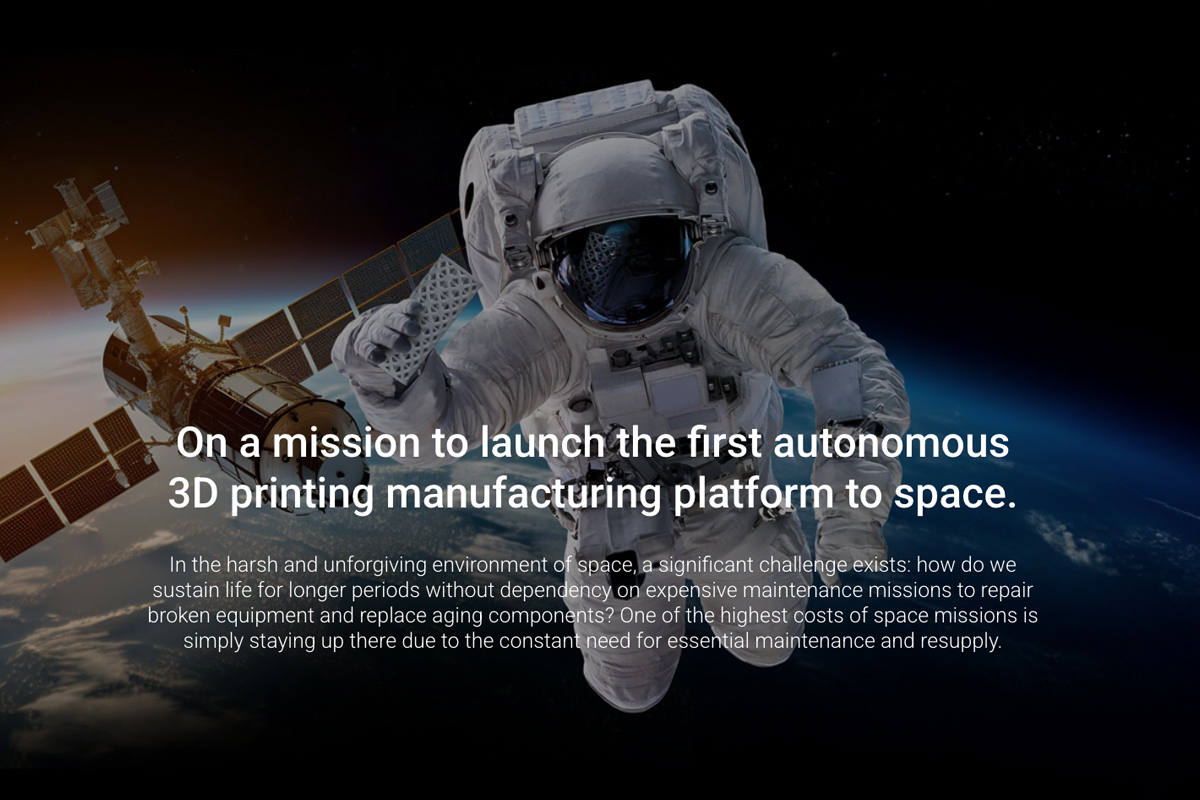
Photocentric develops autonomous 'CosmicMaker' 3D printing platform for space, ISS testing planned

Hardware
Originally reported by ShareLab
UK-based photopolymer 3D printer manufacturer Photocentric has unveiled its autonomous additive manufacturing platform, CosmicMaker, designed for in-space production. Developed with support from the European Space Agency (ESA), the system is based on Photocentric's proprietary LCD-based vat photopolymerization technology. The company reports that CosmicMaker has demonstrated stable operation across all orientations, in positive and negative gravity environments, and under vacuum conditions. Photocentric is now planning parabolic flight microgravity testing and has initiated discussions for a demonstration mission aboard the International Space Station (ISS).
This development targets a well-understood pain point in long-duration space missions: the cost and logistics of resupply. CosmicMaker's claimed material versatility - thermosetting resins, fiber-reinforced composites, ceramics like silicon carbide and alumina, and metals including stainless steel and titanium - sets it apart from earlier in-space 3D printing experiments, which have largely focused on polymer extrusion. The platform's small size, low weight, and low power consumption are deliberate design choices for the constrained environment of orbital stations or future lunar habitats. However, the claim of metal and ceramic capability via an LCD-based vat photopolymerization process requires careful scrutiny; these materials are typically processed via binder jetting or sintering routes, and Photocentric has not disclosed the specific mechanism for achieving dense, functional metal or ceramic parts in microgravity. The project sits at the intersection of the aerospace qualification grind and the emerging in-space manufacturing market, a segment that remains pre-commercial but is attracting increasing institutional and private investment as ISS successor stations and Artemis lunar plans advance.
For Photocentric, CosmicMaker represents a significant pivot from its core business of industrial and dental LCD printers into a highly specialized, government-funded R&D domain. The company's near-term credibility hinges on successful parabolic flight tests and, ultimately, a verified ISS demonstration that produces parts with documented mechanical properties. The broader AM industry should view this as a long-cycle technology development program, not a near-term commercial product. The real signal will be whether Photocentric can transition from prototype to a qualified, repeatable manufacturing system that meets NASA and ESA safety and reliability standards - a process that historically takes years, not quarters.
Topics