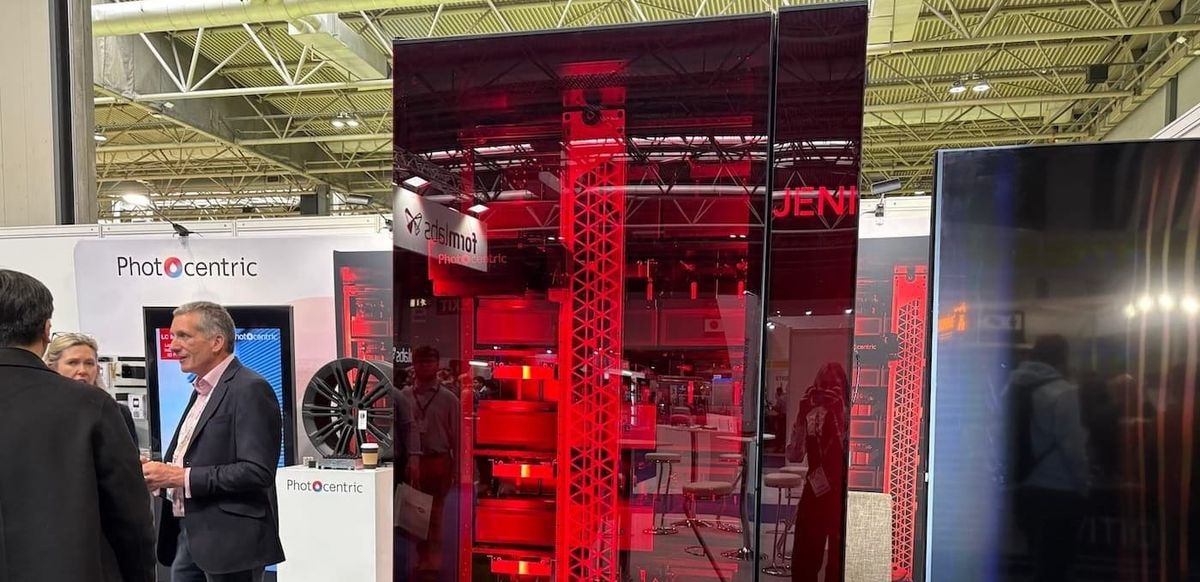
Photocentric unveils JENI modular LCD print platform targeting injection moulding volumes

Hardware
Originally reported by TCT Magazine
Photocentric, the UK-based polymer photopolymerization specialist, publicly demonstrated its JENI modular 3D printing platform at TCT 3Sixty in June 2026. The system is not a single printer but a configurable platform housing multiple LCD-based print modules, each capable of being assigned as a printer, wash station, rinse station, or curing unit. The company’s largest deployed system to date contains 11 modules and over 300 printers, and the first commercial unit was installed at a US production site of a multinational manufacturer in April 2025. Photocentric positions JENI as a fully autonomous, digital alternative to injection moulding, targeting mass production of plastic components such as connectors, clips, and customised consumer goods.
This launch directly addresses the long-standing gap between additive’s flexibility and injection moulding’s economics at scale. By eliminating tooling costs and manual post-processing, JENI aims to make photopolymer AM cost-competitive for runs that would traditionally require hard tooling. The platform’s modular architecture allows users to mix resins, run continuous jobs, and maintain consistent quality across shifts - a pain point Photocentric experienced firsthand during its pandemic-era production of 4.5 million face shield components, where manual handling led to quality variation. The JENI competes with other high-throughput polymer systems such as HP’s Multi Jet Fusion and Carbon’s DLS, but differentiates by offering a fully enclosed, automated workflow from print to post-cure within a single platform.
For Photocentric, the JENI’s success hinges on execution: proving that the platform can deliver repeatable, injection-moulding-quality output at scale across multiple customer sites. The unnamed US customer will be the first real-world reference, and the company must demonstrate that the system’s automation and traceability translate into lower total cost per part compared to both traditional tooling and other AM alternatives. Buyers evaluating JENI should request cycle-time and cost-per-part data for their specific geometries, as the platform’s economics will vary significantly with part size, resin choice, and required throughput.
This article is an AI-assisted rewrite of the linked source report. Facts originate from the source; phrasing is AMPulse's. Use Read Original below to verify, or Report an issue if something is wrong.