Photocentric spins out CosmicMaker space 3D printing business after successful zero-gravity test flights

Hardware
Originally reported by TCT Magazine
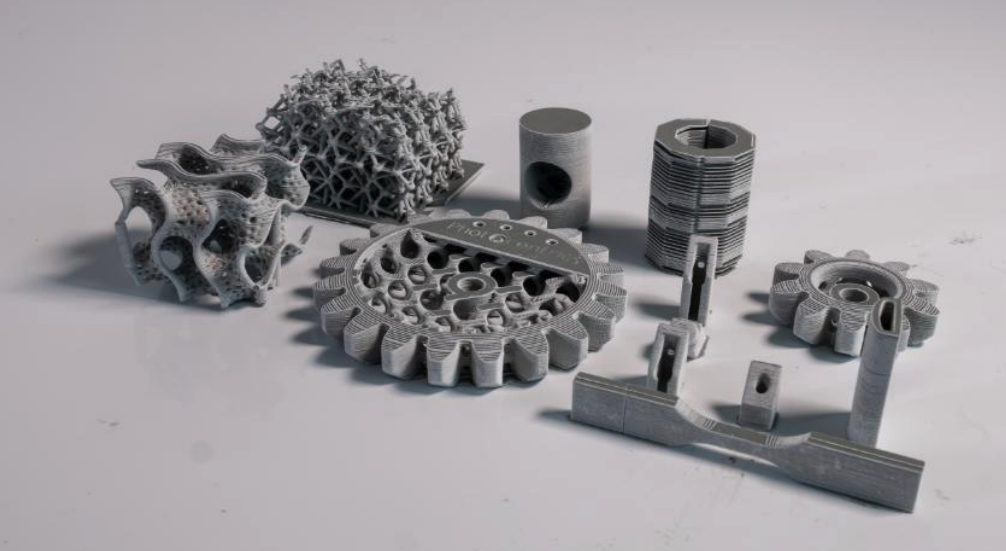
Photocentric has formally spun out its CosmicMaker space 3D printing division as a standalone entity, CosmicMaker Ltd., following a series of successful parabolic flight tests. Three identical CosmicMaker printers, based on Photocentric's proprietary LCD-based vat photopolymerization technology, were flown on Novespace's Airbus A310 Zero G out of Bordeaux, printing continuously across conditions ranging from 2g to 0g. The company reported that test parts printed in silicon carbide, alumina, and two thermoset plastics were dimensionally accurate, with ceramic slurries achieving better particle distribution in microgravity than under 2g. Photocentric has secured support from the UK Space Agency via ESA's BSGN program and three grants to manufacture and validate the printer, which it claims is one of the few AM systems that operates better in space than on Earth.
This spinout fits a recurring pattern in the AM industry: terrestrial polymer process technology finding a second life in the space segment, where low mass, low energy, and support-free printing are decisive advantages. Photocentric's LCD approach - evolved from a 2014 desktop printer to an automated multi-printer system aimed at injection-molding replacement - now targets a niche that is small in unit volume but high in qualification value and policy-driven funding. The space AM segment remains fragmented, with competitors like Made In Space (now Redwire) and Tethers Unlimited focused on extrusion-based systems, while Photocentric's vat photopolymerization route offers a different material set (ceramics, composites) and a potentially faster print cycle. The UK Space Agency's backing signals a deliberate national strategy to build sovereign in-orbit manufacturing capability, a trend amplified by the broader defense-driven push for supply-chain resilience.
For Photocentric, the practical challenge is translating parabolic-flight validation into a flight-qualified system that can survive launch loads and operate autonomously on orbit or on the lunar surface. The company's stated ambition to become the go-to solution for manufacturing parts on the moon is credible only if it can demonstrate reliability across thermal vacuum, radiation, and extended microgravity operations. The near-term signal to watch is whether CosmicMaker Ltd. secures a payload slot on a commercial or government space station mission within the next 18 months - that would separate a funded research project from a deployable product.
Topics