Prusa Research Open-Sources ColorMix Workflow for Multi-Tone FFF Printing

Hardware
Originally reported by Fabbaloo
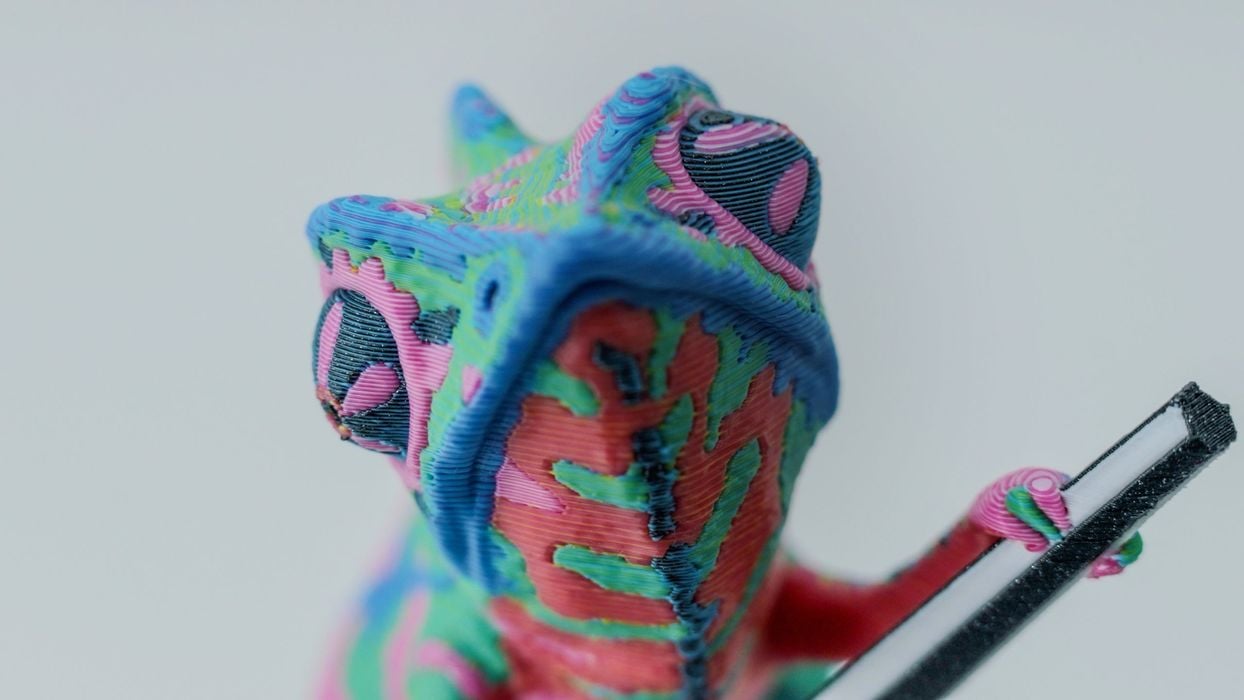
Prusa Research has released an open-source ColorMix workflow integrated into PrusaSlicer and EasyPrint, enabling users to produce dozens of visible color tones from a handful of loaded filaments. The system uses layer-interleaved halftoning, alternating thin layers of different filaments to optically blend colors at normal viewing distances. Prusa engineer Ondrej Bartas led the calibration effort, measuring actual FFF test prints to tune the halftone equation for plastic behavior rather than paint or translucent-layer models. The company is also preparing a dedicated five-filament set (CMYKW) to address the common issue of CMYW setups producing bluish dark grays instead of true black.
This move productizes a community-driven concept that had previously existed only in slicer forks and utility tools like Ratdoux's OrcaSlicer-FullSpectrum and Justin H. Rahb's filament-mixer. By publishing the ColorMix model under the MIT license and tying it to the OpenPrintTag Material Database, Prusa is attempting to turn a proprietary software advantage into a shared industry reference - a classic open-source play that lowers the barrier for multi-color FFF adoption across the polymer material extrusion segment. The announcement is significant for the desktop and prosumer polymer-MEX market, where multi-material printing has been limited by either complex hardware (toolchangers) or excessive purge waste (single-nozzle changers). ColorMix addresses the software gap that has kept halftone mixing from being practical, potentially expanding the addressable use cases for decorative parts, figurines, cosplay props, and gifts without requiring users to invest in additional hardware.
Prusa's calibration data is currently limited to Prusament PLA on the Original Prusa XL, and the company acknowledges that coefficients will differ for PETG, ABS, or specialty filaments. The practical value of ColorMix will depend on how quickly the community contributes measurements for other materials and printer platforms. For buyers, this means the feature is immediately usable for PLA-based decorative prints on Prusa hardware, but should be treated as a beta-quality capability for other materials until the database matures. The real test is whether the open-source model attracts enough cross-platform contributions to become a de facto standard, or remains a Prusa-centric differentiator.
This article is an AI-assisted rewrite of the linked source report. Facts originate from the source; phrasing is AMPulse's. Use Read Original below to verify, or Report an issue if something is wrong.