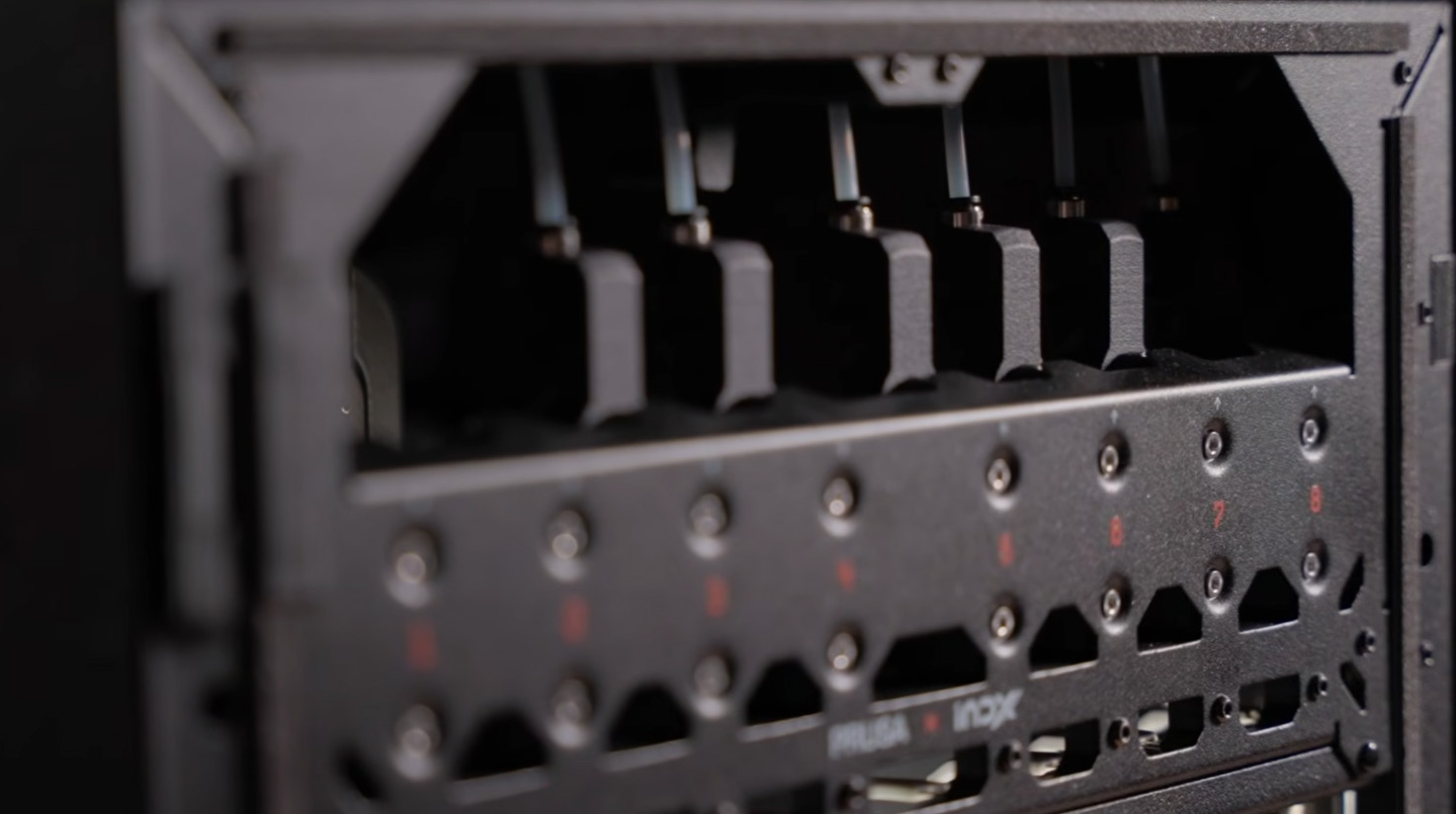
Prusa Research and Bondtech begin serial delivery of INDX toolchanger upgrade kit for CORE One

Hardware
Originally reported by 3Druck
Prusa Research, in partnership with Bondtech, has begun serial delivery of the INDX toolchanger upgrade kit for its CORE One and CORE One+ 3D printers. The first Founder’s Edition units have reached early users, and regular upgrade kits are scheduled to ship by end of July, with the full first batch completed by end of August. The system features a patented waste-reduction mechanism combining a waste container and silicone nozzle cleaner, achieving only 29 grams of waste per print versus up to 696 grams on competing multi-color FDM/FFF systems. A new automatic tool offset calibration sensor, using a load cell for Z-axis and an inductive sensor for X and Y, enables nozzle changes between jobs without manual reconfiguration. Prusa has also updated EasyPrint and PrusaSlicer with a ColorMix halftoning process that supports CMYKW+RGB configurations on the eight-tool INDX setup.
This launch addresses a critical economic friction in desktop polymer material extrusion: material waste in multi-color printing. Prusa’s internal benchmark, using standard manufacturer profiles, showed waste costs of €10–25 per complex print on competing systems, while the INDX reduced that to near-negligible levels. The upgrade kit transforms the CORE One from a single-extruder workhorse into a multi-tool production platform, directly competing with Bambu Lab’s AMS multi-filament system and the Palette series from Mosaic Manufacturing. By focusing on waste economics and automated calibration, Prusa is targeting the prosumer and small-batch production segment where material cost and repeatability matter more than raw speed. The partnership with Bondtech, a specialist in extruder and toolchanger hardware, allows Prusa to leverage proven mechanical design without diverting internal R&D from its core printer platform.
For users evaluating the INDX, the key practical takeaway is the waste-reduction claim: 29 grams versus 696 grams is a 96% reduction, which directly improves per-part economics for multi-material or multi-color production runs. The automatic offset calibration sensor removes a major friction point for users who swap nozzles between jobs, making the system viable for daily use rather than occasional experimentation. Prusa must now execute on firmware stability and profile delivery - four additional print profiles are promised - to ensure the system performs reliably across common materials like PLA, PETG, and TPU. For the desktop AM market, this is a meaningful incremental improvement in multi-material capability, not a category shift, but one that strengthens Prusa’s position among users who prioritize low waste and high repeatability over speed.
Topics