Q5D and Molrix to supply US Army with wire harness production robots for drone scale-up

Hardware
Originally reported by 3DPrint.com
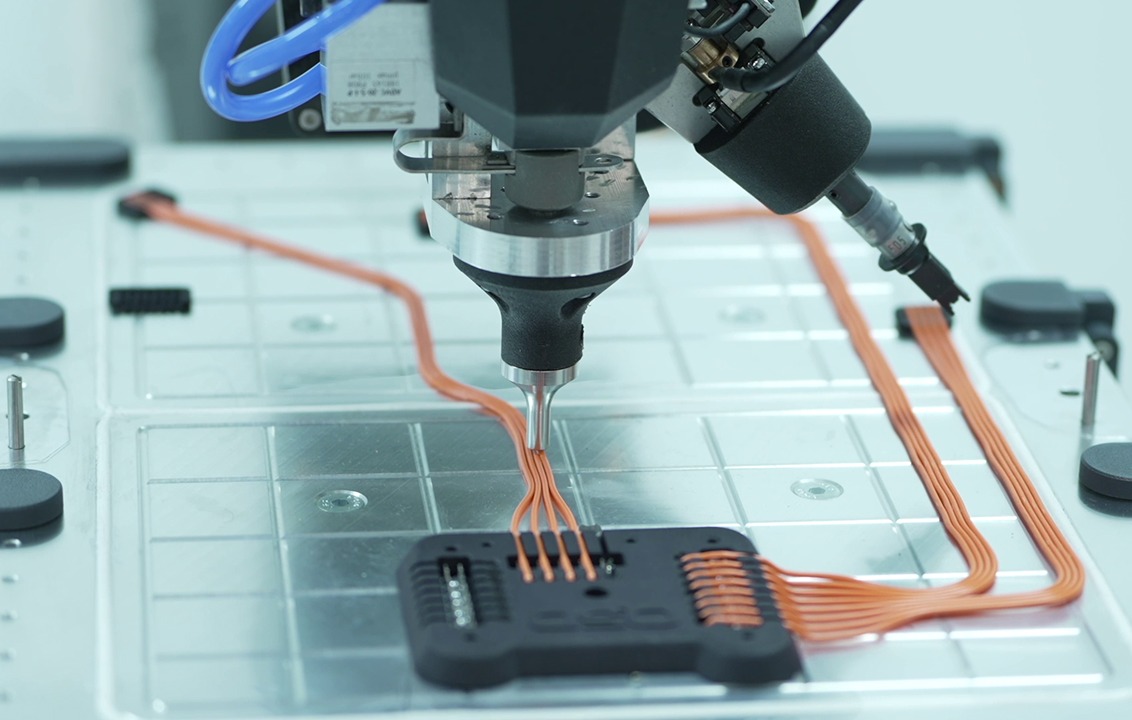
Q5D Technologies and Molrix have secured a contract to supply the US Army with automated wire harness production cells. One system will support the Army's SkyFoundry project, which aims to accelerate the adoption of additively manufactured and autonomous unmanned aerial systems (UAS). Two additional cells will be deployed to the US Army Materiel Command's Tobyhanna Army Depot under a 20-month agreement, where they will be used for maintenance and repair of existing equipment. The deal signals that the Army is moving beyond qualification and selection phases and into scaling production of drones and related systems.
This contract places Q5D at the intersection of two critical trends in defense manufacturing: the push to produce drones at scale under austere conditions, and the persistent bottleneck of wire harness production. Harnesses remain a surprisingly low-tech but operationally critical component, as demonstrated by supply chain disruptions in the Ukraine war. Q5D's cell-based robotic system can print traces, deposit polymers, and assemble harnesses, effectively automating a task that has traditionally been outsourced to low-cost labor markets. For the defense vertical, this capability addresses a specific production gap: if the military is to 3D print drones at scale, it must also automate the wiring and assembly that follows. The deal fits the pattern of politically accelerated defense adoption in 2025-26, where the US military is becoming a direct production operator rather than just a specifier.
For Q5D, the practical challenge is now execution: delivering reliable cells that can operate under depot and field conditions, not just in controlled factory environments. The 20-month deployment window at Tobyhanna will test whether the automation can handle the variability of legacy equipment repair, where harness configurations are not standardized. Buyers in defense and aerospace should watch how Q5D manages material handling, filament drying, and system uptime in these initial deployments. If successful, this contract could open a broader market for automated harness production across other military depots and prime contractors.
This article is an AI-assisted rewrite of the linked source report. Facts originate from the source; phrasing is AMPulse's. Use Read Original below to verify, or Report an issue if something is wrong.