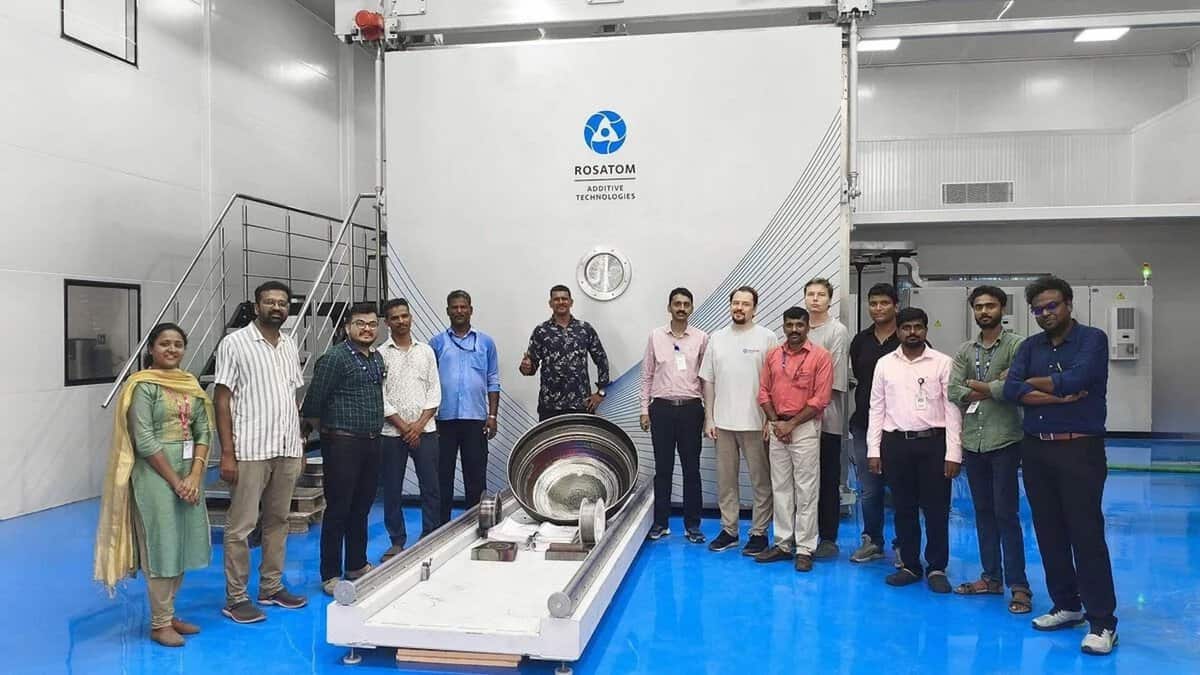
Rosatom delivers RusBeam 2800 electron-beam 3D printer to India for ISRO programs

Platform
Originally reported by Manufactur3D
Rosatom, Russia's state nuclear and technology corporation, has delivered and commissioned its RusBeam 2800 industrial electron-beam 3D printer in India, equipping the Indian Space Research Organisation (ISRO) with the country's largest vacuum-operated wire deposition system. The system, based on Electron Beam Additive Manufacturing (EBAM) technology, can fabricate metal parts up to 2.8 meters in height and weighing up to four tonnes, producing 50 kg components within five hours. The deployment, awarded through a competitive international tender, marks Rosatom's formal entry into the Indian additive manufacturing market and will support ISRO's Gaganyaan crewed spaceflight mission, the Bharatiya Antariksh Space Station program, and the Chandrayaan lunar missions.
This delivery represents a significant cross-border technology transfer in directed energy deposition (DED) for aerospace applications, a segment where qualification timelines typically span a decade or more. The RusBeam 2800's ability to produce large, complex metal parts in hours rather than weeks addresses a critical bottleneck in ISRO's production pipeline for rocket engine components and structural elements. The deal also illustrates the growing geopolitical dimension of AM technology flows, with Russian state enterprise entering a market traditionally served by Western and Chinese suppliers. For India, this acquisition bypasses the long aerospace qualification grind by importing a pre-validated system, though it introduces dependency on foreign software and service support.
For ISRO, the practical value lies in compressing lead times for large titanium and steel components that are difficult to cast or forge domestically. Rosatom must now demonstrate sustained service reliability and software updates to justify the strategic choice over alternatives from Sciaky or Norsk Titanium. The real test will be whether ISRO can integrate this system into its qualification workflows without creating a single-point-of-failure in its supply chain.
Topics