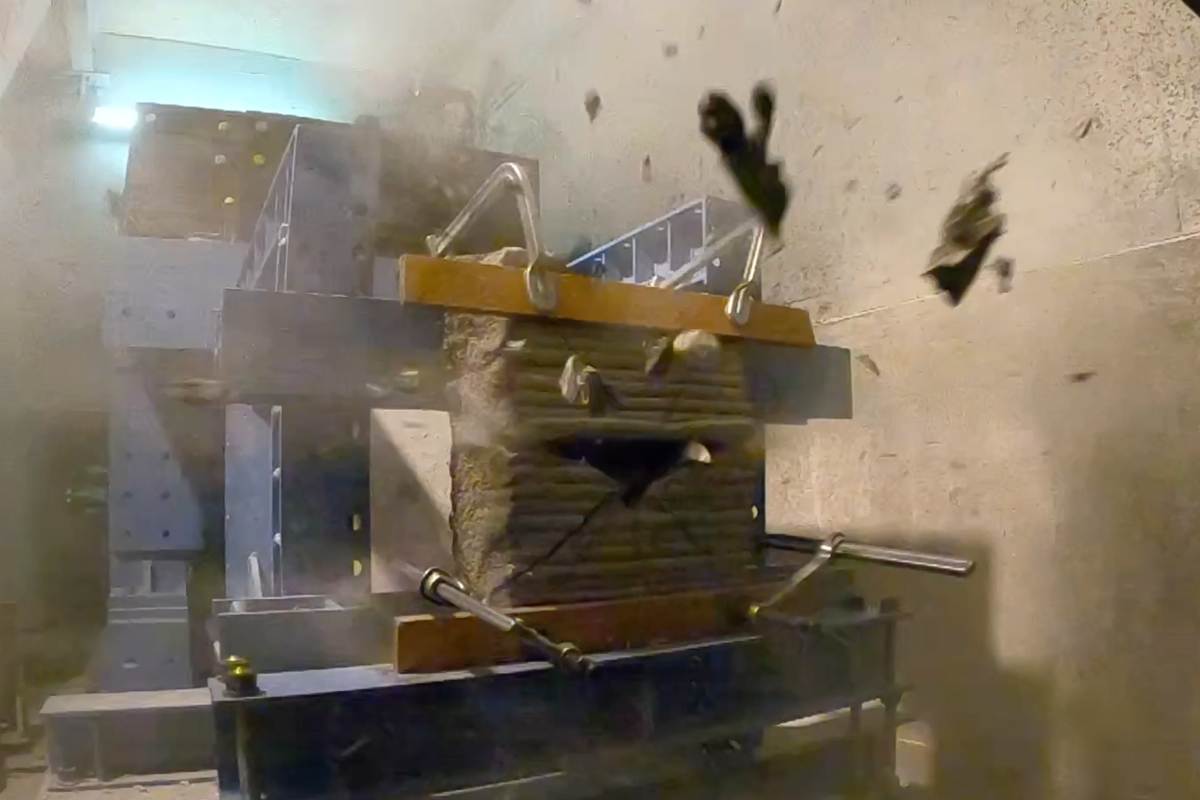
Serendix Runs High-Speed Projectile Impact Tests on 3D Concrete Printed Structures, Plans Blast-Resistant Shelter Display at Farnborough 2026

Hardware
Originally reported by ShareLab
Serendix, Japan's first 3D-printed house builder, conducted high-speed projectile impact tests on multiple structures formed with its construction-scale 3D concrete printer, comparing different wall geometries and surface-treated materials against metal projectiles fired at high velocity. The tests were executed by Serendix with technical supervision from KAP, and the company says results showed clear differences in impact resistance depending on structural shape and material processing. Serendix will present the findings at the Farnborough International Airshow 2026 (July 20-24, UK), exhibiting inside the booth of Japan's Acquisition, Technology and Logistics Agency (ATLA) alongside a 3D concrete printed blast-resistant shelter and a drone base concept built on this data.
The tests mark Serendix's push beyond disaster-recovery and transit housing into protective infrastructure, an adjacency few 3D concrete printing service providers have backed with ballistic data rather than marketing renders. Concrete printing for defense-adjacent structures is a niche compared with the metal and polymer processes that dominate aerospace and defense qualification coverage, but it draws on the same discipline: repeatable wall geometry, documented material treatment, and impact data rather than design intent alone. Serendix has filed a patent covering wall-count and structural optimization by use case, including double and triple-wall assemblies and ribbed layouts, which it credits for the resistance differences observed. The company's position sits in structure delivery and service rather than machine sales, consistent with the printing-services-led economics that dominate broader AM industry revenue.
This is early validation data, not a qualified product. Serendix has not disclosed projectile velocity, standoff distance, or a governing test standard, details that defense and critical-infrastructure buyers will need before treating this as more than proof of concept. The more concrete signal is the co-exhibition with ATLA, which gives Serendix a formal channel into Japan's defense-industrial base rather than a one-off demo. The next indicator to track is whether the shelter and drone-base concepts advance to a named pilot customer or remain at the exhibition-display stage.
Topics