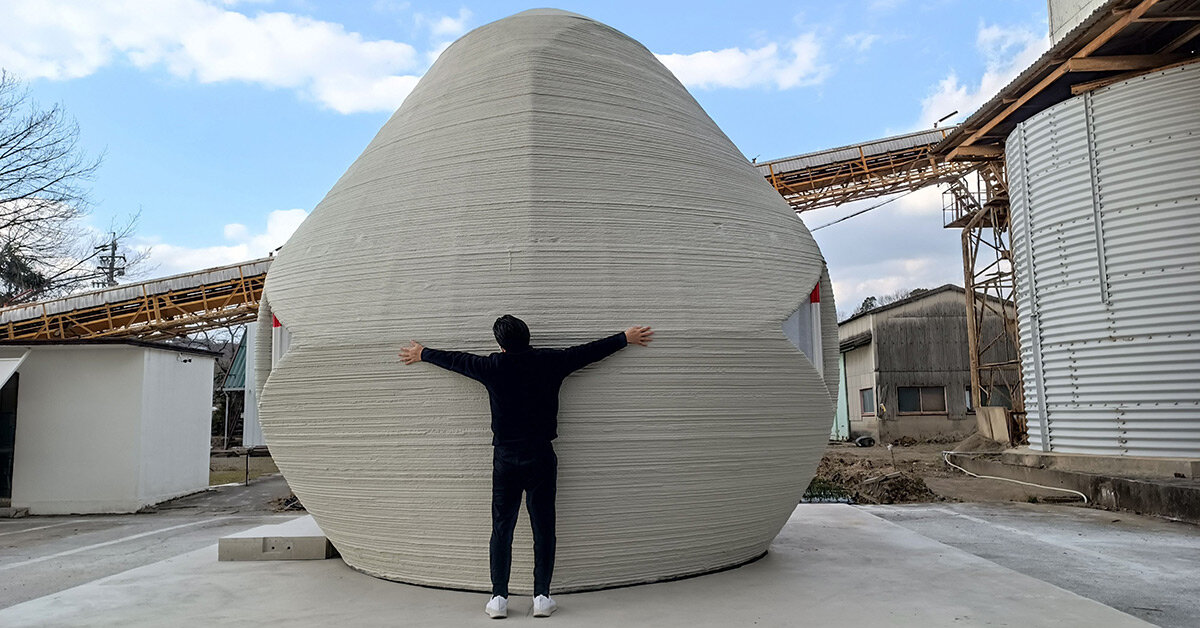
Serendix transitions 3D-printed construction business from R&D to mass production phase

Hardware
Originally reported by SEKAPRI
Serendix, the Hyogo-based 3D-printed housing manufacturer, announced on June 15, 2026, that its 3D-printed construction business has officially moved from the R&D phase into mass production. The company, which delivered Japan's first 3D-printed home 'serendix10' in March 2022, has since accumulated project references including a 3D-printed train station building at JR Kisei Main Line's Hatsushima Station, completed in March 2025 in collaboration with JR West Group. Serendix now expects to secure approximately 38 orders for housing and infrastructure-related facilities by the end of July 2026, with a target of over 100 cumulative buildings within 1-2 years and over 1,000 buildings annually within five years. The company also stated it will strengthen its management structure and accelerate hiring to support expansion, and plans to offer construction robotics solutions beyond housing both domestically and internationally.
This transition matters because it moves Serendix from the proof-of-concept phase that has characterized most construction AM ventures globally into a production-qualified operational state. The construction AM segment has historically been dominated by a handful of players - COBOD (Denmark), ICON (US), and Peri (Germany) - but Serendix's achievement of a certified public infrastructure project (a train station) is a rare qualification milestone that most competitors have not yet reached. The company's stated ramp from 38 orders to 1,000 buildings per year implies a factory-scale production model rather than project-by-project construction, which would require significant capital equipment deployment and supply chain standardization. Serendix's positioning as a construction robotics solutions provider, rather than a pure housing contractor, suggests it sees the value capture opportunity in selling the production system itself, not just the buildings.
From a practical standpoint, Serendix now faces the execution challenge that has tripped up every construction AM company that has attempted scale: converting project wins into repeatable, cost-competitive production at volume. The 38-order pipeline for the current fiscal year is a credible near-term signal, but the jump to 1,000 buildings per year requires not just demand generation but also material supply chain maturity, construction code acceptance across multiple jurisdictions, and financing mechanisms for buyers. The company's next 12 months will be the real test of whether its production infrastructure can match its ambition.
This article is an AI-assisted rewrite of the linked source report. Facts originate from the source; phrasing is AMPulse's. Use Read Original below to verify, or Report an issue if something is wrong.
Topics