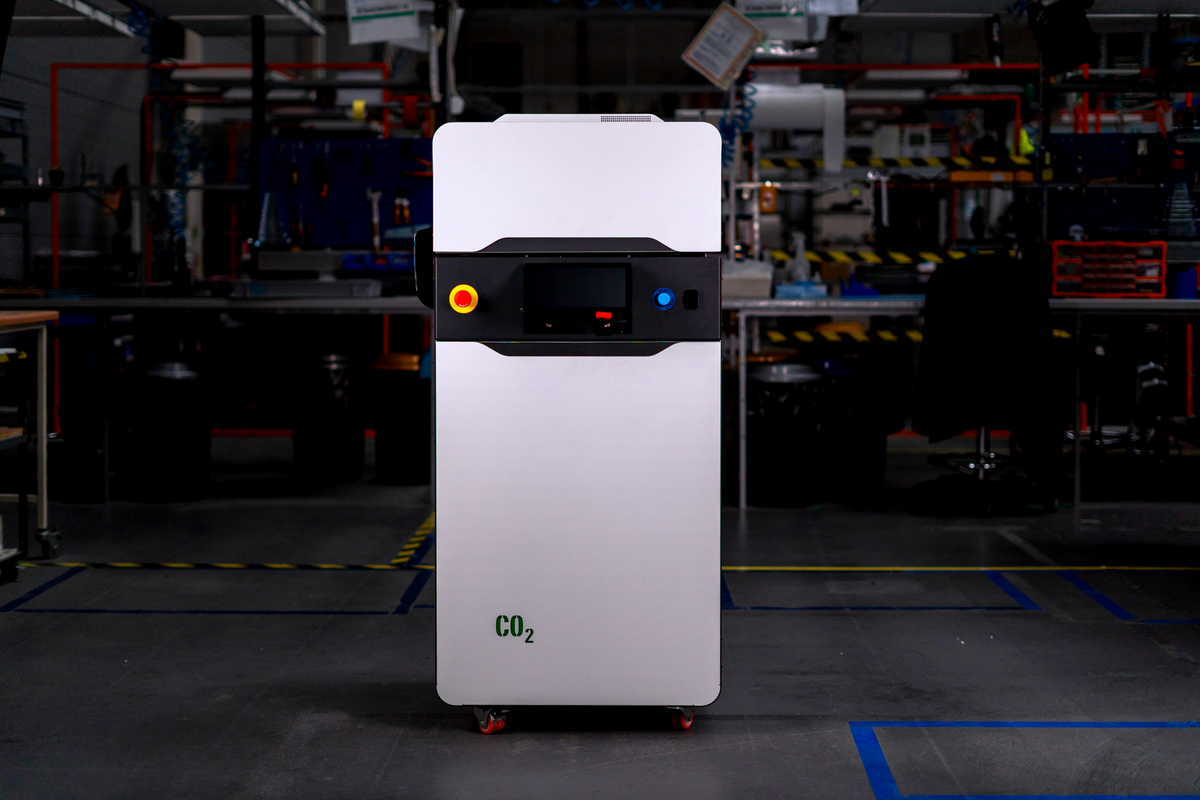
Sinterit launches BIANCO2 compact SLS platform with 30W RF CO₂ laser at €47,000

Hardware
Originally reported by TCT Magazine
Sinterit has launched the BIANCO2, a compact selective laser sintering (SLS) system powered by a 30W RF CO₂ laser, priced at €47,000 and expected to ship in Q4 2026. The machine features a build volume of 130 × 180 × 330 mm, build speeds up to 30 mm/h, a 4-zone heating architecture with 19 independent heating elements, and a dedicated laser water chiller. It runs on Sinterit Studio Ultimate software, offering 137 adjustable print parameters and an open material ecosystem supporting technical, white, natural, colourable, and flexible powders. Preorders are open with a 15% discount for the first 30 orders, requiring 50% prepayment.
This launch targets a persistent gap in the polymer SLS market: affordable, compact platforms that offer industrial-grade material flexibility without requiring a cleanroom or large footprint. Most sub-€50,000 SLS systems rely on diode lasers limited to standard PA12 and TPU, whereas the BIANCO2’s CO₂ laser enables sintering of a wider range of powders, including those with different absorption characteristics. This positions Sinterit against Formlabs’ Fuse series and Sintratec’s compact systems, but with a stronger emphasis on open parameters and material experimentation. The timing aligns with growing demand from medical/dental, automotive, and defence segments for short-run functional parts and rapid material validation, where closed-material ecosystems have been a barrier.
For Sinterit, the BIANCO2 is a logical extension of its mission to democratise SLS, but execution will hinge on delivering reliable process control across the expanded material set. The open-parameter approach is a double-edged sword: it attracts R&D users but may frustrate production customers who prefer validated, repeatable profiles. The company must ship on schedule in Q4 2026 and build a library of certified material profiles to convert preorders into repeat buyers. For buyers, the BIANCO2 is worth evaluating if material flexibility outweighs the need for turnkey simplicity.
This article is an AI-assisted rewrite of the linked source report. Facts originate from the source; phrasing is AMPulse's. Use Read Original below to verify, or Report an issue if something is wrong.
Topics