Spherene AG joins 3MF Consortium to advance Adaptive Density Minimal Surfaces standard for 3D printing

Software
Originally reported by 3Druck
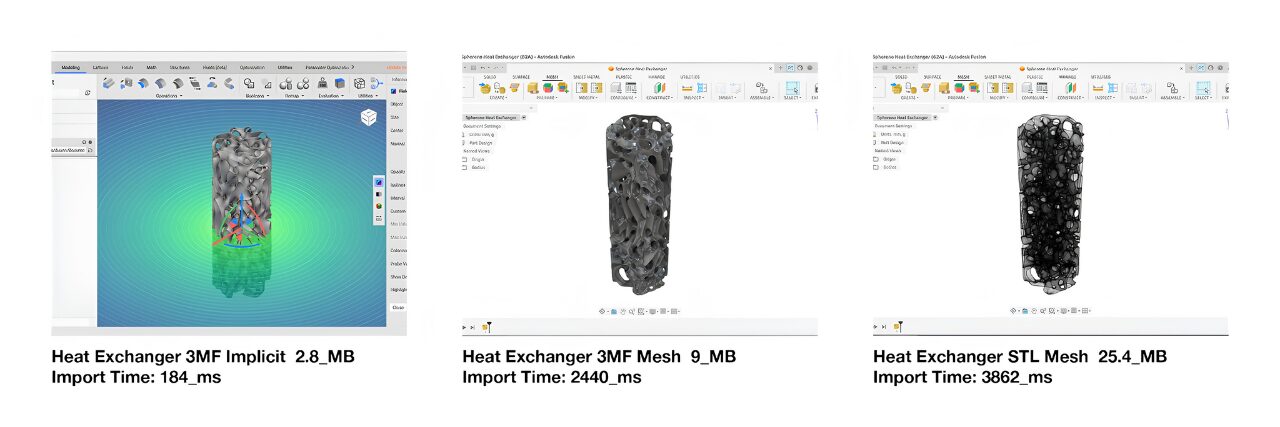
Spherene AG, a Swiss software company specializing in Adaptive Density Minimal Surfaces (ADMS), has joined the 3MF Consortium to help develop a volumetric extension for the open 3D manufacturing file format. The company reports that its ADMS geometry engine can reduce file sizes for complex internal structures from 24 MB to 9 MB using mesh-based 3MF, and further to 2.8 MB with the proposed implicit volumetric extension. CEO Claudio Nessi stated the move is a logical step toward ensuring that intelligent internal geometries can be communicated seamlessly across software, machines, and materials. Duann Scott, Executive Director of the 3MF Consortium, welcomed Spherene, noting that the potential of volumetric and implicit geometry has long been constrained by inadequate file formats.
This partnership addresses a structural bottleneck in the AM value chain: the loss of volumetric information when transferring functionally graded lattice and metamaterial designs from CAD to production. While STL and even current 3MF handle surface meshes well, they struggle to preserve continuous density gradients and cell-size variations that define modern lightweight, high-performance parts. Spherene's ADMS technology is already deployed in aerospace, medical, automotive, energy, and footwear applications, where internal geometry is increasingly part of a part's function rather than just its shape. By embedding implicit volumetric representation into the 3MF standard, the consortium aims to close a gap that has limited the practical adoption of advanced lattice and porous structures in production environments.
For the AM industry, this is a practical standards-development effort rather than a breakthrough announcement. The real test will be whether the volumetric extension gains broad machine-software support across printer OEMs and slicer vendors, and whether it materially reduces the post-processing overhead currently required to convert implicit designs into printable toolpaths. Spherene's next-generation platform, which aims to more tightly integrate design, simulation, and functional requirements at the volumetric level, will need to demonstrate that the format change translates into measurable throughput or performance gains for end users.
This article is an AI-assisted rewrite of the linked source report. Facts originate from the source; phrasing is AMPulse's. Use Read Original below to verify, or Report an issue if something is wrong.
Topics