SprintRay patents selective SLA curing method for variable part properties

Hardware
Originally reported by Fabbaloo
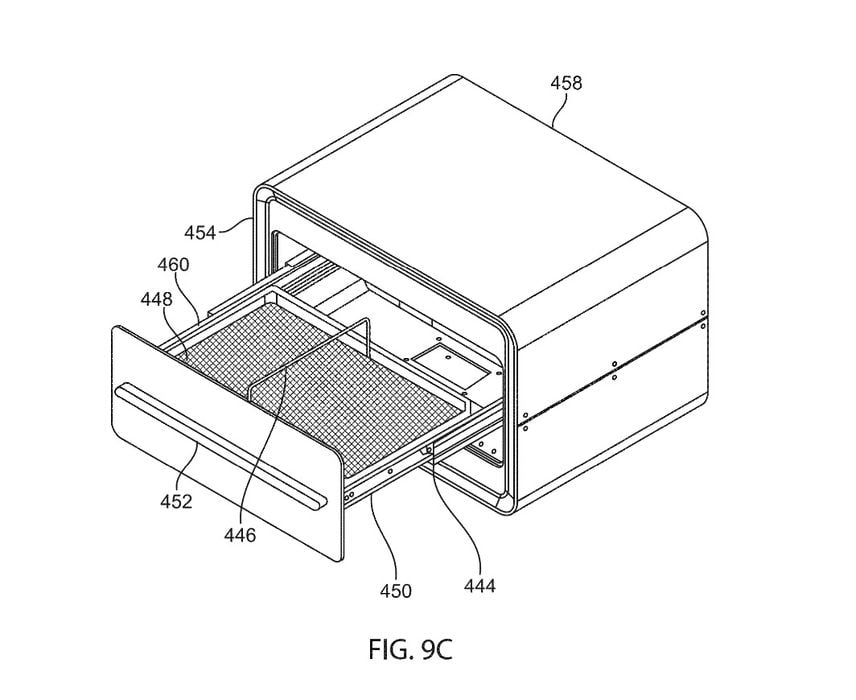
SprintRay has filed a patent application for an intelligent post-curing system that enables selective curing of stereolithography (SLA) parts, allowing different regions of the same object to achieve distinct mechanical and optical properties. The system uses a movable light source assembly, multiple wavelengths (365nm, 385nm, 405nm), and a curing toolpath derived from the part's 3D model data. Targeted properties include color shade, opacity, flexural strength, modulus, and elasticity. The patent also describes integrated UVC sterilization for dental and medical workflows, addressing undercut regions and surface dosage requirements.
This development shifts value from the printer to the post-processing step, turning the curing chamber into an active material-tuning system rather than a passive finishing box. For dental applications-SprintRay's core market-the ability to produce crowns, bridges, aligners, and splints with gradient properties could reduce the need for manual staining or multi-material printing. The patent fits the broader industry trend of moving material control into software-defined post-processing, a pattern seen in other polymer AM segments where curing and annealing steps are increasingly automated and parameterized. If commercialized, this could raise the barrier for generic curing chambers and strengthen SprintRay's position in the dental vertical, where Align Technology's VPP-based aligner production remains the largest single AM application.
For SprintRay, execution depends on integrating this curing toolpath into existing dental lab workflows without adding complexity-dentists and lab technicians will not tolerate additional manual steps. The patent's value will be measured by whether it translates into a commercially viable product that reduces post-processing time or improves part consistency across a batch. Competitors in dental AM should watch for SprintRay's next hardware release, as this curing method could become a differentiator in the increasingly crowded dental resin printer market.
This article is an AI-assisted rewrite of the linked source report. Facts originate from the source; phrasing is AMPulse's. Use Read Original below to verify, or Report an issue if something is wrong.