Teledyne invests $20M in Edmonton MEMS sensor fab expansion

AM-Adjacent Equipment
Originally reported by meridiansource.ca
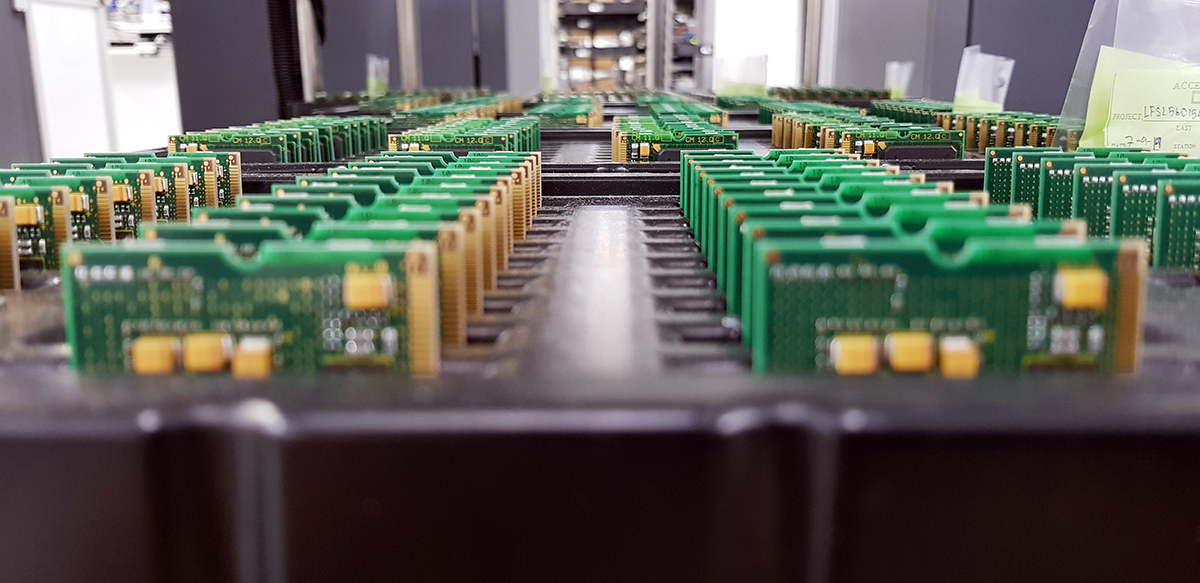
Teledyne Technologies Incorporated is investing $20 million to expand its Edmonton, Alberta micro-electromechanical systems (MEMS) manufacturing facility. The project, supported by a $620,000 grant from Alberta's Investment and Growth Fund, will add wafer processing, inspection, and automation equipment to scale production of microscopic sensors used in vehicle safety, medical diagnostics, cancer research, and gas detection. The expansion is expected to create 16 permanent full-time positions and 20 temporary construction jobs, building on Teledyne's Alberta operations established in 2019. Plant manager Steve Bonham framed the investment as a vote of confidence in the region's technical talent and innovation ecosystem.
This expansion is notable not for AM-specific technology - Teledyne's Edmonton facility uses semiconductor MEMS fabrication, not additive manufacturing - but for what it signals about Alberta's broader advanced manufacturing trajectory. The provincial IGF has committed nearly $28 million in Budget 2026 and, since late 2021, has issued 18 grants that drew over $1 billion in private capital. For the AM industry, this matters because MEMS sensors are critical components in AM system feedback loops - monitoring build chamber conditions, powder bed uniformity, and thermal profiles. A strengthened domestic MEMS supply chain could reduce lead times and qualification friction for Canadian AM OEMs and service bureaus integrating closed-loop process control. The investment also reinforces a pattern of non-AM advanced manufacturing infrastructure that indirectly supports AM adoption through improved component availability.
From an AM industry perspective, this is a supply-chain adjacency rather than a direct AM event. The practical takeaway is that sensor manufacturing capacity in North America is expanding, which may gradually ease a bottleneck for AM system builders who rely on precision MEMS for in-situ monitoring. Teledyne's existing sensor portfolio already serves automotive and medical verticals where AM is increasingly used for production parts, creating potential cross-pollination in qualification workflows. No immediate AM-specific product or partnership emerges from this announcement, but the capacity build is worth tracking for its downstream effects on sensor availability and cost.
Topics