Tsubaki Kabelschlepp adopts SLS 3D printing for energy chain production in intralogistics

AM-Adjacent Equipment
Originally reported by 3Druck
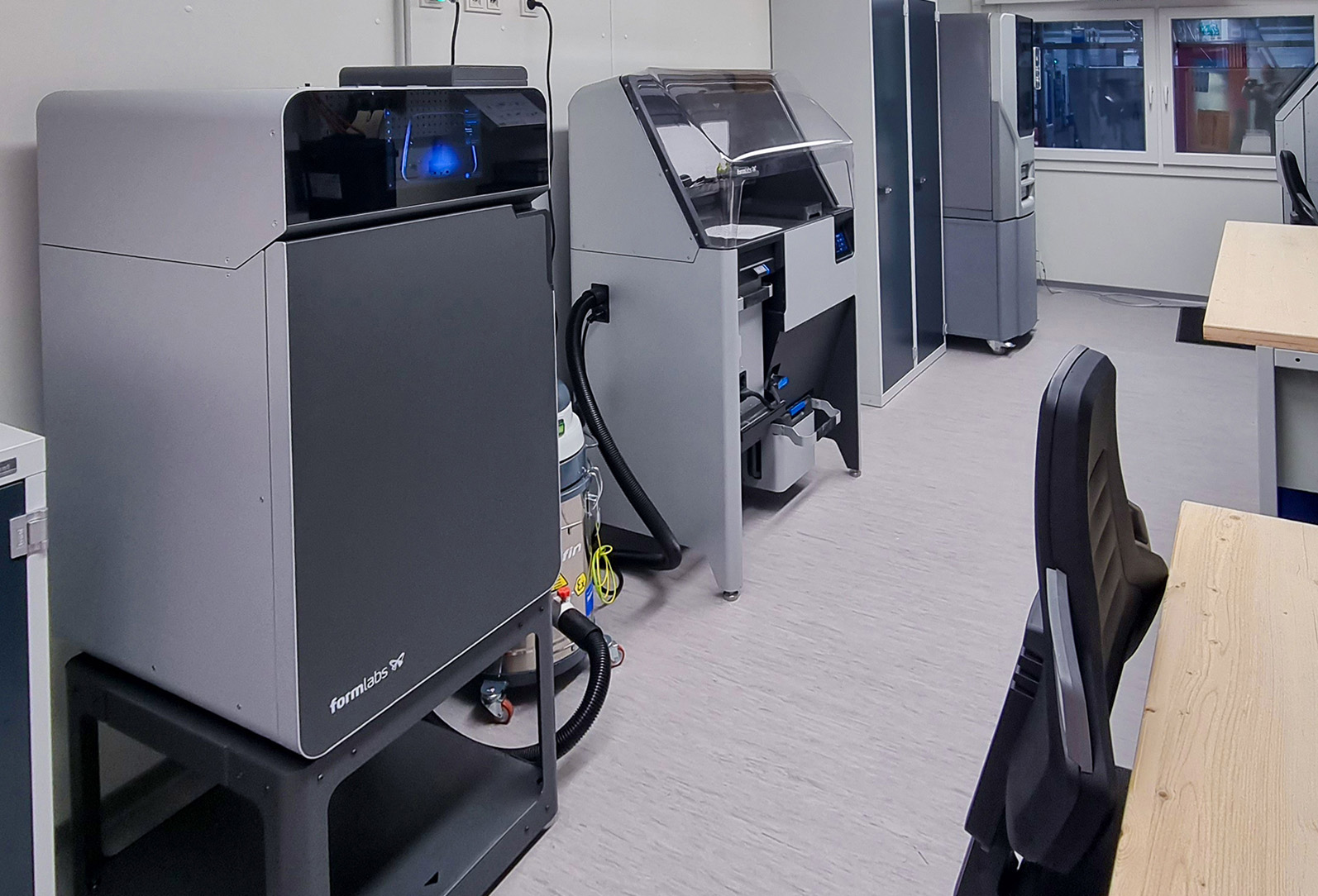
Tsubaki Kabelschlepp, a global leader in energy chain systems for intralogistics, has integrated selective laser sintering (SLS) into its production workflow for prototype and low-volume series manufacturing of cable guidance components. The company reports that the shift reduces material consumption for prototypes by up to 80% and significantly shortens development cycles by eliminating costly tooling modifications during iterative design phases. The SLS system is deployed as a containerized production cell, managed like an injection molding machine with full ERP integration and traceability, producing parts within ±0.2 mm tolerances plus a percentage of part length. Peter Pütz, Vice President Marketing & Innovation, emphasized that the process follows the task: injection molding remains the primary method where superior, but additive manufacturing is combined when design flexibility or small batch economics favor it.
This deployment is a textbook example of industrial tooling and intralogistics adopting polymer AM not as a headline technology but as a pragmatic production complement. Tsubaki Kabelschlepp is not a startup chasing hype; it is a mature Tier 1 supplier embedding SLS into established manufacturing infrastructure to solve real cost and speed problems in a segment-industrial tooling and intralogistics-that is economically significant but media-invisible. The move fits the pattern of service-based adoption, where AM earns its place by reducing iteration loops and enabling geometric freedom for integrated functions, rather than replacing injection molding at scale. The company’s disciplined approach-using SLS only where it outperforms conventional methods, maintaining full quality traceability, and managing the machine as a standard production asset-reflects the kind of qualification and ROI discipline that separates durable adoption from experimental pilots.
From an industry perspective, this is a quiet but instructive case: a large, established manufacturer has found a clear economic niche for SLS in a high-mix, low-volume environment without overpromising on throughput or material breadth. The practical takeaway is that polymer SLS continues to prove its value in functional prototyping and small-series production for demanding industrial applications, especially where design iteration speed and part complexity outweigh surface finish requirements. Tsubaki Kabelschlepp’s next challenge will be scaling this cell model across more product lines and proving that the ERP-integrated, containerized approach can maintain repeatable quality as volumes grow.
Topics