U.S. awards $4.2M to Norsk Titanium for submarine part production via wire-fed titanium AM

Hardware
Originally reported by All3DP
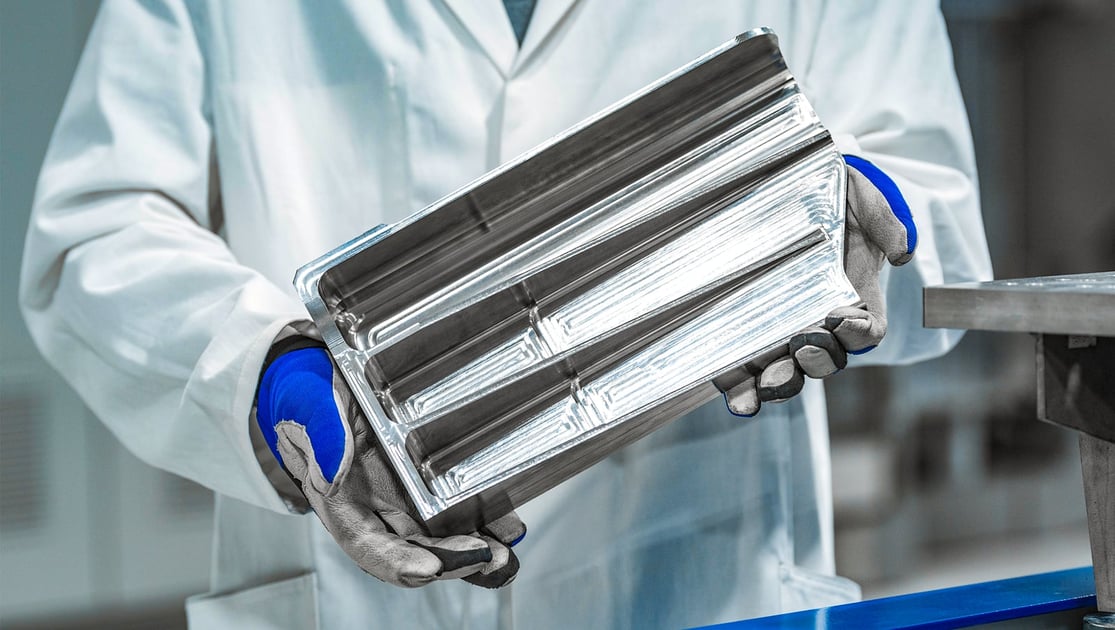
The U.S. Department of Defense has awarded Norsk Titanium a $4.2 million contract to produce titanium components for submarine construction using its proprietary Rapid Plasma Deposition (RPD) wire-fed directed energy deposition (DED) process. The funding, announced in June 2026, targets the U.S. Navy’s persistent submarine part shortage, specifically for the Virginia and Columbia-class programs. Norsk Titanium, headquartered in Oslo, Norway, with its primary production facility in Plattsburgh, New York, will deliver qualified near-net-shape titanium parts directly to naval supply chains under this award.
This award places Norsk Titanium squarely within the defense vertical’s politically accelerated adoption wave, where the U.S. is actively using procurement dollars to bypass traditional forging and casting bottlenecks. The submarine part shortage is a well-documented industrial base problem: large titanium components for pressure hulls and auxiliary systems have lead times exceeding 18 months via conventional supply chains. Norsk’s RPD process, which deposits Ti-6Al-4V wire at rates up to 10 kg/hour, offers a path to reduce that timeline while maintaining the mechanical property traceability required for naval certification. The contract is a direct test of whether wire-fed DED can transition from aerospace secondary-structure applications (where Norsk has existing Boeing and Spirit AeroSystems qualifications) into the more demanding maritime environment, where corrosion resistance, fatigue life, and shock loading requirements are distinct. This is not a speculative R&D grant; it is a production- intent award that requires Norsk to deliver certified parts within the contract period.
For Norsk Titanium, the practical challenge is scaling its Plattsburgh facility’s output while maintaining the quality governance that naval nuclear and submarine programs demand. The company must demonstrate that its RPD process can produce parts that meet MIL-SPEC standards for porosity, residual stress, and dimensional accuracy at production volumes, not just in demonstration runs. For the broader AM industry, this award reinforces that defense procurement is becoming the primary near-term demand driver for metal DED, particularly for large-format titanium components where forging dies are expensive and supply chains are fragile. The company’s execution over the next 18 months will determine whether wire-fed DED becomes a standard tool in naval shipbuilding or remains a niche solution for low-rate initial production.
This article is an AI-assisted rewrite of the linked source report. Facts originate from the source; phrasing is AMPulse's. Use Read Original below to verify, or Report an issue if something is wrong.
Topics