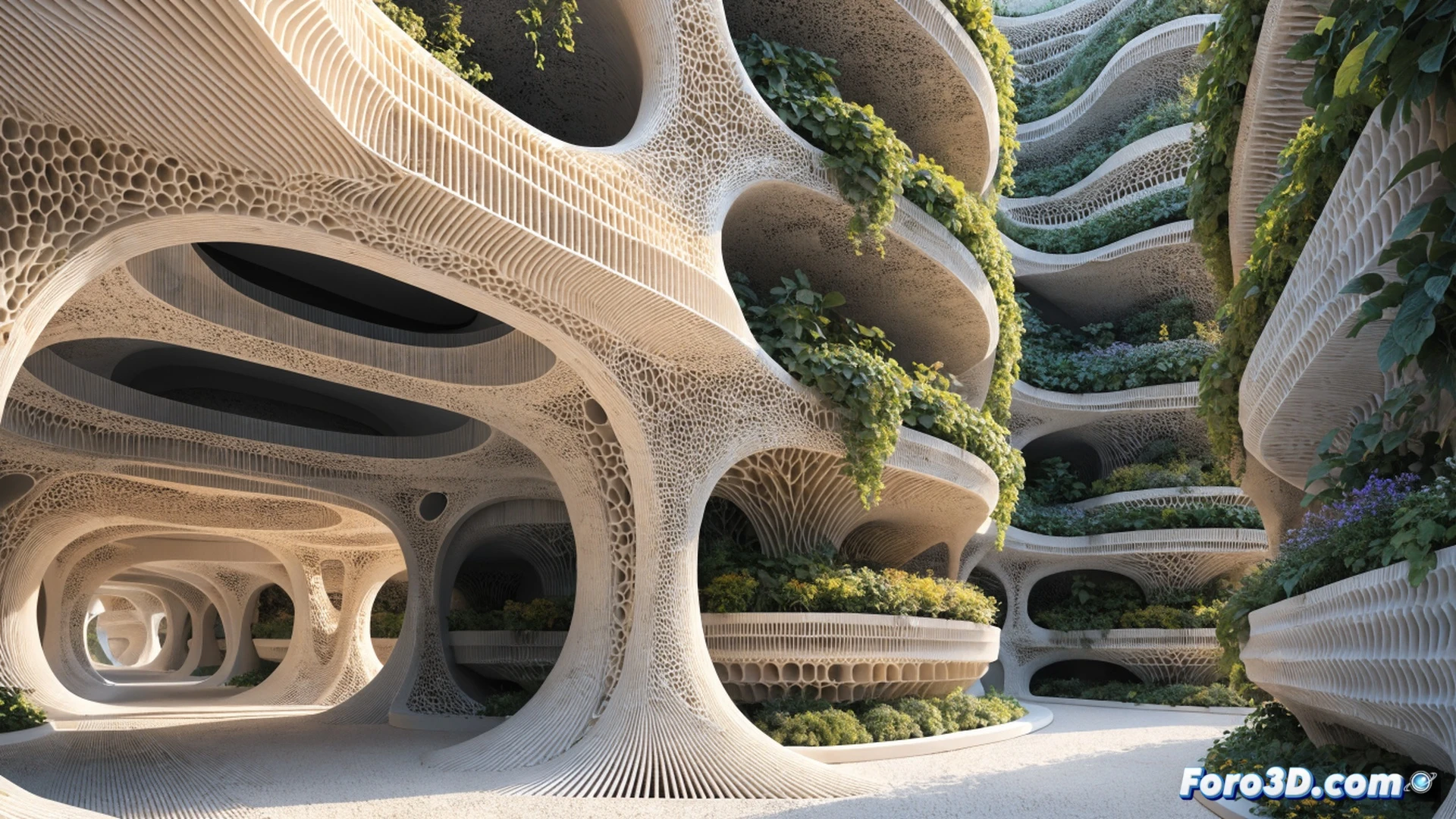
WASP and Olfattiva build Shamballa, a 3D-printed eco-farm in Italy combining additive manufacturing with agriculture

Hardware
Originally reported by foro3d.com
WASP, the Italian additive manufacturing company known for large-format clay and earth 3D printing, has partnered with agricultural research firm Olfattiva to construct Shamballa, a 3D-printed eco-farm in Italy. The facility uses WASP's large-scale 3D printers to build structures from locally sourced earth, minimizing concrete and steel use. Shamballa integrates hydroponic and aquaponic systems controlled by sensors that optimize irrigation and light, with a modular design enabling production scaling without extensive land requirements. The project demonstrates a practical application of additive construction for sustainable food production, reducing carbon footprint through natural material use.
This project fits the recurring pattern of AM expanding beyond industrial manufacturing into niche, application-specific verticals - in this case, sustainable agriculture and construction. While most large-format 3D printing attention has focused on concrete-based housing (e.g., ICON, COBOD), WASP has consistently pursued earth-based construction, a lower-carbon alternative that aligns with circular economy principles. Shamballa represents a convergence of additive construction, precision agriculture, and sensor-driven automation, creating a self-contained production unit. The significance lies not in scale - this is a pilot farm, not a commercial rollout - but in proving that AM can integrate multiple functions (structure, irrigation, environmental control) into a single printed system, potentially reducing the capital and land barriers to local food production.
From a practical standpoint, Shamballa is a proof-of-concept that will need to demonstrate real yield data, operational cost per kilogram of produce, and replicability across different climates and soil types before it moves beyond the pilot stage. WASP and Olfattiva must now show that the farm's sensor-driven hydroponics and aquaponics deliver consistent output compared to conventional methods. For buyers and investors, the near-term value is in understanding whether earth-printed agricultural infrastructure can achieve the durability and maintenance costs needed for multi-year farming cycles - a question that remains unanswered until long-term field data emerges.
Topics