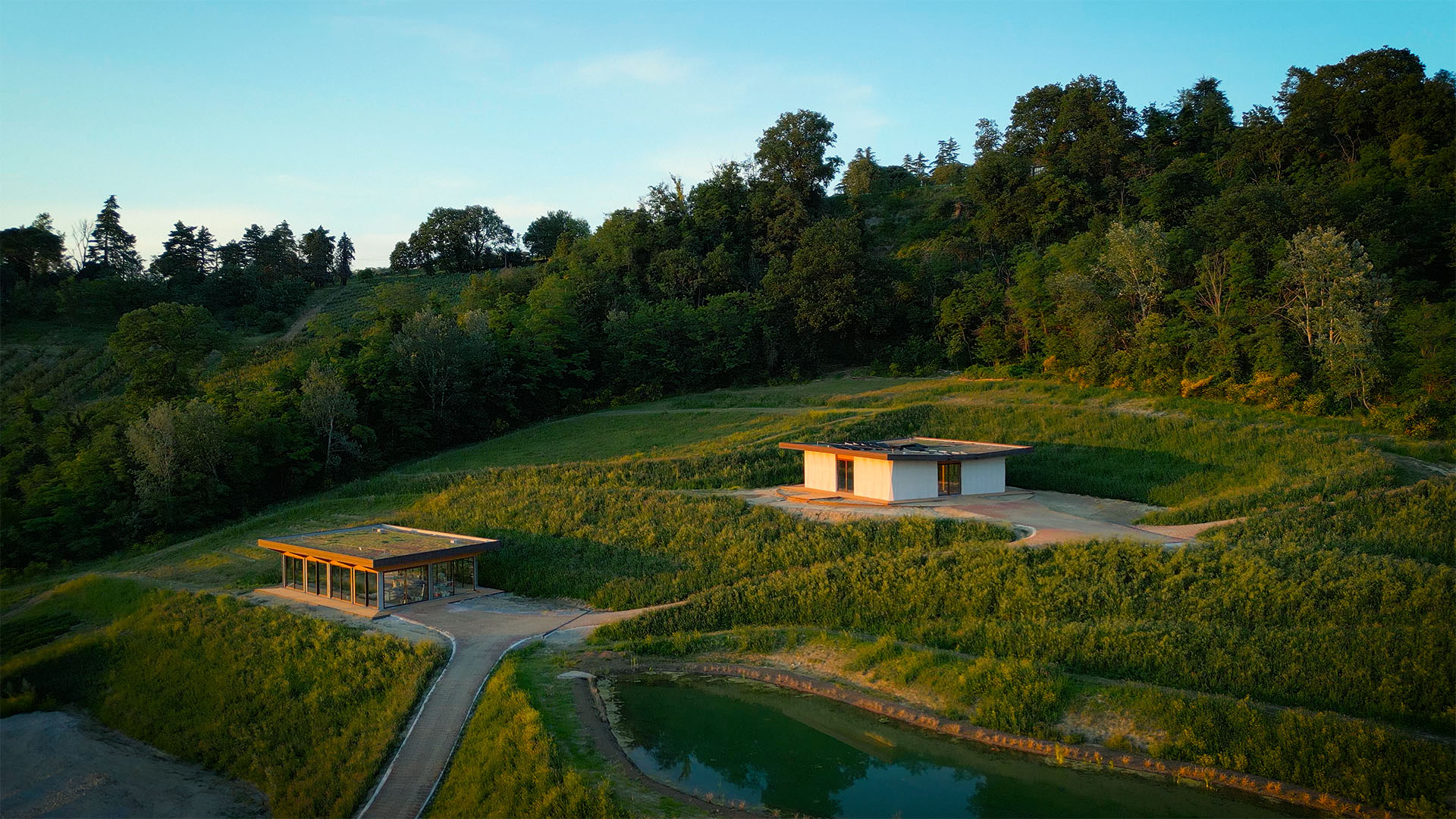
WASP tests 3D-printed farm as construction laboratory in Emilia-Romagna

Hardware
Originally reported by 3Druck
WASP, the Italian large-format additive manufacturing specialist, has completed Itaca, a 3D-printed farm building at the Shamballa site in the hills of Emilia-Romagna. The structure was fabricated using the Crane WASP printer, a system designed for architectural-scale construction. Key technical details include the integration of electrical cables and panel heating during the printing process, and the use of a mortar blend based on NHL lime and Geolegante from Kerakoll, which the company states produces lower CO₂ emissions than standard cement-based formulations. The building meets Italian and regional seismic safety standards, and the site will function as an open-air laboratory for sustainable construction, bio-construction, and agricultural cycle research, operated jointly with Olfattiva, a sister company within the CSP S.r.l. Group.
This project is significant not for its commercial scale but as a real-world testbed for construction-scale AM in a demanding regulatory environment. WASP is one of the few European companies pushing large-format extrusion (FDM/FFF for construction) beyond demonstration pavilions toward habitable, code-compliant structures. The integration of MEP (mechanical, electrical, plumbing) elements during printing addresses a critical pain point in construction AM: post-print assembly labor that erodes the speed advantage. The material choice-a lime-based mortar with rice husk and natural insulation-positions the project within the broader push for lower-embodied-carbon building methods, a trend that could open niche adoption in European green building standards. However, the construction AM segment remains fragmented and capital-intensive, with no clear production leader; WASP competes against firms like COBOD, ICON, and Peri 3D Construction, none of which have yet achieved serial production at scale.
From a practical standpoint, WASP needs to demonstrate that the Itaca building performs as modeled over multiple seasonal cycles, particularly regarding thermal behavior and structural integrity. The project is a long-term experiment, not a commercial product launch. For buyers and specifiers in construction, the key takeaway is that printed buildings can achieve regulatory compliance and functional integration, but the cost and throughput advantages over conventional methods remain unproven at this scale. The real test will be whether WASP can translate this laboratory into repeatable, cost-competitive construction workflows.
This article is an AI-assisted rewrite of the linked source report. Facts originate from the source; phrasing is AMPulse's. Use Read Original below to verify, or Report an issue if something is wrong.