Weerg calls for deeper OEM partnerships as 28-machine MJF fleet reveals scaling challenges

Service
Originally reported by 3Druck
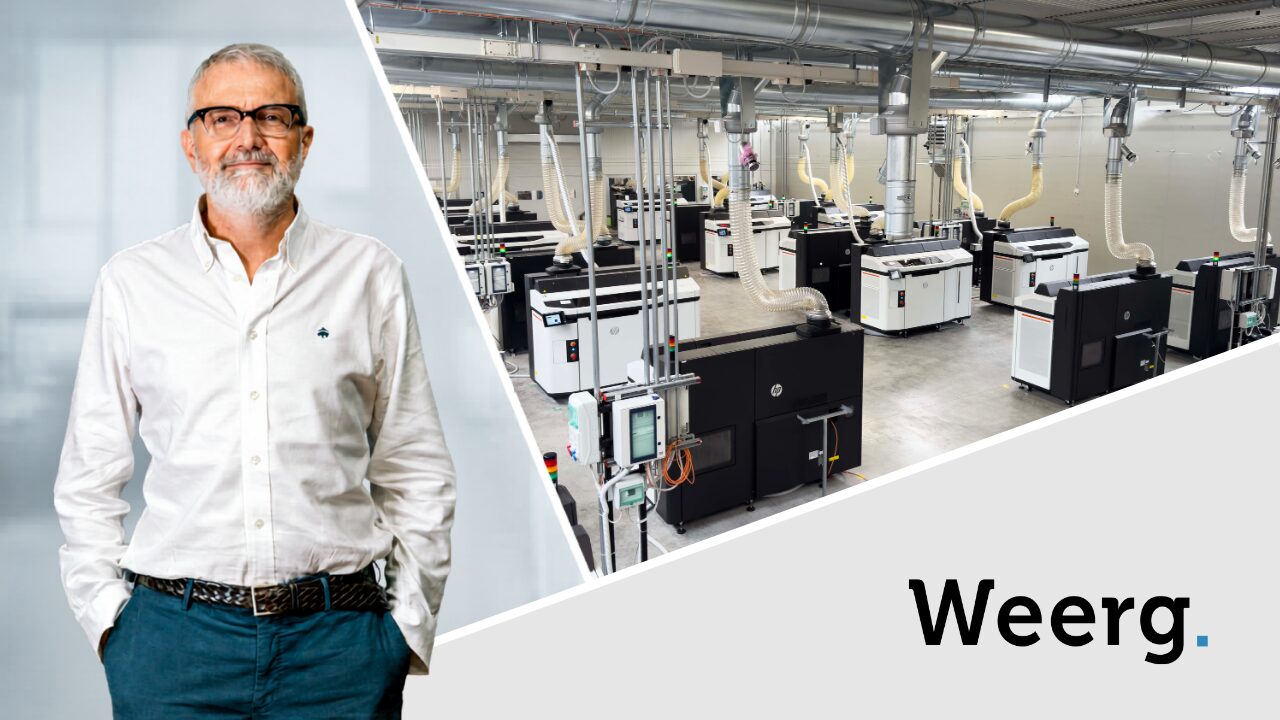
Italian manufacturing service bureau Weerg has publicly called for closer partnerships between industrial 3D printing operators and machine OEMs, citing operational challenges that emerge only at production scale. Founder Matteo Rigamonti stated that Weerg’s facility in Scorzè, Italy, runs 28 HP Multi Jet Fusion 5620 Pro systems in continuous 24/7 operation, a fleet size that exposes defect patterns, parameter interactions, and wear modes invisible in lab or pilot environments. Rigamonti emphasized that when rare defects or undocumented failure modes appear across parallel production, operators cannot resolve them alone and require rapid OEM support. While he described HP as technically competent and reliable, he noted that as a large corporation with multiple business units, HP’s internal prioritization can be too slow for a production shop where every hour of downtime directly impacts delivery commitments.
This call for deeper collaboration reflects a structural tension in the polymer AM service segment as it transitions from prototyping to serial production. Weerg’s experience mirrors a pattern seen across the broader AM industry: the economics and operational discipline required for high-volume production differ fundamentally from those of R&D or low-volume service. The Multi Jet Fusion process, which HP has positioned as the leading polymer technology for production-scale parts, now faces the same scaling friction that metal PBF-LB operators encountered years ago. Weerg’s position as a high-volume service bureau gives it unique visibility into these issues, and its willingness to speak publicly signals that the gap between OEM support models and production-floor reality is widening. The company is not abandoning MJF - it plans further investment - but is actively seeking development partnerships, shared-risk models for new materials, and deeper on-site expertise from suppliers.
For the AM industry, Weerg’s statement is a practical reminder that production-scale service bureaus are the canary in the coal mine for process maturity. When a bureau running 28 identical machines reports that OEM support cycles are too slow for production demands, that is not a complaint - it is data. HP and other polymer AM OEMs should treat this as a product requirement, not a negotiation point. The next competitive differentiator in polymer AM will not be build speed or material breadth alone, but the speed and depth of the support ecosystem around production fleets. Weerg’s next move - whether it deepens ties with HP, diversifies across multiple OEMs, or builds in-house remediation capability - will signal which model wins at scale.
This article is an AI-assisted rewrite of the linked source report. Facts originate from the source; phrasing is AMPulse's. Use Read Original below to verify, or Report an issue if something is wrong.