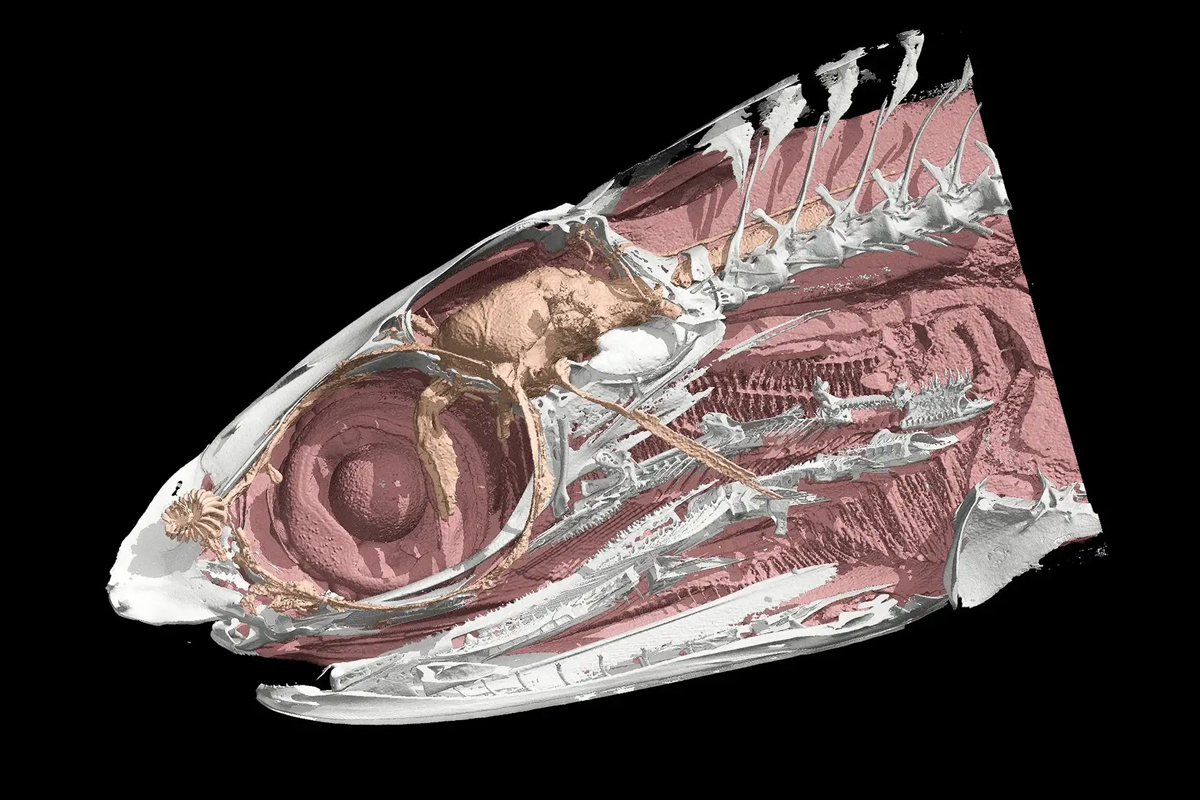
White Rabbit releases Molcer Plus ver. 2.0 with enhanced CT segmentation for AM quality control

Software
Originally reported by ShareLab
White Rabbit, a Japanese software developer based in Kanagawa, has released Molcer Plus ver. 2.0, a major update to its 3D image analysis and processing software for voxel data. The new version significantly expands segmentation capabilities for X-ray CT and MRI volume data, introducing direct voxel editing, free-form manual segmentation, and automated object splitting and protrusion detection. The software now allows users to edit and segment directly on 3D models rather than working solely from 2D cross-sections, with added functionality to replace partial voxel values with original data for refined corrections.
This update matters for additive manufacturing because CT-based non-destructive inspection is becoming a standard qualification step for metal and polymer AM parts, particularly in aerospace and medical applications where internal defect detection is critical. Most commercial CT analysis tools remain rooted in 2D slice workflows, forcing operators to mentally reconstruct 3D features from planar images. White Rabbit's approach of native 3D voxel editing directly addresses a practical bottleneck in AM quality assurance: the time and skill required to segment complex internal geometries, lattice structures, and conformal cooling channels from CT scans. The software's particle and void analysis options also support powder bed fusion process monitoring by enabling automated statistical characterization of porosity and inclusion distributions.
For AM users evaluating CT analysis tools, Molcer Plus ver. 2.0 offers a differentiated workflow that may reduce segmentation time for complex internal features compared to traditional slice-based software. The practical test will be whether the tool integrates with existing AM quality management pipelines and handles the data volumes typical of high-resolution industrial CT scans. White Rabbit's position as a niche Japanese software vendor means adoption will depend on language support, file format compatibility, and distribution channels outside Japan.
This article is an AI-assisted rewrite of the linked source report. Facts originate from the source; phrasing is AMPulse's. Use Read Original below to verify, or Report an issue if something is wrong.
Topics