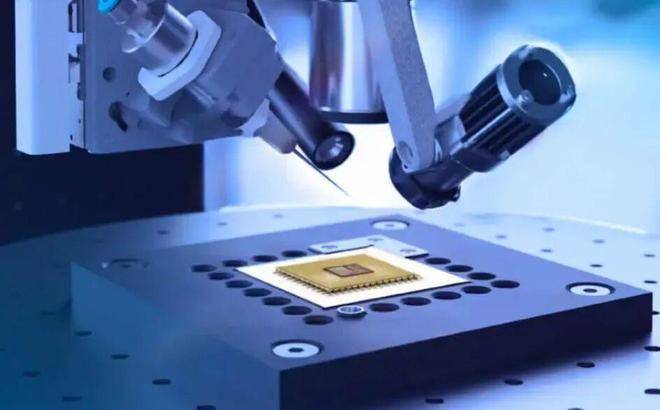
XTPL enters Japanese semiconductor market with ultra-precision dispensing module for advanced packaging

Hardware
Originally reported by 黑科技研究所
Polish OEM XTPL has secured its first Japanese customer for its ultra-precision dispensing (UPD) module, marking the company's entry into the semiconductor advanced packaging market. The unnamed buyer, described as a publicly listed advanced automation equipment manufacturer, will integrate the UPD print head into a prototype machine for industrial-scale testing of advanced PCB and chip packaging applications. This follows XTPL's earlier 2026 sales in Taiwan (flat-panel display) and Silicon Valley. The Japanese deal also marks XTPL's first commercial deployment of copper-based materials, a critical material class for advanced packaging. Delivery is scheduled for Q4 2026, with the unit priced at roughly double XTPL's Chinese FPD deployment, reflecting the more demanding specifications of semiconductor packaging equipment.
This transaction fits the recurring pattern of AM-enabled precision deposition finding specialized homes outside traditional AM process families. XTPL's UPD module is not a general-purpose 3D printer but a print-head subsystem for industrial automation, targeting the semiconductor back-end market where annual R&D spend is estimated at $150-200 billion - roughly 9x the entire AM industry's R&D. The Japanese customer's focus on advanced PCB and chip packaging aligns with the broader chip-packaging revolution driving semiconductor R&D. XTPL now has six customers at the prototype-integration stage (Phase 4 of its evaluation framework), all testing UPD modules in industrial prototype machines. The shift from prototype to production scaling is the critical transition, mirroring patterns seen in aerospace and medical AM where qualification cycles are long but production lock-in is deep.
XTPL's copper material introduction and the higher unit price in Japan signal that the company is moving up the value chain from display manufacturing into semiconductor-grade precision. The key execution challenge is converting these six prototype-stage customers into production-scale deployments, which requires not only technical validation but also integration into the customer's supply chain and quality systems. For the AM industry, this deal reinforces that the chip-packaging opportunity remains underappreciated - TDK's acquisition of Fabric8Labs in 2025 was a signal, and XTPL's Japan entry is another data point. The practical next step is to watch whether XTPL can replicate its Chinese FPD industrialization success in the more demanding semiconductor segment.
Topics